
Blood Pressure Medications: Types, Side Effects, and Safety

High blood pressure doesn’t come with warning signs. You might feel fine, but your arteries are under constant strain. Left untreated, it can lead to heart attack, stroke, or kidney failure. That’s why millions of people take blood pressure medications every day - not because they’re sick, but because they need to stay healthy. The right drug can save your life. But the wrong one? It can make things worse.
How Blood Pressure Medications Work
Blood pressure meds don’t just lower numbers - they target how your body controls pressure. Your heart pumps blood through arteries. When those arteries tighten or your blood volume increases, pressure rises. Different drugs break that cycle in different ways.
Diuretics, like hydrochlorothiazide, flush out extra salt and water. Less fluid means less pressure on vessel walls. Beta-blockers, such as metoprolol, slow your heart rate and reduce how hard it beats. ACE inhibitors like lisinopril stop a hormone called angiotensin II from narrowing arteries. ARBs, like losartan, block the same hormone but at a different spot - and they don’t cause the dry cough that ACE inhibitors often do. Calcium channel blockers like amlodipine relax artery muscles. Alpha-blockers and central agonists like clonidine work on your nervous system to calm the signals that raise blood pressure.
There’s no one-size-fits-all. Your doctor picks a drug based on your age, race, other health issues, and even how your body tends to react to medicine. For example, Black patients often respond better to diuretics or calcium channel blockers than to ACE inhibitors. Older adults may need lower starting doses because their bodies process drugs slower.
The Top Five Classes of Blood Pressure Medications
Here are the five most common types, what they do, and why your doctor might choose them.
- Thiazide diuretics (hydrochlorothiazide, chlorthalidone): First-line for most people. Cheap, proven, and effective. They reduce fluid volume. Side effects include low potassium, frequent urination, and sometimes gout flare-ups.
- Calcium channel blockers (amlodipine, diltiazem): Great for older adults and people of African descent. Amlodipine is one of the most prescribed drugs in the U.S. It can cause swollen ankles, dizziness, and flushing. Non-dihydropyridines like verapamil may slow heart rate too much in some people.
- ACE inhibitors (lisinopril, enalapril): Preferred if you have diabetes, heart failure, or kidney disease. They protect your kidneys. But about 1 in 5 people get a persistent dry cough - enough to make them stop taking it.
- ARBs (losartan, valsartan): Same benefits as ACE inhibitors, without the cough. Often used when someone can’t tolerate ACE inhibitors. Risk of high potassium and harm to unborn babies.
- Beta-blockers (metoprolol, carvedilol): Not first-line for most, but essential if you’ve had a heart attack or have heart failure. Can cause fatigue, cold hands, and trouble sleeping. They can hide low blood sugar signs in diabetics.
These five classes cover about 90% of prescriptions. Other types - like aldosterone blockers (spironolactone), vasodilators (hydralazine), or direct renin inhibitors (aliskiren) - are used only in complex cases, usually when the first four don’t work.
Common Side Effects You Should Know
Side effects aren’t rare. They’re normal. The question isn’t whether you’ll get them - it’s whether they’re manageable.
With diuretics, you might need to pee more often, especially at first. That’s why doctors often suggest taking them in the morning. Low potassium can cause muscle cramps or irregular heartbeat. Your doctor will check your blood levels regularly.
Calcium channel blockers like amlodipine can make your ankles swell. It’s not dangerous, but it’s annoying. Some people get headaches or feel flushed. Gingival hyperplasia - overgrown gums - is rare but real. Brushing more won’t fix it; you may need a dentist’s help.
ACE inhibitors cause a dry, tickly cough in 10-20% of users. It’s not an allergy. It’s a side effect of how the drug changes bradykinin levels. If it’s bad, switching to an ARB usually fixes it.
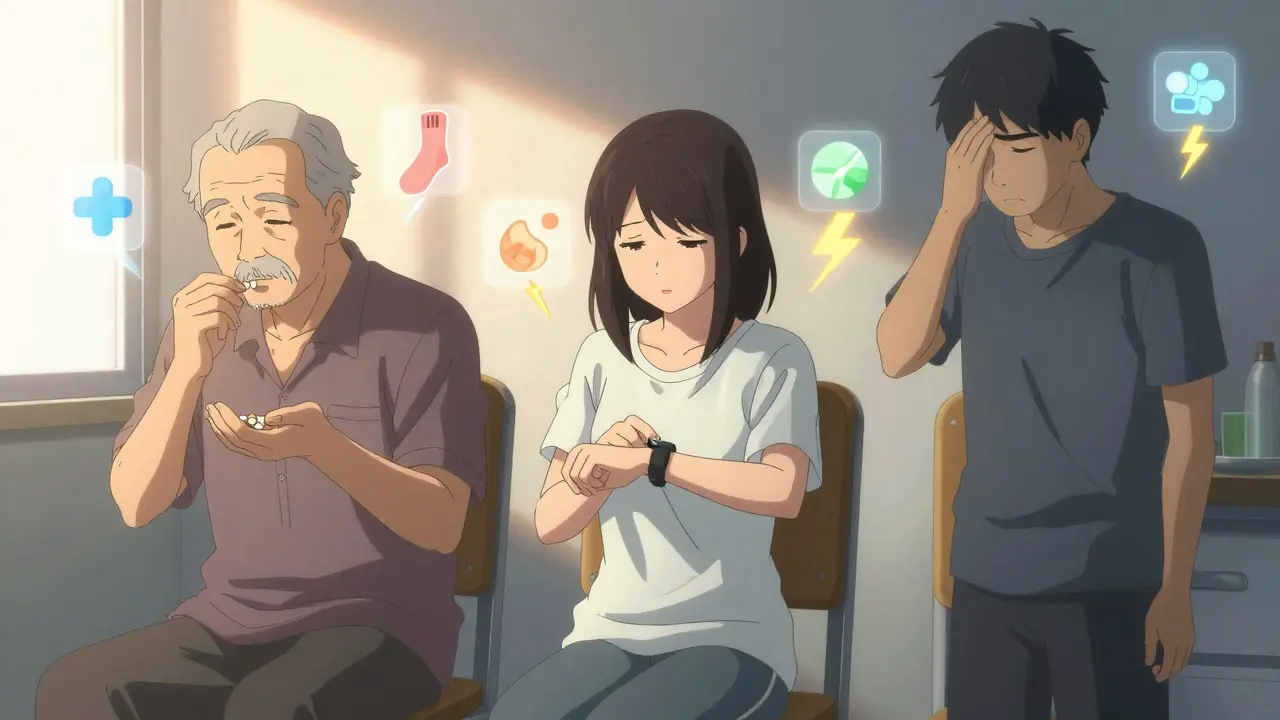
Beta-blockers can make you feel tired or cold. They may worsen asthma or cause depression in some. If you’re diabetic, you might not feel the warning signs of low blood sugar - like shakiness or sweating - because the drug masks them.
ARBs and ACE inhibitors can raise potassium levels. Too much potassium can cause heart rhythm problems. Avoid salt substitutes or potassium supplements unless your doctor says it’s safe.
Alpha-blockers like doxazosin can cause a sudden drop in blood pressure when you stand up. This is called orthostatic hypotension. It’s scary - you might feel dizzy or even pass out. Start with a low dose, take it at bedtime, and stand up slowly.
Safety Rules: What to Avoid
Some combinations are dangerous. Others are useless. And some can hurt you even if you think they’re harmless.
Never take an ACE inhibitor and an ARB together. It doesn’t lower blood pressure any better - but it sharply increases your risk of kidney failure and dangerously high potassium. The FDA and major guidelines warn against this.
NSAIDs like ibuprofen or naproxen can cancel out the effects of your blood pressure meds and damage your kidneys, especially if you already have kidney disease. Use acetaminophen instead for pain.
If you’re pregnant, most blood pressure drugs are off-limits. ACE inhibitors, ARBs, and direct renin inhibitors can cause birth defects or stillbirth. Methyldopa and labetalol are the safest choices during pregnancy.
Older adults are more sensitive. A dose that’s fine for a 40-year-old might make an 80-year-old fall. Start low. Go slow. Watch for dizziness, confusion, or fainting.
Alcohol can drop your blood pressure too far, especially with diuretics or alpha-blockers. It also makes side effects worse. Limit it. Don’t mix it with meds unless your doctor says it’s okay.
When You Need More Than One Drug
Most people need two or more medications to reach their target. About 70% of patients with high blood pressure require combination therapy. That’s not failure - it’s normal.
For stage 2 hypertension (140/90 or higher), current guidelines say to start with two drugs at once. Common combos include:
- ACE inhibitor + diuretic
- Calcium channel blocker + ARB
- Diuretic + calcium channel blocker
Fixed-dose combinations - one pill with two drugs - make it easier to take. Fewer pills mean better adherence. If your doctor prescribes a combo pill, ask if it’s available as a generic. It can cut your cost in half.
Some people need three or even four drugs. That’s not unusual. It just means your body needs more help. There’s no shame in that.
Adherence Is the Real Challenge
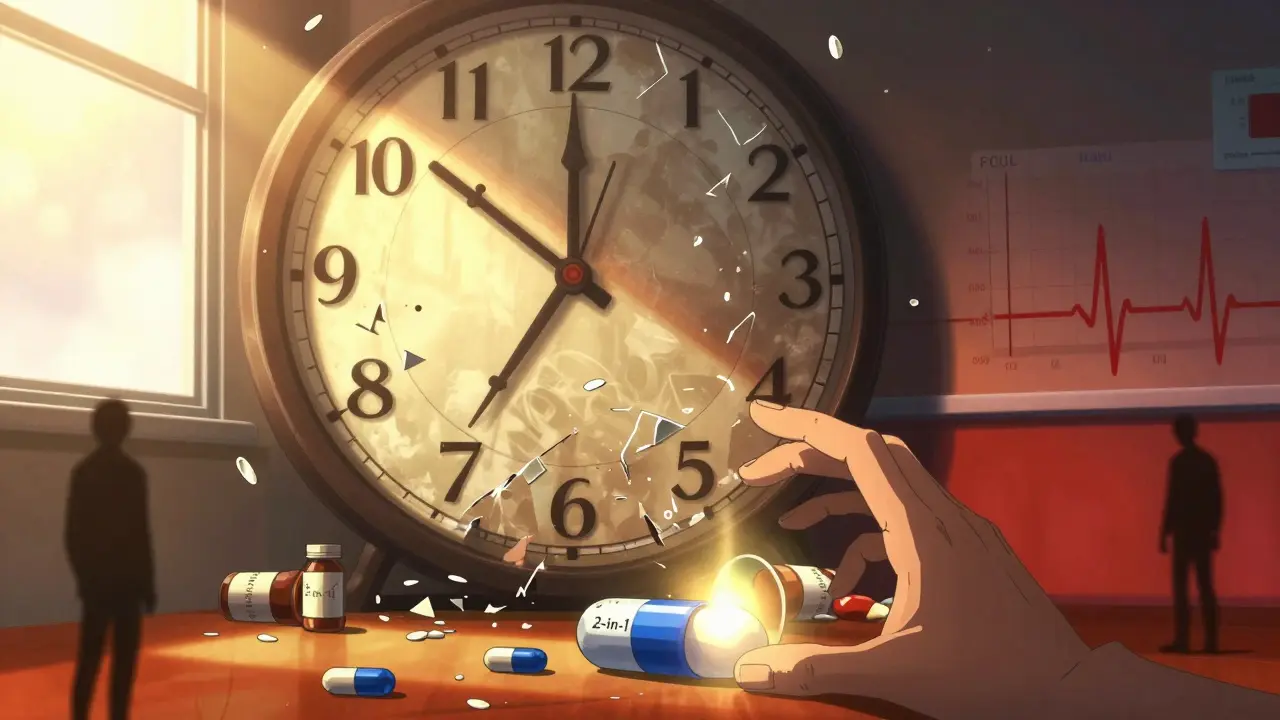
Here’s the hard truth: half of all people stop taking their blood pressure meds within a year. Not because they’re cured. Not because they feel better. But because they don’t feel worse.
Hypertension is silent. You take a pill every day for a condition you can’t see, feel, or hear. It’s easy to forget. Or skip. Or decide it’s not worth the side effects.
But stopping meds is dangerous. Blood pressure creeps back up. Risk rises. Stroke doesn’t wait.
Here’s how to stay on track:
- Use a pill organizer. Set phone alarms.
- Keep your meds where you’ll see them - next to your toothbrush or coffee maker.
- Don’t stop because you feel fine. That’s the whole point.
- Talk to your doctor about side effects. Don’t just quit. There’s usually another option.
- Use apps that track blood pressure and remind you to take pills. Studies show they improve adherence by 15-20%.
Medication isn’t a cure. It’s a tool. Like wearing a seatbelt. You don’t wear it because you expect a crash. You wear it because you don’t want to be the one who gets hurt.
What’s Next for Blood Pressure Treatment
Research is moving fast. Scientists are studying how your genes affect how you respond to certain drugs. One day, a simple blood test might tell your doctor whether you’re more likely to respond to a beta-blocker or a calcium channel blocker. That’s personalized medicine.
New drugs are in the pipeline - like endothelin blockers and novel vasodilators - but they’re still for rare, hard-to-treat cases. The real progress is in how we use existing drugs.
Studies like SPRINT showed that pushing systolic pressure below 120 mmHg reduces heart attacks and strokes in high-risk patients. But it also increases side effects like low blood pressure and kidney issues. So now, doctors don’t aim for one number for everyone. They tailor targets based on your age, heart health, and risk factors.
Combination pills are becoming more common. Smart monitors that sync with apps are helping people track trends at home. And telehealth makes follow-ups easier.
But none of this matters if you don’t take the pill. The best drug in the world won’t help if it’s sitting on the counter.
Final Thoughts: It’s Not About the Pill - It’s About the Habit
High blood pressure doesn’t care how smart you are, how fit you are, or how healthy you eat. It just needs to be managed.
Your medication isn’t a punishment. It’s protection. It’s the reason you’re still here, still walking, still breathing without a heart attack.
If a side effect is bothering you - tell your doctor. Don’t suffer silently. There’s almost always another option. Maybe a different drug. Maybe a lower dose. Maybe a combo pill that reduces the number of pills you take.
And if you’re thinking of stopping? Ask yourself this: What’s the cost of skipping one day? What’s the cost of skipping a year?
Blood pressure meds don’t fix your life. But they give you the chance to live it - longer, safer, and without fear.





Comments
Nicholas Urmaza
January 14, 2026 AT 22:38People act like taking blood pressure meds is a weakness but it’s not it’s strategy like wearing a seatbelt you don’t wait for a crash to buckle up
RUTH DE OLIVEIRA ALVES
January 15, 2026 AT 01:47It is imperative to underscore the clinical significance of medication adherence in the management of essential hypertension. Noncompliance not only elevates the risk of cerebrovascular and cardiovascular events but also imposes a substantial burden on public health infrastructure. Evidence-based guidelines consistently affirm the utility of pharmacologic intervention in asymptomatic individuals, as the absence of symptoms does not equate to the absence of pathological process.
Jan Hess
January 16, 2026 AT 17:01I used to skip my pills all the time until I had a scare last year now I take them like clockwork even on weekends
My doctor said if I kept going I’d be in the hospital by 40
Turns out feeling fine doesn’t mean you’re fine
Haley Graves
January 16, 2026 AT 21:06If you’re on a beta-blocker and you’re diabetic you need to know this your body won’t warn you when your sugar drops
That’s not a side effect it’s a silent danger
Check your glucose more often and talk to your endocrinologist
Diane Hendriks
January 17, 2026 AT 16:55This country is full of people who think they know better than doctors
Take your pills or move to a country that values science not self-help memes
High blood pressure doesn’t care about your lifestyle influencer phase
ellen adamina
January 18, 2026 AT 10:40I’ve been on lisinopril for six years and never had the cough
But my mom got it bad and switched to losartan
Just wanted to say it’s not everyone
Gloria Montero Puertas
January 18, 2026 AT 11:50It’s fascinating how the pharmaceutical industry has convinced an entire generation that daily chemical ingestion is synonymous with health…
Have you considered… nutrition? Movement? Sleep? Or is the pill just easier than changing your life?
And don’t even get me started on the marketing budgets behind these drugs…
Frank Geurts
January 19, 2026 AT 22:54As a medical professional with over two decades of clinical experience, I must emphasize that the data supporting combination therapy for Stage 2 hypertension is unequivocal.
Furthermore, the use of fixed-dose combinations significantly improves adherence rates, as demonstrated in multiple randomized controlled trials, including the ACCORD and ALLHAT studies.
It is incumbent upon clinicians to educate patients on the rationale for polypharmacy-not as a failure, but as a deliberate, evidence-based strategy to reduce long-term morbidity and mortality.
Arjun Seth
January 20, 2026 AT 22:24My uncle took these pills for 10 years and still had a stroke
So what’s the point?
They just make you feel worse for no reason
Why not just eat more garlic and pray?
Mike Berrange
January 21, 2026 AT 17:58Did you know that the FDA approved most of these drugs based on trials funded by the companies that make them?
And the dry cough from ACE inhibitors? That’s not a side effect-it’s your body rejecting a toxic compound.
And why are diuretics still first-line? Because they’re cheap-not because they’re best.
Wake up.
Dan Mack
January 22, 2026 AT 17:13They’re hiding the truth
These pills are part of a bigger plan
Big Pharma + the CDC + your doctor = control your body
They don’t want you healthy they want you dependent
Check the ingredients-there’s lithium in some of them
It’s not for your blood pressure it’s for your mind
Amy Vickberg
January 23, 2026 AT 18:44I get it. Taking pills every day feels meaningless when you feel fine.
But think of it like brushing your teeth-you don’t do it because your mouth hurts.
You do it because you don’t want to lose them.
And if you’re tired of the side effects? Talk to your doctor. There’s always another option.
You’re not failing. You’re just human.
And you’re worth the effort.