
Common Pharmacist Concerns About Generic Substitution: What Really Happens Behind the Counter
What Pharmacists Really Think About Generic Substitution
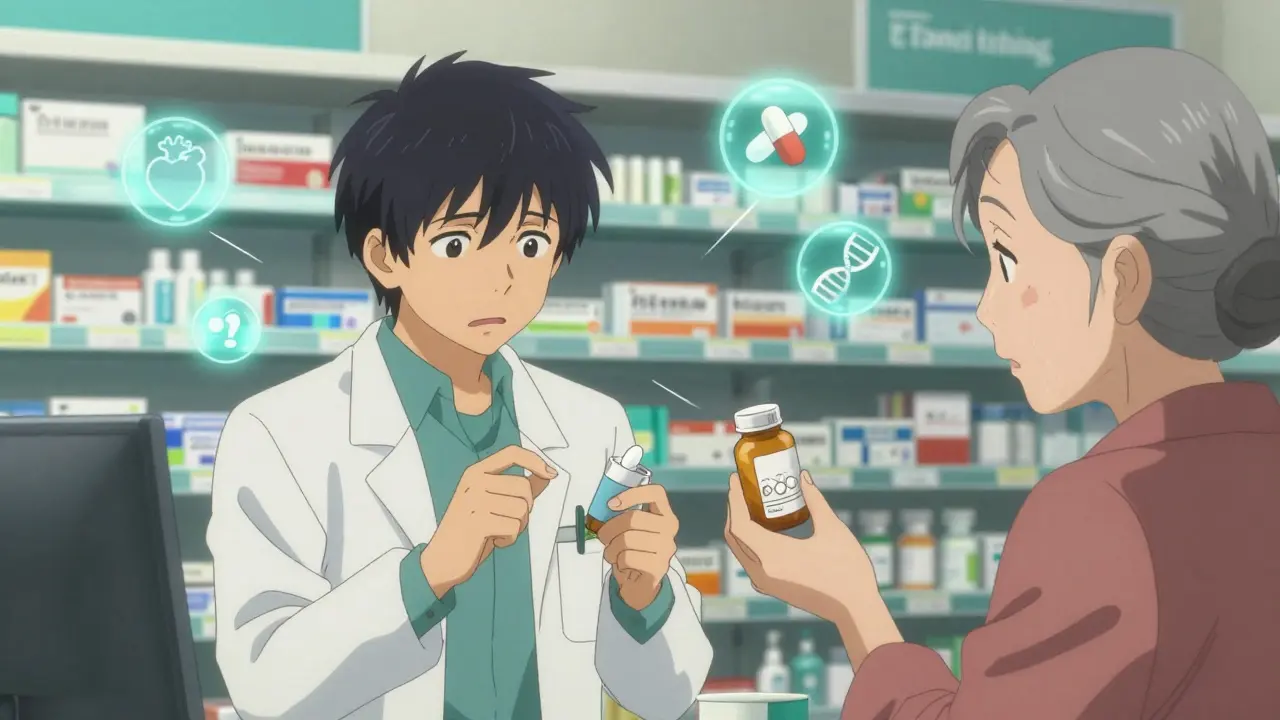
Every day, pharmacists in the UK and across the world face the same quiet dilemma: they’re asked to swap a brand-name pill for a cheaper generic version. It’s supposed to be simple - same active ingredient, same dose, same effect. But behind the counter, it’s never that easy. Patients stare at the new pill, confused. Some refuse outright. Others don’t understand why their medication looks different. And pharmacists? They’re caught in the middle - trying to save money, keep patients safe, and still get through their day.
The truth? Most pharmacists support generic substitution. It cuts costs. The generic substitution system was built to do exactly that: save patients money without sacrificing safety. In the U.S., the FDA requires generics to match brand drugs in absorption within 80-125%, and studies show the average difference is just 3.5%. That’s not a gap - it’s a rounding error. But knowing that doesn’t make the job any easier.
Patients Don’t Trust the Blue Pill
One of the biggest headaches isn’t the law or the science. It’s the patient.
Imagine a 72-year-old woman who’s been taking her brand-name blood pressure pill for 12 years. She knows the shape, the color, the little logo on it. One day, the pharmacist hands her a smaller, white, oval tablet. No logo. Different packaging. She asks, “Is this the same?” The pharmacist explains it’s bioequivalent. She doesn’t believe it. She’s heard rumors. She thinks generics are made overseas, in factories with lower standards. She’s not wrong to worry - she’s just misinformed.
Studies show nearly one-third of patients report negative experiences after switching. Some feel worse. Some get confused. Some stop taking their meds altogether. And when that happens, it’s not the generic’s fault - it’s the lack of clear communication. Patients don’t understand that a generic isn’t a “cheap copy.” It’s a legally approved, scientifically tested version of the same drug. But when a pharmacist has only three minutes between prescriptions, how do you explain that?
Doctors Don’t Talk About It - So Pharmacists Do
Here’s a startling fact: 64% of patients say their doctor never mentioned generic substitution. Not once. Not even when prescribing.
That means the pharmacist becomes the first - and sometimes only - person to explain the switch. But pharmacists aren’t trained to be medical educators. They’re trained to dispense, check interactions, and catch errors. Now they’re also expected to convince skeptical patients that a $5 pill is just as good as a $50 one.
And it’s worse for chronic conditions. For someone with epilepsy or thyroid disease, switching meds isn’t just about cost - it’s about stability. A tiny change in absorption can throw off a delicate balance. Pharmacists know this. They see the data. But they also see the fear in patients’ eyes. So they hesitate. Sometimes, they don’t substitute at all - even when they legally can.
The Narrow Therapeutic Index Problem
Not all drugs are created equal. Some have what’s called a narrow therapeutic index (NTI). That means the difference between a dose that works and a dose that harms is very small. Drugs like warfarin, levothyroxine, and some anti-seizure medications fall into this category.
Pharmacists are trained to flag these. In fact, many states and countries have rules that block automatic substitution for NTI drugs unless the prescriber specifically allows it. But even then, patients get confused. “Why can’t I get the cheap one?” they ask. Pharmacists have to explain that it’s not about money - it’s about safety. A 5% difference in absorption might be fine for an antibiotic. For warfarin? That could mean a stroke.
And then there’s the rise of biosimilars - complex biologic drugs that mimic things like insulin or rheumatoid arthritis treatments. These aren’t simple pills. They’re made from living cells. Even small changes in manufacturing can affect how they work. Pharmacists are now learning a whole new layer of substitution rules. And patients? They have no idea the difference between a generic pill and a biosimilar. The pharmacist has to explain it all - in plain language - before they even touch the bottle.
Time Is the Real Enemy
Pharmacists aren’t lazy. They’re stretched thin.
A typical pharmacy day involves 200+ prescriptions. Each one requires checking for interactions, verifying dosages, counseling patients, and answering questions. When a patient gets a generic, the pharmacist is expected to explain why it’s safe, why it’s cheaper, and why they have the right to refuse it. But only 38.5% of patients are even told they can say no.
In Australia, pharmacists reported spending up to 15 extra minutes per patient who resisted substitution. That’s 15 minutes taken from someone else’s care. And it’s not just about time - it’s about emotional labor. Patients get angry. They feel betrayed. They blame the pharmacist. And the pharmacist? They’re just trying to do the right thing.
Why Packaging Changes Make Everything Harder
Here’s something most people don’t realize: generic drugs often come in different shapes, sizes, and colors - even if they contain the exact same chemical.
Why? Because trademark laws prevent generics from looking identical to brand drugs. So a blue oval pill becomes a white capsule. A red tablet becomes a yellow one. For someone with dementia, or who takes six medications a day, that change is terrifying. They think it’s a different drug. They think they’re being poisoned.
Pharmacists have to spend extra time showing patients the label, pointing out the active ingredient, and reassuring them that the pill inside is the same. But when the pharmacy is busy, and the patient is confused, and the next person is waiting? That conversation gets skipped. And that’s when mistakes happen.

What Can Be Done?
There’s no magic fix. But there are small, real steps that help.
- Doctors need to talk about it first. If a prescriber says, “We’re switching to a generic to save you money,” patients are far more likely to accept it. That one sentence cuts resistance by half.
- Pharmacists need more time. Not just for counseling - for training. Many pharmacists weren’t taught how to explain bioequivalence to a worried retiree. That skill needs to be part of pharmacy education.
- Patient education materials need to improve. Brochures with tiny print won’t help. Simple visuals - side-by-side pill photos, clear labels, short videos - make a difference.
- Transparency matters. If a patient gets a different-looking pill, the pharmacist should say, “This is the same medicine, but made by a different company. Here’s the name of the active ingredient. You can check it yourself.”
And above all - patients need to know they have a right to refuse. Not just the legal right. The emotional right. To say, “I want the one I’ve always taken.” A good pharmacist won’t push. They’ll listen. They’ll document it. And they’ll call the doctor if needed.
It’s Not About Cost - It’s About Trust
At the end of the day, generic substitution isn’t a technical problem. It’s a human one.
Pharmacists aren’t against generics. They’re against being the ones who have to fix the system’s failures. They’re against being blamed when a patient feels worse. They’re against being the last line of defense for a healthcare system that doesn’t prepare anyone - not doctors, not patients, not even pharmacists - for what substitution really means.
The science says generics are safe. The data says they save money. But until patients trust them - and until doctors help build that trust - pharmacists will keep facing the same quiet battles, one pill at a time.
Are generic drugs really as effective as brand-name drugs?
Yes. The FDA requires generics to have the same active ingredient, strength, dosage form, and route of administration as the brand-name drug. They must also prove they’re absorbed into the body at the same rate and to the same extent - within 80-125% of the brand. Studies show the average difference in absorption is just 3.5%, which is clinically insignificant for most medications.
Why do generic pills look different from brand-name ones?
By law, generic drugs can’t look identical to brand-name versions because of trademark rules. So manufacturers change the color, shape, or size to avoid copying the brand’s appearance. But the active ingredient - the part that treats your condition - is exactly the same. The differences are only in inactive ingredients like dyes or fillers, which don’t affect how the drug works.
Can pharmacists substitute any drug with a generic version?
No. Certain drugs, especially those with a narrow therapeutic index (NTI) like warfarin, levothyroxine, or some anti-seizure medications, require special care. In many places, pharmacists can’t substitute these automatically - the prescriber must allow it. Even then, pharmacists often check with the doctor first, especially if the patient is stable on the brand version.
Do I have the right to refuse a generic substitution?
Yes. You always have the right to ask for the brand-name drug, even if a generic is available. Pharmacists are required to inform you of this option - though in practice, many don’t. If you’re not asked, speak up. You can also ask your doctor to write “Dispense as Written” or “Do Not Substitute” on your prescription.
Why do some patients feel worse after switching to a generic?
Sometimes, it’s psychological - the belief that a cheaper drug is worse can trigger real symptoms. Other times, especially with NTI drugs, a small change in absorption might affect someone who’s very sensitive. But in most cases, studies show no difference in outcomes. If you feel worse after switching, talk to your pharmacist or doctor. Don’t stop taking your medication. They can help determine if it’s the drug or something else.
Are biosimilars the same as generic drugs?
No. Biosimilars are not generics. Generics are exact copies of small-molecule drugs, like pills. Biosimilars are complex biological drugs - made from living cells - that mimic another biologic, like insulin or rheumatoid arthritis treatments. Because they’re more complex, they can’t be identical. They must be shown to be “highly similar” with no clinically meaningful differences. Pharmacists need special training to handle biosimilars, and substitution rules are stricter.
Why don’t doctors tell patients about generic substitution?
Many doctors don’t bring it up because they assume the pharmacist will handle it. Others aren’t fully aware of the cost savings or think patients won’t care. But studies show that when doctors mention generics during the prescription, patient acceptance increases dramatically. It’s not that doctors are hiding anything - it’s just not always part of the conversation.
How can I be sure my generic drug is safe?
Check the label. The active ingredient must match the brand-name drug exactly. You can also look up the drug on the FDA’s website or ask your pharmacist to show you the approval documentation. Generic drugs are held to the same manufacturing standards as brand-name drugs. The only difference is the company that makes them - not the quality.
What Comes Next?
If you’re a patient, ask questions. Don’t assume a new pill is wrong. Ask your pharmacist: “Is this the same as my old one?” If you’re a prescriber, mention generics when you write the script. If you’re a pharmacist - keep doing what you’re doing. You’re not just filling prescriptions. You’re preventing errors, saving money, and holding the system together.
The system isn’t perfect. But change doesn’t come from laws alone. It comes from conversations - one patient, one pharmacist, one pill at a time.



Comments
Wren Hamley
January 2, 2026 AT 13:02Okay, but let’s be real - the FDA’s 80-125% absorption window isn’t a rounding error, it’s a goddamn canyon. I’ve seen patients on levothyroxine go from rock-solid TSH levels to full-on hypothyroid chaos after a generic switch. It’s not placebo. It’s pharmacokinetics. And no, not all generics are created equal - some manufacturers cut corners on fillers that alter dissolution rates. The system’s broken when a $3 pill can literally make someone sick.
JUNE OHM
January 3, 2026 AT 06:33GENERIC DRUGS ARE MADE IN CHINA. THEY USE TALC FROM INDUSTRIAL WASTES AND DYES THAT CAUSE CANCER. MY COUSIN’S DOG GOT SICK AFTER EATING A GENERIC PILL. THEY DON’T WANT YOU TO KNOW THIS. #BIOHAZARD #BIGPHARMAISLIES
Kerry Howarth
January 4, 2026 AT 10:44Pharmacists are the unsung heroes here. They’re doing triage with empathy while the system ignores them. We need more time, not more regulations.
Lori Jackson
January 6, 2026 AT 06:20It’s not just about bioequivalence - it’s about *ethical integrity*. When you commodify human health to the point where a pill’s color matters more than its efficacy, you’ve surrendered to capitalism’s most grotesque iteration. The fact that patients are left to navigate this labyrinth without informed consent? That’s not healthcare. That’s exploitation dressed in white coats.
Angela Goree
January 6, 2026 AT 14:36My aunt took a generic for her heart meds - lost her balance, started hallucinating - and the pharmacist said, ‘It’s the same thing!’ Same thing?! She’s 78 and nearly fell down the stairs! This isn’t science - it’s Russian roulette with pills!
Philip Leth
January 8, 2026 AT 10:40Been a pharmacist in Texas for 18 years. I’ve seen it all. The truth? Most patients don’t care if it’s generic - until it’s not. Then they blame YOU. I hand them the pill, explain it’s the same active ingredient, show them the label - and half still walk out muttering about ‘Chinese poison.’ We need better patient education - not more rules.
Joy F
January 9, 2026 AT 16:51Let’s not pretend this is about safety. It’s about control. The pharmaceutical-industrial complex doesn’t want you to know that the same molecule, manufactured in the same facility, can be sold for 90% less - because then you’d realize the entire pricing model is a fraud. The ‘brand’ isn’t medicine - it’s branding. And we’re all just consumers in a performance art piece called ‘Modern Healthcare.’
Angela Fisher
January 10, 2026 AT 04:06Look, I’m not paranoid - I’ve done the research. The FDA doesn’t test generics for long-term effects. They test them for 2 weeks. TWO WEEKS. What about the 60-year-old on warfarin who’s been stable for a decade? They swap the pill, and now her INR spikes. Who’s liable? The pharmacist? The manufacturer? The FDA? NOBODY. And that’s the point. They want you scared enough to pay $50, but cheap enough to never question it. Wake up. The pills are being made in the same factories as your phone chargers. Same machines. Same workers. Same lack of oversight.
Shanahan Crowell
January 11, 2026 AT 05:21Everyone’s freaking out, but here’s the real win: if we just let pharmacists spend 5 extra minutes with each patient who’s confused - not just explain the science, but *listen* - we’d cut non-adherence by half. It’s not about the pill. It’s about the person holding it. We’re missing the forest for the tablets.
Haley Parizo
January 11, 2026 AT 17:10There’s a deeper truth here: we’ve turned medicine into a transaction, not a relationship. When a pharmacist is forced to be a salesperson, a counselor, a legal advisor, and a therapist - all while being underpaid and overworked - of course they can’t fix the system. The real question isn’t ‘Are generics safe?’ It’s ‘Why are we asking pharmacists to fix a broken system alone?’
Ian Ring
January 13, 2026 AT 00:02Interesting read. I’ve worked in a UK pharmacy for 14 years - and yes, patients *do* panic over colour changes. But here’s the thing: we always write the active ingredient on the bag in bold. We offer a leaflet. We give them a phone number. And we never push. If they say no - we respect it. It’s not about cost. It’s about dignity. And yes, doctors should mention it. But we’re not the enemy. We’re the bridge.
Ian Detrick
January 14, 2026 AT 09:12My dad’s been on levothyroxine for 22 years. We switched generics twice. No change. He’s stable. His TSH is perfect. I get the fear - I do. But don’t let fear silence the data. The science is clear. The problem isn’t the pill - it’s the silence around it.