
Crohn’s Disease: Managing Chronic Inflammation with Biologic Therapy

For someone living with Crohn’s disease, every flare-up feels like a battle you didn’t sign up for. Diarrhea that won’t stop. Abdominal pain that makes it hard to sit through a meeting. Fatigue so deep it doesn’t go away with sleep. And then there’s the fear - will this flare lead to a hospital stay? A surgery? A fistula that won’t heal? For decades, the only tools doctors had were steroids and immunosuppressants - treatments that helped some, but often left patients stuck in a cycle of flares and side effects. That changed with biologic therapy. Today, these targeted drugs are rewriting the story for millions with Crohn’s disease, offering real remission, not just temporary relief.
What Makes Crohn’s Disease Different
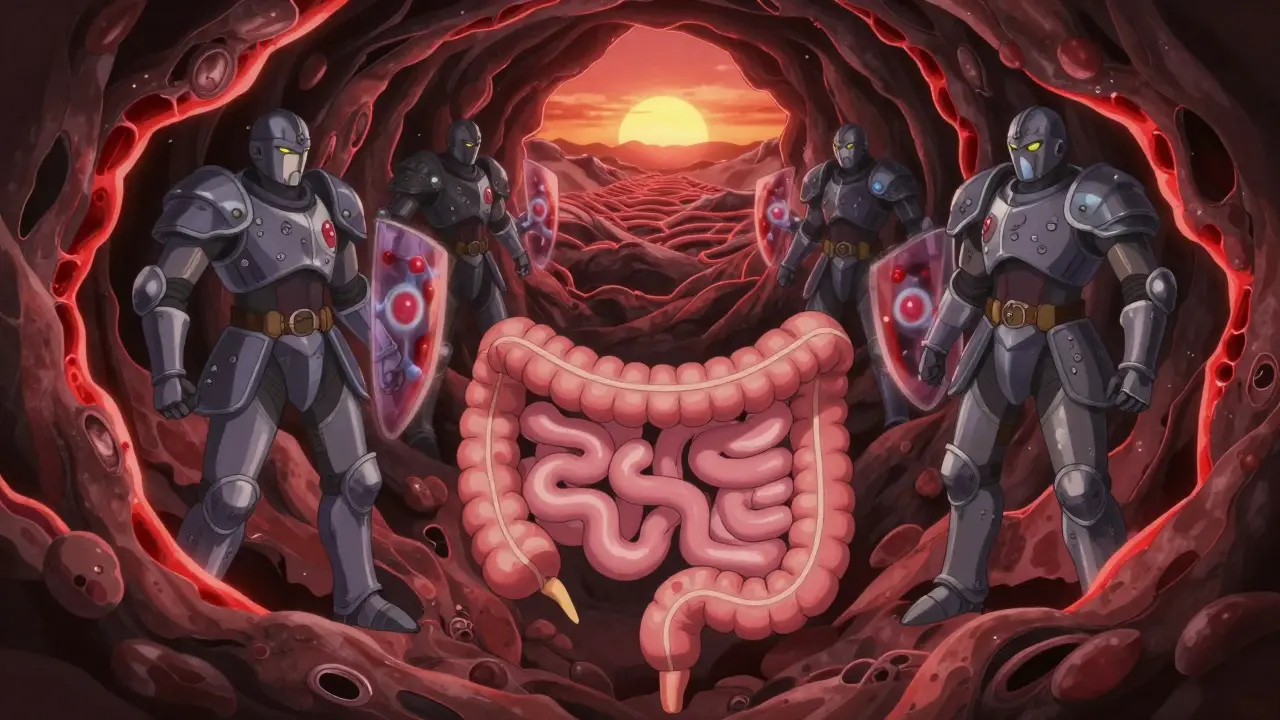
Crohn’s disease isn’t just ‘bad digestion.’ It’s a chronic immune system malfunction. Your body’s defenses turn on the lining of your gut, attacking harmless bacteria and your own tissue. This isn’t a one-time mistake - it’s a constant, misdirected war. The inflammation doesn’t stay on the surface. It cuts deep, through every layer of the intestinal wall. That’s why Crohn’s can cause strictures (narrowing), fistulas (abnormal tunnels), and abscesses. It can affect anywhere from your mouth to your anus, though most often it hits the end of the small intestine and the beginning of the colon.Genes play a role. If you have a family member with Crohn’s, your risk goes up. Mutations in the NOD2 gene, found in 30-40% of inherited cases, make your immune system overreact to gut bacteria. But genes alone don’t cause it. Environment matters too - smoking, diet, antibiotics in childhood, even where you live. The disease hits hardest in North America and Europe, with over 300 cases per 100,000 people. In Asia, it’s far rarer. Still, the number of cases is rising globally.
Unlike ulcerative colitis, which only affects the colon’s inner lining, Crohn’s jumps around. One patch of intestine is inflamed, the next looks normal. That makes diagnosis tricky. It often takes years. Many people go through multiple misdiagnoses - irritable bowel syndrome, food allergies, stress - before getting the right answer. By then, the inflammation has already caused damage.
How Biologics Stop the Inflammation
Biologic therapies are engineered proteins. They’re not pills. They’re injections or infusions. And they work like precision missiles, zeroing in on the exact molecules driving the inflammation.The first big breakthrough came with anti-TNF drugs. TNF-alpha is a key inflammatory signal. Too much of it = more damage. Drugs like infliximab (Remicade), adalimumab (Humira), and certolizumab (Cimzia) block TNF-alpha. They don’t calm the whole immune system. They silence just this one loudspeaker. In clinical trials, 30-40% of patients on anti-TNF drugs went into remission - double the rate of placebo. For many, it’s the first time in years they’ve had a full day without pain.
But not everyone responds to anti-TNF drugs. And some lose response over time. That’s where newer biologics come in.
Vedolizumab (Entyvio) works differently. Instead of targeting cytokines, it blocks white blood cells from even getting into the gut. It sticks to a molecule called α4β7 integrin - a kind of ‘door handle’ that immune cells use to enter intestinal tissue. Vedolizumab locks that handle. Only gut-specific cells are blocked. Other immune functions stay intact. That’s why it has fewer serious infections than anti-TNF drugs. But it takes longer to work - 10 to 14 weeks before you feel the difference.
Ustekinumab (Stelara) targets IL-12 and IL-23, two other key inflammatory signals. It’s especially useful for people who failed anti-TNF drugs. In trials, 34-44% of patients reached remission in just 8 weeks. And the effect lasts. Half of those patients stayed in remission a year later.
These aren’t magic bullets. But they’re the most effective tools we have. They don’t just reduce symptoms. They heal the gut lining. Studies show 40-60% of patients on biologics achieve mucosal healing - meaning the inside of their intestine looks normal again under a scope. That’s huge. It lowers the risk of surgery, hospitalization, and long-term complications.
Choosing the Right Biologic
There’s no one-size-fits-all. The choice depends on your disease pattern, your risks, and your life.If you have stricturing or fistulizing disease - the more aggressive forms - doctors often start with an anti-TNF. They work fast. If you’re in a flare, you need relief now. If you’ve had multiple flares, or if your colon is badly damaged, early biologic use cuts your surgery risk by half.
If you have joint pain, skin rashes, or eye inflammation (common extraintestinal symptoms), vedolizumab might be better. It’s less likely to trigger autoimmune reactions in other parts of the body. If you have a history of multiple sclerosis or optic neuritis, anti-TNF drugs are avoided. Ustekinumab is often the go-to here.
Cost matters too. Annual treatment ranges from $35,000 to $70,000. Insurance often requires trying older drugs first. But many patient assistance programs cover 30-50% of out-of-pocket costs. Biosimilars - cheaper copies of brand-name biologics - are now available for infliximab and adalimumab. They work just as well and cost 15-30% less.
Here’s how they stack up:
| Drug | Type | How It’s Given | Time to Effect | Remission Rate (8-12 weeks) | Annual Cost (USD) | Key Risk |
|---|---|---|---|---|---|---|
| Infliximab (Remicade) | Anti-TNF | IV infusion | 2-4 weeks | 30-40% | $40,000-$60,000 | Increased infection risk |
| Adalimumab (Humira) | Anti-TNF | Subcutaneous injection | 2-4 weeks | 30-40% | $35,000-$55,000 | Injection reactions, autoimmune side effects |
| Vedolizumab (Entyvio) | Integrin blocker | IV infusion | 10-14 weeks | 25-30% | $45,000-$65,000 | Slower onset |
| Ustekinumab (Stelara) | IL-12/23 inhibitor | Subcutaneous injection | 6-8 weeks | 34-44% | $50,000-$70,000 | Lower infection risk than anti-TNF |
Some patients do better on injections. Others prefer infusions every 8 weeks. Some can’t handle needles. Others hate sitting in a clinic for hours. Your lifestyle matters as much as your disease.

Monitoring and Managing Side Effects
Biologics are powerful. That means they need careful monitoring.Before starting, you’ll get tested for tuberculosis, hepatitis B, and heart conditions. Anti-TNF drugs can reactivate old TB infections. That’s why a simple skin test or blood test is mandatory.
Once you’re on treatment, doctors track your drug levels. This is called therapeutic drug monitoring. If your infliximab level drops below 3 μg/mL, you’re more likely to flare. If it’s above 7 μg/mL, you’re more likely to get infections. The sweet spot? Between 3 and 7. Same for adalimumab - aim for 5-12 μg/mL. Adjusting your dose based on these numbers can boost remission rates by 3.5 times.
Side effects vary. Infection risk is real. Pneumonia, urinary tract infections, and skin infections are more common. Serious infections like sepsis happen in 12-15 out of every 100 patients per year. That’s higher than with older drugs. But the trade-off? Fewer hospitalizations and surgeries.
Some patients develop antibodies to the drug. That’s why some lose response after a year. Switching to a different biologic often helps. Vedolizumab has lower immunogenicity - only 4% of patients develop antibodies, compared to 15-20% with anti-TNFs.
There are rare but serious risks. Lupus-like reactions, nerve damage, and lymphoma have been reported. These are uncommon - less than 1 in 1,000. But if you get unexplained fever, rash, or joint pain, tell your doctor right away.
And then there’s the mental toll. One in four patients on biologics report ‘infusion anxiety’ - panic before an infusion, dread of side effects, fear of needles. Cognitive behavioral therapy and support groups help. You’re not alone. Online communities like Reddit’s r/Crohns_Disease have over 150,000 members sharing stories, tips, and real-time advice.
Real Lives, Real Results
Take ‘CrohnWarrior87’ from Reddit. After 15 bowel movements a day and failing three conventional drugs, infliximab brought him down to two. He went back to work. He traveled. He got his life back.But not everyone has a smooth ride. ‘IBDSurvivor22’ developed a lupus-like reaction on Humira. It took six months of steroids to recover. That’s the risk. But that’s also why monitoring matters - catching side effects early can save you from worse outcomes.
Health Union’s 2023 survey of 1,207 patients found 78% felt their quality of life improved on biologics. Eighty-five percent reduced or stopped steroids. Seventy-two percent had fewer hospital visits. Sixty-eight percent stayed employed.
But cost is a barrier. Forty percent delayed doses because copays hit $150 or more per injection. That’s not just a number - it’s missed treatments, returning flares, lost workdays. Patient assistance programs exist. Insurance appeals work. You have to fight for access. Don’t give up.
What’s Next?
The future is brighter. New drugs are coming. Ozanimod, a pill that traps immune cells in lymph nodes, showed 37% remission in trials. Mirikizumab, targeting just IL-23, hit 40% endoscopic improvement. These could mean fewer injections and better outcomes.Biosimilars are already lowering costs. In the next five years, they could cut biologic prices by 15-30%. That’s millions of dollars saved for patients and the system.
But the biggest shift? Starting biologics earlier. Ten years ago, doctors waited until steroids failed. Now, guidelines recommend starting biologics right away for high-risk patients. Why? Because early treatment prevents irreversible damage. Once you have a stricture or fistula, drugs can’t undo it. Surgery becomes inevitable.
Managing Crohn’s isn’t about finding a cure. It’s about controlling the inflammation before it controls you. Biologics give you that chance. They’re not perfect. They’re expensive. They require effort. But for most, they’re the difference between living with disease - and living well.
What You Can Do Now
If you’re on biologics:- Keep track of your symptoms with an app like MyIBDCoach - 45% of users find it helpful.
- Ask your doctor about therapeutic drug monitoring. Don’t assume your dose is right just because you feel okay.
- Know your injection or infusion schedule. Missed doses raise flare risk.
- Report any new rashes, fevers, or joint pain immediately.
- Connect with an IBD nurse specialist. They’re available at 92% of major centers and can help with insurance, side effects, and emotional support.
If you’re not on biologics yet:
- Ask if you’re a candidate. If you have deep ulcers, fistulas, or failed steroids, you likely are.
- Don’t wait for ‘worse’ to start. Early treatment protects your gut.
- Explore financial aid. Many drugmakers offer copay cards or free medication programs.
Can biologics cure Crohn’s disease?
No, biologics don’t cure Crohn’s disease. But they can induce deep remission - meaning inflammation goes away, symptoms disappear, and the gut heals. Many people stay in remission for years. Some even stop flares completely. The goal isn’t a cure. It’s long-term control so you can live a full life.
How long do I need to stay on biologics?
Most people stay on biologics long-term. Stopping increases flare risk by 60-80% within a year. Even if you feel great, the inflammation may still be there under the surface. Your doctor may consider lowering the dose after years of remission, but stopping completely is rarely advised unless you’ve had deep healing for over 2 years and your doctor agrees.
Do biologics cause cancer?
There’s a small increased risk of lymphoma and skin cancer, especially with long-term use. But the risk is low - less than 1 in 1,000. The bigger danger? Uncontrolled Crohn’s disease. Chronic inflammation itself raises cancer risk. Biologics reduce inflammation, which lowers your overall cancer risk. The benefits outweigh the risks for most patients.
Can I get vaccines while on biologics?
Yes - but not live vaccines. You can safely get flu shots, pneumonia vaccines, and COVID boosters. Avoid live vaccines like MMR, varicella, or nasal flu spray. Get them before starting biologics if possible. Your doctor will check your vaccine history and update you.
What if my biologic stops working?
This happens in 30-46% of patients each year. It’s often due to antibodies building up against the drug. The fix? Switch to a different biologic with a different target - like moving from an anti-TNF to vedolizumab or ustekinumab. Your doctor may also check your drug levels and adjust your dose. Don’t wait for a flare - talk to your team early.
Are biosimilars as good as brand-name biologics?
Yes. Biosimilars are highly similar to the original drug, with no meaningful difference in safety or effectiveness. The FDA requires rigorous testing before approval. Many patients switch without issues. They’re cheaper, which makes them a smart choice if your insurance covers them.





Comments
Adam Rivera
January 13, 2026 AT 14:04Just wanted to say this post hit different. I’ve been on Humira for 3 years and honestly? It gave me back my life. No more hiding in bathrooms at work. No more dreading dinner with friends. I still get tired, but now it’s because I stayed up reading, not because my gut is staging a rebellion. Thanks for laying it all out like this.
Rosalee Vanness
January 14, 2026 AT 04:29I’m a nurse who works in GI, and I’ve seen patients go from wheelchair to hiking trails on these drugs. But I’ve also seen the quiet ones-the ones who skip doses because the copay is $200 and they’re choosing between insulin and their biologic. This isn’t just science. It’s survival. And if your insurance makes you jump through hoops before approving it, you’re not just fighting Crohn’s-you’re fighting a system that treats healing like a luxury. Please, if you’re reading this and you’re on biologics: you’re not weak for needing help. You’re a warrior.
Lethabo Phalafala
January 15, 2026 AT 15:52My sister got diagnosed at 19. She cried for three days straight. Then she Googled everything. Found this post. Started on vedolizumab. Two years later, she’s planning her wedding. No fistulas. No hospital stays. Just… life. I don’t know how to thank you for writing this. It’s like someone finally said out loud what we’ve been screaming into the void for years.
lucy cooke
January 16, 2026 AT 03:38How quaint. A 12,000-word manifesto on pharmaceuticals, delivered with the emotional nuance of a corporate whitepaper. Truly, the pinnacle of human insight. I suppose we should all be grateful that capitalism has finally found a way to monetize suffering with a 40% remission rate and a $70k price tag. How poetic. The body as a balance sheet. The gut as a quarterly report. I weep for the soul of medicine.
Trevor Davis
January 17, 2026 AT 04:23Look, I’ve been on two biologics. Both failed. I got the lupus thing too. But here’s the thing-this post didn’t sugarcoat it. And that’s rare. Most of these articles act like biologics are a magic wand. They’re not. They’re a gamble with side effects that feel like your immune system’s revenge. But? I’d take the gamble again. Because not trying meant losing my job, my relationships, my dignity. So yeah. It’s messy. But it’s worth it.
John Tran
January 18, 2026 AT 02:01ok so i just read this whole thing and like… i think i need to talk to my doc but also i dont know if i can afford it and also i think my insurance is gonna make me try imuran first even though it made me feel like death for 6 months and also why is there no pill version of these drugs yet like why do i have to sit in a clinic for 2 hours and get poked and why cant i just take a pill like normal people?? also i saw someone say biosimilars are good but i dont trust them like are they really the same?? like what if theyre just cheap knockoffs??
Trevor Whipple
January 19, 2026 AT 04:37Anyone else notice how this post completely ignores the fact that 30% of people on biologics develop antibodies and lose response? Or that the real cure is a low-FODMAP diet and fasting? No? Of course not. Big Pharma doesn’t want you to know that. You’re being sold a $70k placebo while real solutions sit in a lab gathering dust. Wake up. Your gut isn’t broken-it’s poisoned by processed food and stress. Fix that first. Then maybe you won’t need a biologic.
laura Drever
January 19, 2026 AT 09:47Too long. Didn’t read. But I’m sure it’s great. Biologics. Cool. Cost? Bad. Got it. ✌️
Randall Little
January 20, 2026 AT 13:28Interesting how the article cites a 78% quality-of-life improvement but doesn’t mention that 40% of patients delay doses due to cost. That’s not a success story. That’s a systemic failure dressed in clinical language. And yet, the tone here is ‘miracle drug.’ No irony? No critique? Just corporate cheerleading? I’m not mad. I’m just… disappointed.
Nelly Oruko
January 21, 2026 AT 18:37I’ve been on Stelara for 18 months. My colon looks clean on scope. I haven’t had a flare in over a year. But I still have anxiety before every injection. I count the seconds. I cry sometimes. It’s not just the medicine. It’s the weight of knowing this is what it takes to stay alive. This post? It didn’t just inform me. It felt like someone finally saw me.
vishnu priyanka
January 22, 2026 AT 09:49From India, where biologics are a dream and steroids are the only option. Saw this post and cried. We don’t have access. We don’t have insurance. We don’t have hope. But we still read. We still learn. Maybe one day, someone will make this affordable. Until then, thank you for writing this. It’s the closest thing to justice we’ve had.
Angel Tiestos lopez
January 22, 2026 AT 11:42bro this is the most real thing i’ve read all year 🙏 i’ve been on infliximab for 2 years and i still get nervous before infusions but now i can play with my niece without being scared i’ll need to run to the bathroom. also biosimilars are legit-my cousin switched and saved like $15k a year. no side effects. just… life. 🌱❤️
James Castner
January 23, 2026 AT 15:07Let us not mistake the machinery of modern medicine for the essence of healing. Biologics are not cures-they are sophisticated palliatives, elegant Band-Aids stitched onto the wound of a broken immune system. The real question is not whether they work, but why we have allowed the human body to become a battlefield of corporate patents and insurance algorithms. We have traded the wisdom of holistic care for the convenience of molecular targeting. We have outsourced resilience to pharmaceutical laboratories. And yet, in the quiet hours, when the IV drip slows and the silence returns, we are still alone with our pain. The science is brilliant. The humanity? Still in development. Let us not confuse efficacy with redemption. Healing requires more than antibodies. It requires belonging. It requires dignity. It requires a world that does not make survival contingent upon credit scores.