
High-Dose Statins After Stroke: What the Evidence Says About Benefits and Risks
Statin Risk-Benefit Calculator
Your Medical Profile
Results
Enter your medical information to see personalized risk-benefit analysis.
This tool is for educational purposes only and should not replace medical advice.
After a stroke, many people are told to start a high-dose statin-often 80 mg of atorvastatin-to lower their risk of another one. It sounds simple: take the pill, lower your cholesterol, stay safe. But the reality is more complicated. For some, it’s life-saving. For others, it brings side effects that make them question whether the trade-off is worth it. So what does the science really say?
Why High-Dose Statins Are Prescribed After Stroke
Strokes happen when blood flow to the brain is blocked-usually by a clot formed from fatty deposits in arteries. Statins work by blocking an enzyme your liver uses to make cholesterol. High-dose statins, like atorvastatin 80 mg, can slash LDL (bad) cholesterol by 50% or more. That’s far more than moderate doses, which typically drop it by 30-40%.
The biggest evidence comes from the SPARCL trial, which tracked over 4,700 people who’d recently had a stroke or TIA. After nearly five years, those on high-dose atorvastatin had a 16% lower chance of having another stroke. That might not sound huge, but in real numbers: out of 100 people, 13 would have another stroke on placebo. On high-dose statin, that number dropped to 11. That’s 2 fewer strokes per 100 people over nearly five years.
It’s not just about cholesterol. Statins also reduce inflammation in blood vessels and help stabilize plaques so they’re less likely to break off and cause clots. That’s why they’re especially helpful for people whose stroke was caused by atherosclerosis-narrowing arteries from fatty buildup. For them, high-dose statins can cut the risk of another ischemic stroke by up to 30%.
The Hidden Risk: Bleeding in the Brain
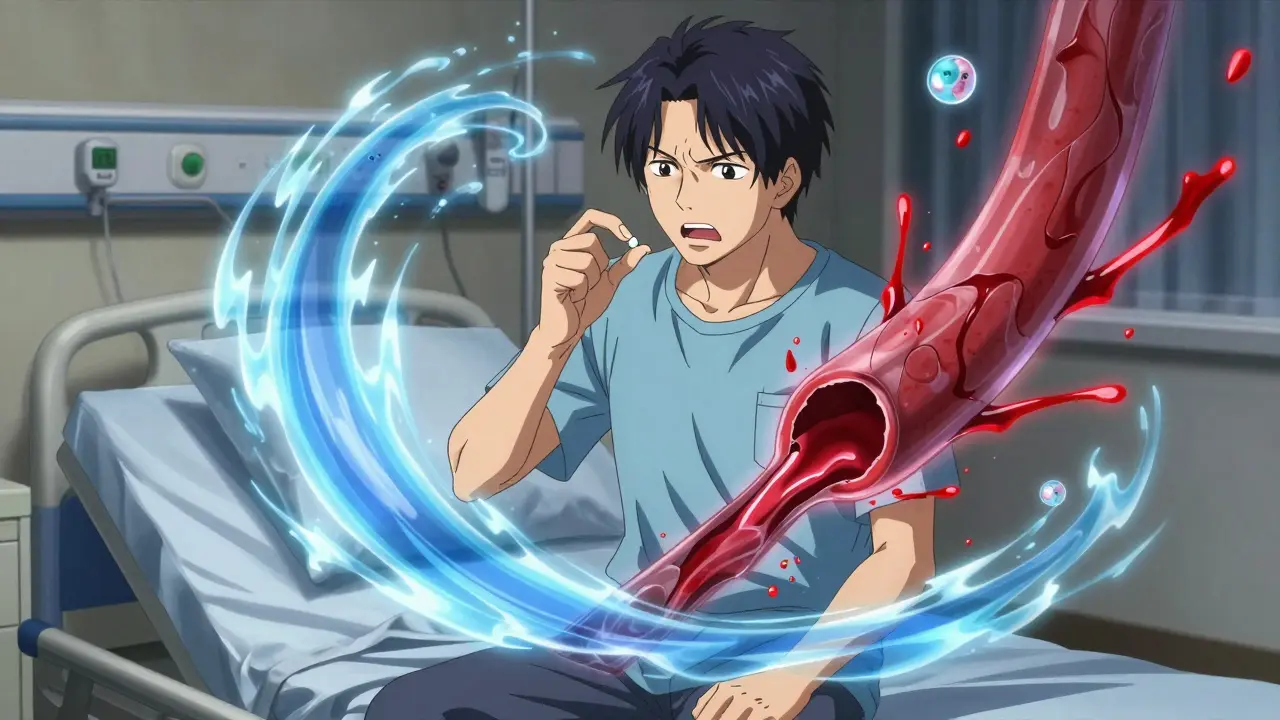
But here’s the catch. That same SPARCL trial found a downside: more brain bleeds. While only 1.4% of people on placebo had a hemorrhagic stroke, 2.3% on high-dose atorvastatin did. That’s a 65% increase in absolute risk.
Why does this happen? Statins lower cholesterol so aggressively that they may weaken the walls of small blood vessels in the brain, especially in people with existing high blood pressure or amyloid angiopathy (a condition where proteins build up in brain vessels). The risk isn’t huge-but it’s real. And it’s why guidelines don’t blindly recommend high-dose statins for everyone after stroke.
If your stroke was caused by a bleed in the brain (hemorrhagic stroke), statins aren’t usually recommended. They don’t help prevent another bleed-and might make it more likely. Even for ischemic stroke survivors, doctors now weigh this risk carefully. If you’ve had a small brain bleed in the past, or have uncontrolled high blood pressure, high-dose statins might not be the best choice.
Side Effects People Actually Experience
Most people tolerate statins fine. But for some, the side effects are hard to ignore.
- Muscle pain or weakness: Reported by 5-10% of users. It’s often mild, but can be enough to make people stop taking the pill. Sometimes it’s just soreness. In rare cases, it can lead to muscle breakdown (rhabdomyolysis), which is dangerous.
- Liver enzyme changes: About 1-2% of people on high-dose statins see elevated liver enzymes. This usually doesn’t mean liver damage, but doctors monitor it with blood tests.
- Digestive issues: Nausea, gas, or constipation affect 1-3% of users.
- Brain fog: Some patients report memory lapses or mental fuzziness. Studies haven’t proven this is caused by statins, but enough people describe it that doctors take it seriously.
Here’s what matters most: if you feel side effects, don’t quit cold turkey. A 2023 study found that nearly one in three stroke survivors stopped their statin within six months-and those people had a 42% higher risk of another stroke. The answer isn’t always stopping. It’s switching. Trying a lower dose. Switching from atorvastatin to rosuvastatin. Or even taking it every other day. These tweaks often reduce side effects without losing protection.

What About Other Lipid-Lowering Drugs?
Statins aren’t the only option. Newer drugs like PCSK9 inhibitors (alirocumab, evolocumab) lower LDL even more than high-dose statins-by 60% or more. And crucially, they don’t seem to increase the risk of brain bleeds.
So why aren’t they first-line? Cost. These injectables cost over $10,000 a year, and insurance often won’t cover them unless you’ve tried and failed statins. They’re also not approved for routine use after stroke yet. But for someone who can’t tolerate statins-or has a history of brain bleeds-they’re a game-changer.
There’s also ezetimibe, a pill that blocks cholesterol absorption in the gut. Used with a moderate-dose statin, it can lower LDL almost as much as high-dose statins alone-and with fewer side effects. It’s cheaper than PCSK9 inhibitors and often covered by insurance.
Who Should Take High-Dose Statins? Who Should Avoid Them?
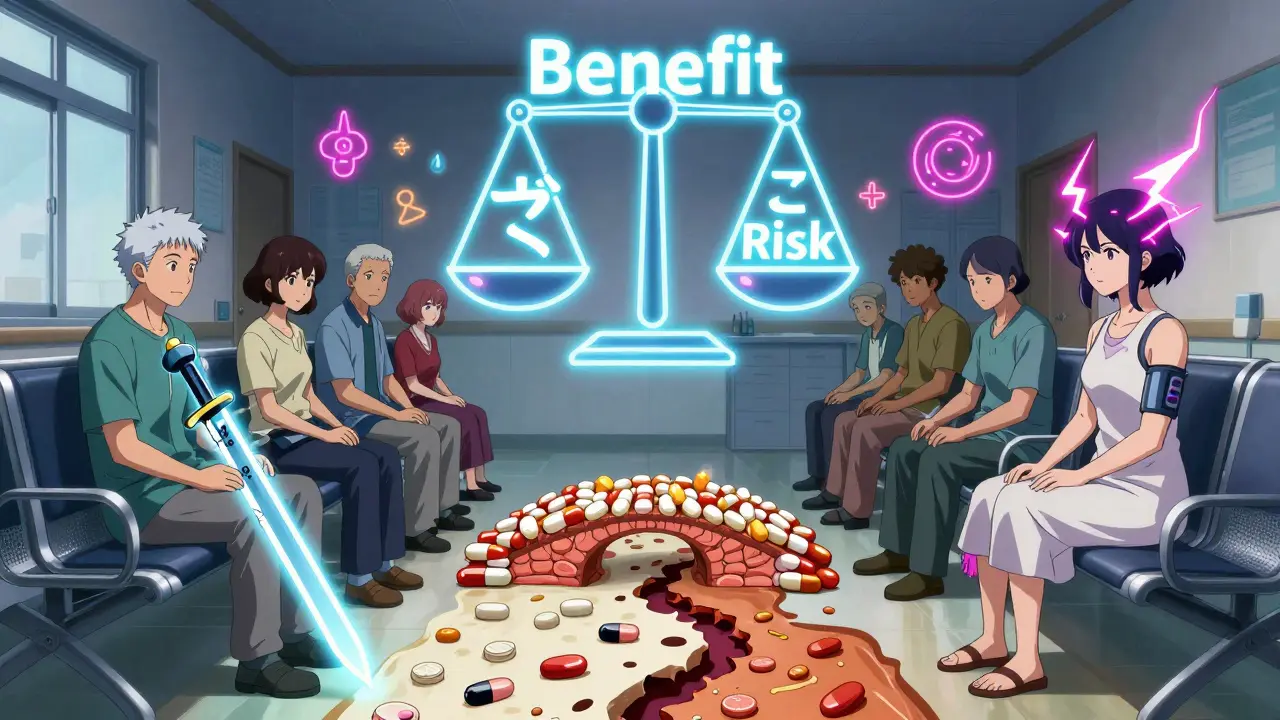
Not everyone benefits equally. The biggest winners are people with:
- Ischemic stroke caused by atherosclerosis (plaque in arteries)
- LDL cholesterol above 100 mg/dL
- No history of brain bleeds
- No severe liver disease or pregnancy
People who should think twice:
- Those who had a hemorrhagic stroke
- People with uncontrolled high blood pressure
- Those who’ve had serious muscle side effects from statins before
- Patients on certain medications like cyclosporine, amiodarone, or some antifungals (these can raise statin levels dangerously)
And here’s something many don’t realize: timing matters. A 2024 study found that starting high-dose statins within 72 hours of stroke didn’t improve recovery or reduce stroke risk in the first 90 days. But it also didn’t increase bleeding. So if you’re stable, starting statins early is safe-but not necessarily faster-acting.
How Doctors Monitor You on High-Dose Statins
If you’re prescribed a high-dose statin, your doctor will want to check a few things:
- Liver enzymes: Baseline test before starting, then again at 3 and 6 months.
- CK levels: Creatine kinase checks for muscle damage. Only needed if you have muscle pain.
- LDL levels: Usually checked at 4-12 weeks to see if you’re hitting the target (often below 70 mg/dL).
- Blood pressure: Especially important if you’re at risk for brain bleeds.
Most side effects show up early. If you’re feeling fine after 6 months, you’re likely in the clear. But don’t skip follow-ups. Many problems happen quietly.
Real-World Challenges: Why People Stop
Even when statins work, people stop taking them. In the U.S., only about half of stroke survivors get a statin prescription when they leave the hospital. And of those, 30% quit within six months.
Why? The top reasons:
- “I don’t feel any different.”
- “My legs hurt.”
- “I heard statins cause dementia.”
- “It’s too expensive.”
Here’s the truth: statins don’t cause dementia. In fact, some studies suggest they might protect against it. And cost? Generic atorvastatin 80 mg costs less than $10 a month in the U.S. But insurance companies sometimes push cheaper alternatives like simvastatin 80 mg-which the FDA warns can cause dangerous muscle damage, especially with blood pressure meds.
The best advice? Talk to your doctor before stopping. There’s almost always a way to keep the benefits and reduce the downsides.
The Bottom Line
High-dose statins after stroke are powerful-but not perfect. For most people with ischemic stroke and high cholesterol, they reduce the chance of another stroke by about 1 in 5. That’s meaningful. But for some, the risk of muscle pain or brain bleeding makes them a bad fit.
The goal isn’t to take the highest dose possible. It’s to take the lowest effective dose that keeps you protected. That might mean 80 mg of atorvastatin. Or 40 mg. Or 10 mg with ezetimibe. Or even a PCSK9 inhibitor if you’re high-risk and can afford it.
Statin therapy isn’t a one-size-fits-all. It’s a personal decision, shaped by your stroke type, your health history, your side effects, and your goals. The best outcome isn’t just avoiding another stroke. It’s living well without being crushed by side effects.
Ask your doctor: “Is this dose right for me-or can we find a better balance?” That conversation could make all the difference.



Comments
Brenda King
January 20, 2026 AT 15:23My dad took 80mg atorvastatin after his stroke and started having muscle pain so bad he could barely walk
He switched to 40mg + ezetimibe and now he’s hiking every weekend
Don’t assume higher dose = better. Sometimes less is more.
Keith Helm
January 21, 2026 AT 04:54It is imperative to note that the SPARCL trial demonstrated a statistically significant reduction in recurrent ischemic events, with a number needed to treat of 50 over five years. The increase in hemorrhagic stroke risk, while notable, remains within acceptable bounds for appropriate candidates.
Chiraghuddin Qureshi
January 21, 2026 AT 16:22From India, we see so many patients on statins and never get labs done 😅
My uncle took 80mg, got liver issues, switched to 10mg + garlic 🧄
Now he’s fine. Sometimes nature knows better 🙏
Lauren Wall
January 21, 2026 AT 19:55If you’re taking statins just because your doctor said so, you’re doing it wrong.
Kenji Gaerlan
January 23, 2026 AT 05:43statins are just big pharma’s way of making money off people who dont even need em
my bro took em for 3 months and got weird brain fog
he quit and now he’s fine lmao
Oren Prettyman
January 23, 2026 AT 06:50It is worth considering whether the marginal benefit observed in the SPARCL trial, amounting to a 16% relative risk reduction in recurrent stroke, is ethically justifiable when weighed against the 65% increase in hemorrhagic stroke incidence, particularly in populations with undiagnosed cerebral amyloid angiopathy or uncontrolled hypertension. The current guidelines appear to be overly permissive, potentially exposing vulnerable subgroups to disproportionate harm.
Tatiana Bandurina
January 24, 2026 AT 06:20Let’s be honest-most doctors don’t care about your muscle pain. They just want you to take the pill because it’s in the protocol.
And then when you stop, they blame you for ‘noncompliance’.
It’s not your fault. It’s the system.
Philip House
January 25, 2026 AT 16:48Statins are a symptom of our medical industrial complex.
We treat cholesterol like a villain instead of asking why the body is making it.
Evolution didn’t design us to live on processed carbs and sit in cubicles.
Maybe the real fix is lifestyle-not a pill that lowers LDL but also kills your will to live.
Ryan Riesterer
January 26, 2026 AT 09:31LDL <70 mg/dL remains the target per AHA/ACC 2022 guidelines for secondary prevention of ischemic stroke. High-intensity statin therapy is first-line unless contraindicated. PCSK9 inhibitors are indicated for statin-intolerant patients with residual risk, but cost and access remain barriers. Ezetimibe is underutilized as an adjunct.
Monitoring CK and LFTs at 4-12 weeks is standard.
Brain hemorrhage risk is real but context-dependent.
Akriti Jain
January 26, 2026 AT 20:06Did you know the FDA quietly approved statins after a 3-month trial with 47 people?
Big Pharma paid off the SPARCL researchers 💸
And now they’re telling you it’s ‘evidence-based’?
Check your blood pressure before you take that pill… or your brain might just ‘bleed out’ 😏