
How the Microbiome Affects Drug Side Effects and Personalized Medicine
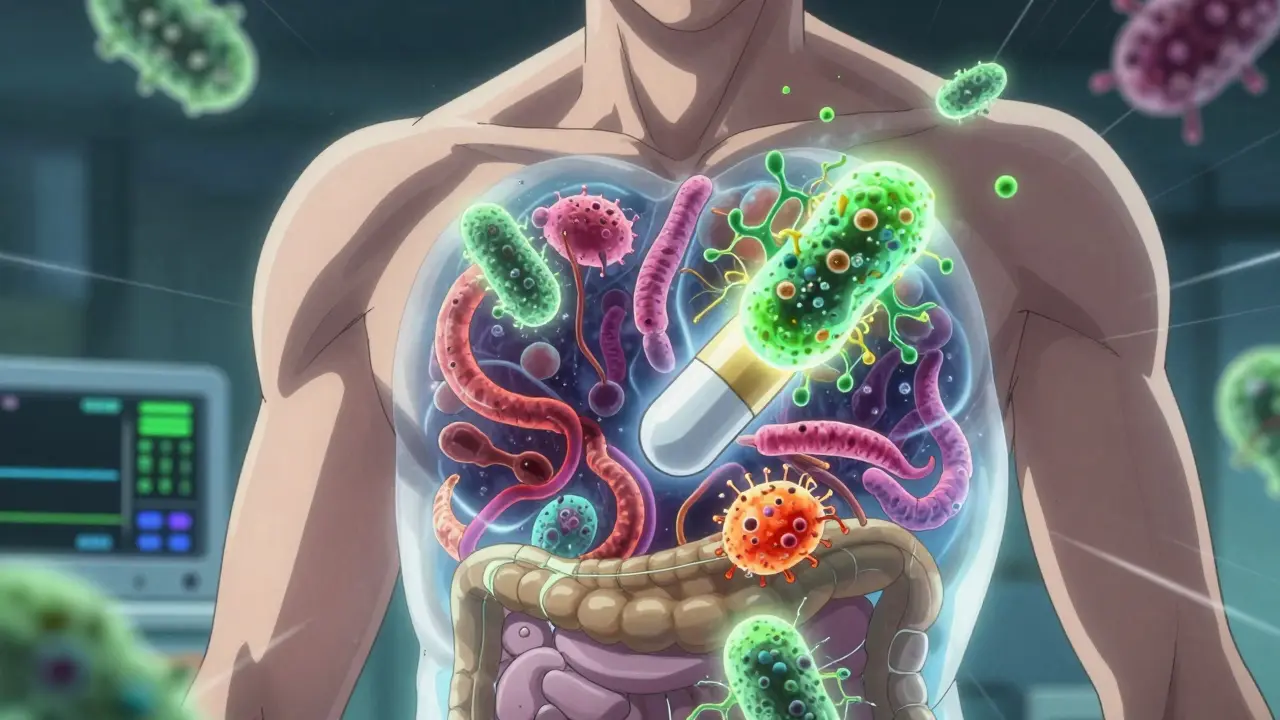
When you take a pill, you assume it works the same way for everyone. But what if your gut bacteria are changing how that drug behaves in your body-making it toxic for you but safe for someone else? This isn’t science fiction. It’s happening right now, and it’s explaining why some people end up in the emergency room after taking common medications while others feel fine.
The human gut is home to trillions of bacteria, viruses, and fungi-collectively called the microbiome. For decades, scientists focused on how the liver and kidneys process drugs. But research since 2019 has flipped that thinking. Microbiome isn’t just about digestion or immunity anymore. It’s a hidden player in how drugs are activated, broken down, or turned into dangerous substances.
Why Your Gut Bacteria Change How Drugs Work
A landmark 2019 study from Yale University showed that gut microbes directly transform three common drugs into toxic metabolites. In some patients, up to 80% of the harmful byproducts came from bacterial activity, not human metabolism. That means two people taking the same dose of the same drug could have wildly different outcomes-one feels relief, the other ends up with severe diarrhea, liver damage, or even organ failure.
These changes happen because gut bacteria carry enzymes that human cells don’t. They can:
- Convert inactive prodrugs into their active form (like prontosil turning into sulfanilamide)
- Reactivate drugs that were meant to be detoxified (like SN-38-glucuronide turning back into toxic SN-38)
- Break down medications before they’re absorbed, reducing their effectiveness (like digoxin being inactivated by Eggerthella lenta)
The colon is ground zero for this. With up to 100 billion bacteria per milliliter, and food sitting there for 24 to 72 hours, there’s plenty of time for microbes to chemically alter drugs. The result? A drug that should help can suddenly harm.
Real-World Examples: Drugs That Go Wrong Because of Gut Bacteria
Some drug reactions are now directly linked to specific bacterial strains:
- Irinotecan (chemotherapy): Up to 40% of patients develop severe, life-threatening diarrhea because gut bacteria produce beta-glucuronidase, an enzyme that reactivates a toxin called SN-38. Studies show patients with higher levels of this enzyme have 87% more diarrhea severity.
- Clonazepam (anti-seizure): Germ-free mice had 40-60% higher levels of this drug in their blood than mice with normal gut flora. That suggests gut bacteria normally break it down-so without them, the drug builds up, increasing overdose risk.
- Digoxin (heart medication): About 30% of people don’t respond to digoxin at all. The reason? A strain called Eggerthella lenta breaks it down before it can work. This isn’t random-it’s predictable based on microbiome profiles.
- Lovastatin (cholesterol drug): Long-term antibiotics can wipe out gut bacteria that help metabolize statins. One study found this reduced the drug’s effectiveness by 35%, raising cholesterol levels despite treatment.
These aren’t rare edge cases. A 2023 review identified 117 drugs affected by the microbiome. Eighty-two percent of them lost effectiveness due to bacterial metabolism. Eighteen percent became more toxic. That’s not a small percentage-it’s a major blind spot in modern medicine.
The Hidden Cost: Emergency Visits and Failed Treatments
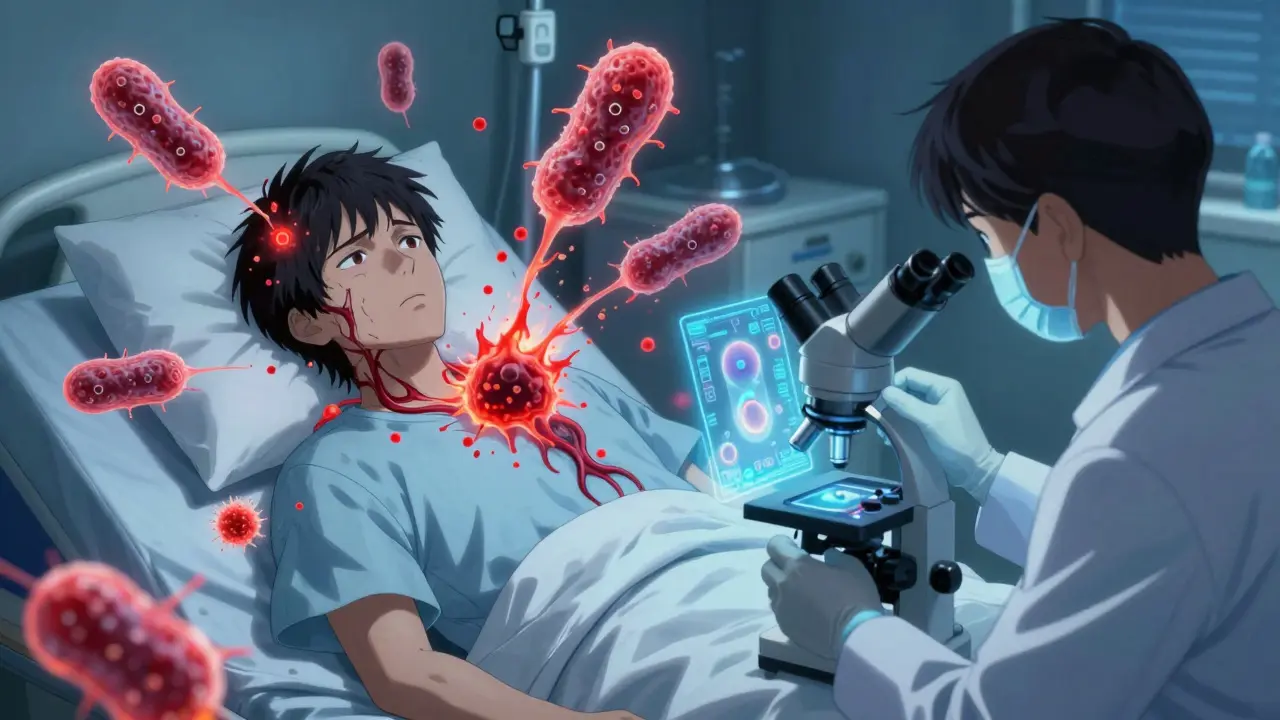
The CDC reports that adverse drug reactions send 1.3 million Americans to emergency rooms every year. Many of these cases are labeled as "unexplained" or "idiosyncratic." But the microbiome may be the missing piece.
Imagine a cancer patient on irinotecan. Their doctor prescribes the standard dose based on weight and kidney function. But if their gut has high levels of beta-glucuronidase, that dose becomes a poison. They end up in the hospital with dehydration, infection, and sepsis. The same dose might be fine for someone else.
Pharmaceutical companies are starting to notice. Since 2020, Pfizer and Merck have begun screening new drugs for microbiome interactions during early trials. They’re spending an extra $2.5 million per drug on these tests-but they’re avoiding $500 million in post-market lawsuits and recalls. It’s not just science. It’s smart business.
How Scientists Are Measuring Your Microbiome’s Drug Impact
Researchers now use three main methods to study how gut bacteria affect drugs:
- In vitro screening: A 3 mL stool sample is mixed with a drug in a lab dish. After 48 hours, scientists check what metabolites form. This is fast and cheap-used by most labs today.
- Gnotobiotic mice: These are mice raised with no microbes, then given specific human bacteria. Scientists can test how each strain changes drug behavior. Each mouse costs $850-$1,200 and takes 8 weeks to study.
- Human trials: Small studies with 50+ people track drug levels, side effects, and microbiome changes over 12 weeks. This is the gold standard-but slow and expensive.
Metagenomic sequencing can now identify which drug-transforming genes are present in a person’s gut. At $300-$500 per test, it’s becoming accessible. One study showed this method predicts drug metabolism with 89% accuracy.
What’s Being Done to Fix This?
Scientists aren’t just identifying the problem-they’re building solutions:
- Beta-glucuronidase inhibitors: A drug to block the enzyme that reactivates SN-38 is in Phase II trials. Early results show 60% fewer cases of chemotherapy-induced diarrhea.
- Personalized probiotics: Companies are testing probiotics designed to either block or enhance specific drug-metabolizing bacteria. One trial (NCT05102805) is testing a pill that stops irinotecan toxicity without affecting other gut functions.
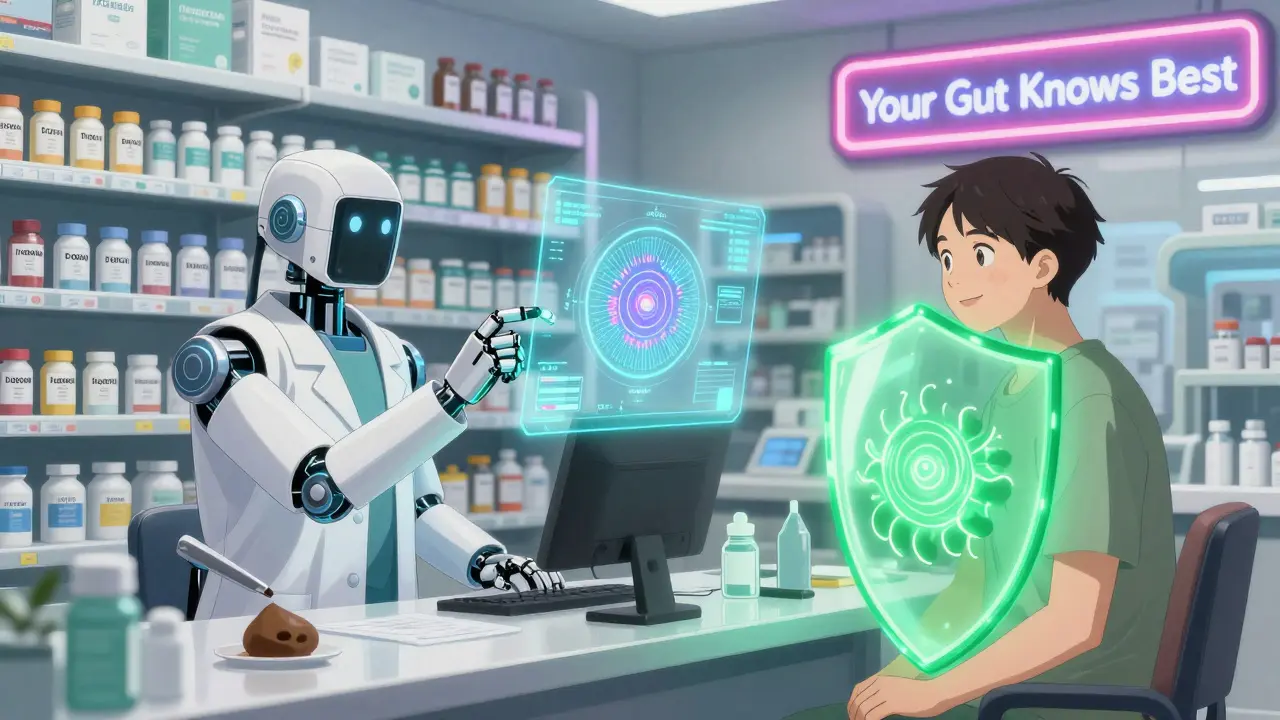
- Microbiome-informed dosing: Imagine a future where your doctor doesn’t just check your weight and age-they check your stool sample. Algorithms could adjust your drug dose based on your bacterial profile. Early models predict this could cut adverse reactions by 25-35%.
- Fecal transplants: For patients with extreme drug sensitivity, replacing their microbiome with one from a healthy donor has shown promise. Costs range from $3,000 to $6,000, but for some, it’s life-saving.
What This Means for You
If you’ve ever had a bad reaction to a drug that others took without issue, it might not be your fault. It could be your gut.
Right now, no one routinely tests for microbiome-drug interactions. But that’s changing fast:
- The FDA issued draft guidelines in 2022 requiring microbiome testing for drugs with narrow safety margins.
- The European Medicines Agency now requires it for all new cancer drugs.
- Oncology leads the way-65% of new cancer drug applications include microbiome data.
- Neurology and cardiology are catching up, with 42% and 31% of new applications including microbiome analysis.
By 2027, the global market for microbiome-based therapies is expected to hit $1.8 billion. The NIH has already invested $14.7 million in research from 2023 to 2025. This isn’t a fringe idea-it’s becoming standard practice.
For patients, this means future prescriptions might come with a simple question: "Have you taken antibiotics recently?" or "Have you had a stool test?" For doctors, it means new tools to avoid harmful side effects. For drugmakers, it means fewer lawsuits and better outcomes.
What Comes Next?
The big shift is from one-size-fits-all dosing to personalized pharmacology. In 5 to 7 years, we may routinely see:
- Drug labels warning about microbiome interactions
- Pharmacists recommending stool tests before starting certain medications
- Probiotic supplements tailored to your drug regimen
- Mobile apps that link your gut profile to your prescription
It’s not about eliminating gut bacteria. It’s about understanding them. The same microbes that help you digest fiber might be quietly sabotaging your heart medication or chemotherapy. The goal isn’t to kill them-it’s to work with them.
This isn’t just science. It’s a new way to think about medicine: not just what you take, but who’s inside you helping-or hurting-you while you take it.


Comments
Brandon Shatley
March 23, 2026 AT 00:00so i took that antibiotic last year and then my anxiety got way worse. i thought it was just stress but now i wonder if my gut killed my meds. wild.
Blessing Ogboso
March 24, 2026 AT 20:35This is why i always say medicine needs to stop treating bodies like they're all the same machine. In Nigeria, we've known for generations that what works for one person doesn't work for another - it's not magic, it's biology. Our grandmas used herbal teas to balance things, and now science is catching up. The microbiome isn't just a buzzword - it's our co-pilot in health. Imagine if doctors asked about your gut health like they ask about your diet. We could prevent so much suffering. Let's not wait for a lawsuit to make this standard. This is justice, not just science.
Jefferson Moratin
March 26, 2026 AT 04:03The fundamental paradigm shift here is not merely pharmacological, but ontological: the human body is no longer a self-contained organism, but a symbiotic ecosystem. The drug is not the actor; the host-microbe interface is. This necessitates a redefinition of "pharmacokinetics" to include microbial metabolism as a primary variable. To treat the microbiome as an ancillary factor is to commit a category error - akin to studying engine performance while ignoring fuel composition. The data are unequivocal: the gut is not a passive conduit, but an active pharmacological agent.
Caroline Dennis
March 27, 2026 AT 02:53Microbiome-mediated drug metabolism is the missing link in precision medicine. We’ve been optimizing for CYP450 polymorphisms for decades - but if your gut bacteria are metabolizing 80% of the drug before it even hits your liver, CYP450 data is noise. We need microbiome panels integrated into EHRs. ASAP. This isn’t futuristic - it’s urgent. The cost of inaction? Lives. Literally.
Zola Parker
March 28, 2026 AT 09:01so like... are we saying our poop is smarter than our doctors? 😂
florence matthews
March 29, 2026 AT 03:56thank you for this. as a black woman who’s been told "it’s all in your head" when I had bad reactions to meds, this feels like validation. i didn’t fail - my gut was just doing its thing. 🙏
Kenneth Jones
March 30, 2026 AT 21:42Enough with the gut nonsense. People get sick because they take too much. Stop blaming bacteria and start taking responsibility. I’ve been on the same meds for 15 years - no issues. Your gut didn’t do this. You did.
Mihir Patel
April 1, 2026 AT 18:40OMG I JUST REALIZED WHY I GOT SO SICK AFTER MY CHEMO!! I WAS TAKING PROBIOTICS BECAUSE I THOUGHT THEY'D HELP... BUT WHAT IF THEY MADE IT WORSE?? MY DOCTOR NEVER TOLD ME TO STOP THEM!! THIS CHANGES EVERYTHING!!
Kevin Y.
April 2, 2026 AT 05:43This is an absolutely fascinating and critically important topic. The integration of microbiome science into clinical pharmacology represents one of the most promising frontiers in modern medicine. I applaud the researchers and institutions investing in this space - it’s not just about avoiding adverse events, but about truly personalizing care. I’d love to see more public education campaigns on this. Maybe even a national initiative?
Raphael Schwartz
April 3, 2026 AT 08:06Another science fad. I bet this is just big pharma’s way to sell more tests. They don’t care about you - they care about profit. Stick to the old way. I’m not paying $500 for a poop test.
Marissa Staples
April 3, 2026 AT 08:14I’ve always wondered why my dad’s blood pressure meds didn’t work for him, but worked perfectly for his twin brother. Same genes. Same diet. Same doctor. Now I think it was their gut. Funny how something so invisible can be so powerful.