
How to Use Refill Synchronization to Improve Medication Adherence

Managing multiple medications is hard. If you’re taking five or more pills a day for conditions like high blood pressure, diabetes, or high cholesterol, keeping track of when each one is due can feel impossible. You might forget one dose. You might run out early. You might skip a refill because the date doesn’t line up with your schedule. That’s not laziness - it’s a system failure. And that’s where refill synchronization comes in.
What Is Refill Synchronization?
Refill synchronization, often called med sync, is a simple pharmacy service that lines up all your maintenance medications to be refilled on the same day each month. Instead of having one pill due on the 3rd, another on the 12th, and three more on the 20th, your pharmacist adjusts your prescriptions so they all become due on, say, the 15th. That’s it. No fancy tech. No apps you have to download. Just one clear date to pick up or get delivered your whole month’s supply. This isn’t new. It started gaining traction around 2010 when pharmacists noticed that patients with chronic illnesses were missing doses because their refill dates were scattered all over the calendar. The World Health Organization estimates that about half of people with long-term conditions don’t take their meds as prescribed. Refill sync tackles one of the biggest reasons why: complexity.How It Actually Works
Here’s how it works in practice:- Initial review: Your pharmacist sits down with you (or calls you) and looks at every prescription you’re taking. They note which ones are for ongoing conditions - not acute ones like antibiotics or painkillers - and check when each is due.
- Adjusting quantities: To make everything line up, they might give you a few extra pills on your first sync. For example, if your blood pressure med is due in 10 days but your diabetes pill is due in 25, they’ll give you a 35-day supply of the blood pressure med so both can be refilled together on day 35.
- Monthly reset: After that, every month on your sync date, you get all your meds ready. No more checking calendars. No more calling the pharmacy. You just show up or get a text saying your order’s ready.
- Proactive care: Your pharmacist doesn’t just hand you pills. They check if your prescriptions changed, if you’ve had side effects, or if you need a new lab test. It’s not just about refills - it’s about staying on track.
Why It Works - The Numbers Don’t Lie
It’s not just convenience. It’s measurable. Studies show patients on med sync improve their medication adherence by 3 to 5 percentage points. That might sound small, but it’s huge in healthcare terms. One 2017 study in Health Affairs tracked nearly 23,000 Medicare patients. Those using refill sync had a Proportion of Days Covered (PDC) of 0.87 - meaning they had their meds on hand 87% of the time. Those not synced? Just 0.84. That 3-point gap translates to fewer hospital visits, fewer ER trips, and lower overall costs. Even more telling: patients who started with low adherence saw the biggest gains. One study showed a 3 to 6 times improvement in persistence - meaning they kept taking their meds for longer. For someone with diabetes, that could mean avoiding nerve damage. For someone with high blood pressure, it could mean avoiding a stroke. And it’s not just theory. A case study from Farmington Drugs in 2022 followed a 72-year-old man with three chronic conditions. His adherence jumped from 65% to 92% after syncing his meds. His blood pressure dropped. His A1C improved. He started sleeping better.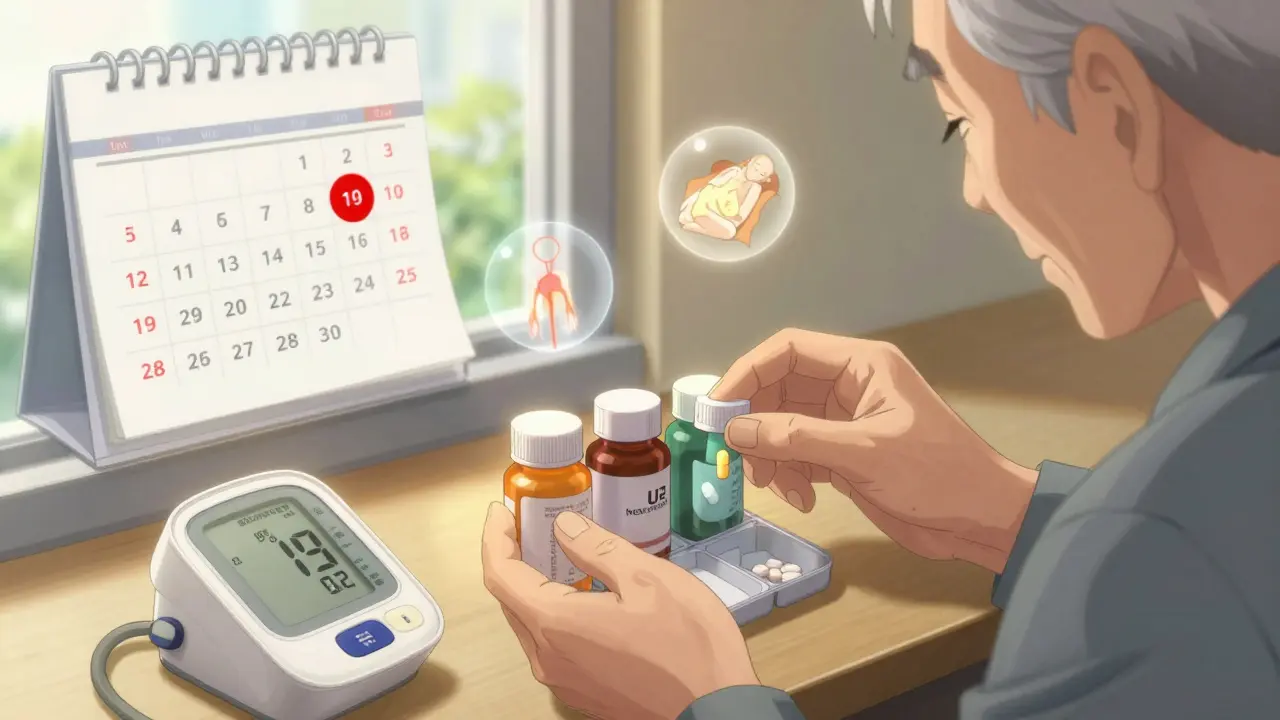
Who Benefits Most?
Refill sync isn’t for everyone. It works best for people who:- Take 3 or more daily maintenance medications
- Have chronic conditions like hypertension, diabetes, high cholesterol, asthma, or depression
- Are on regular, predictable dosing (once or twice daily)
- Use the same pharmacy for most of their prescriptions
- Acute meds (like antibiotics or short-term painkillers)
- Medications that require special handling (like insulin that needs refrigeration)
- People who change meds often (like those in hospital transitions)
What’s Holding People Back?
Despite the benefits, many people still don’t use med sync. Why? First, insurance. Some plans don’t allow early refills - even if the pharmacy needs to adjust quantities to sync everything. That’s a common complaint. One survey found 23% of patients had trouble getting their first synced refill approved. Second, confusion. Many patients don’t understand why they’re getting extra pills at first. One pharmacy intern on Reddit said, “The biggest hurdle is explaining why we’re changing the refill schedule.” It takes time to educate. Third, habit. People are used to managing their own refill dates. Letting a pharmacist take over feels strange - until they realize they haven’t missed a dose in 18 months.What’s Changed Since 2023?
The program has evolved. CVS Health now links med sync to their digital portal. You get text reminders. You can track your adherence score. Walgreens launched “Sync & Save” in early 2023, combining synchronization with copay discounts on select drugs. Kroger Health is testing something new: pairing sync pick-ups with virtual pharmacist visits. You get your meds, then hop on a 10-minute Zoom call to talk about how you’re feeling. It’s not just about refills anymore - it’s about ongoing care. The American Pharmacists Association predicts med sync adoption will grow 35% a year through 2025. By then, 75% of U.S. pharmacies are expected to offer it. That’s not just a trend - it’s becoming standard practice.
How to Get Started
If you’re taking three or more chronic meds:- Call your pharmacy and ask if they offer medication synchronization.
- Ask if they’ll review all your prescriptions - even ones from other doctors.
- Confirm they can handle early refills for syncing (if your insurance allows it).
- Ask for a written schedule of your new sync date.
- Set a calendar reminder for the day you’ll get your first synced refill.
What to Expect After You Enroll
Within a month, you’ll notice changes:- You stop worrying about running out.
- You don’t have to remember 5 different refill dates.
- You get fewer calls from the pharmacy asking why you didn’t refill.
- You start feeling more in control.
Is refill synchronization free?
Yes, refill synchronization is typically offered at no extra cost by pharmacies. It’s considered part of medication therapy management services. Some pharmacies may charge for delivery or expedited shipping, but the sync program itself - adjusting refill dates, counseling, and monthly check-ins - is included in standard pharmacy services.
Can I sync medications from different pharmacies?
No, refill synchronization only works if all your maintenance medications are filled at the same pharmacy. If you use multiple pharmacies, your prescriptions won’t be visible to one pharmacist, making synchronization impossible. To get the full benefit, choose one pharmacy and transfer all your chronic condition prescriptions there.
What if my insurance won’t let me refill early?
This is a common issue. Some insurance plans have strict refill rules - for example, only allowing refills after 75% of the prescription is used. If your sync date requires an early refill, your pharmacist can often request a one-time exception from your insurer. In some cases, your doctor may need to call in a new prescription with adjusted days’ supply. Don’t give up - pharmacists do this regularly and can help navigate the system.
Does refill sync work for insulin or injectables?
It depends. Insulin and other injectables that require refrigeration or frequent dosage changes are harder to sync because they often need more frequent adjustments. However, if you’re on a stable insulin regimen (like once-daily long-acting insulin), many pharmacies can still include it in your sync. Always ask your pharmacist - they’ll evaluate based on your specific prescription and storage needs.
How long does it take to see results?
Most patients notice improved adherence within the first month. Studies show measurable improvements in medication possession ratio (MPR) and proportion of days covered (PDC) after just one full cycle of synchronization. For clinical outcomes like lower blood pressure or better A1C levels, it typically takes 3 to 6 months to see changes, depending on the condition.





Comments
Corey Sawchuk
January 17, 2026 AT 06:26I tried this last year after my grandma kept missing her blood pressure pills. Took her to the pharmacy, they synced everything to the 15th. Now she just grabs her bag and goes. No more panic calls at 2am wondering if she took her metformin. Simple as that.
Pharmacist even called her last month to ask if her knee pain was getting worse. Didn't expect that.
Rob Deneke
January 18, 2026 AT 04:47This is the quiet hero of chronic care. No app needed. No fancy tech. Just someone at the pharmacy paying attention. My dad’s been on sync for 3 years now. His A1C dropped from 8.9 to 6.7. No magic. Just consistency.
evelyn wellding
January 19, 2026 AT 07:39OMG YES!! 🙌 I was drowning in pill bottles and calendar alerts. My pharmacist synced everything to the 10th and now I have TUESDAYS free from med stress. I even started walking my dog again because I wasn't so mentally fried. THANK YOU PHARMACISTS!! 💪❤️
Chelsea Harton
January 21, 2026 AT 05:40System failure. Not laziness. That’s the key. We’re not broken. The system is. Syncing meds is like organizing your closet. Once it’s done you forget how messy it was.
Corey Chrisinger
January 22, 2026 AT 04:06It’s funny how the most life-changing things are also the most boring. No AI. No blockchain. Just a pharmacist with a calendar and a printer. We’ve outsourced our humanity to apps and algorithms, but sometimes the answer is still a person who remembers your name and your meds.
Also… I got a free bag of gummy vitamins last time I picked up. Small wins.
Bianca Leonhardt
January 23, 2026 AT 19:05If you’re still managing your own refills manually in 2024 you’re either a masochist or you don’t care if you die early. This isn’t optional. It’s basic self-preservation. Stop being lazy and call your pharmacy already.
Travis Craw
January 25, 2026 AT 09:39I thought this was just a gimmick till my pharmacist actually called me to ask why I hadn't picked up my lisinopril. Turned out my insurance denied the refill because I was a day early. She called them, got it approved, and mailed me a 30-day supply. That’s service. Not just a drug dispenser.
Christina Bilotti
January 26, 2026 AT 16:19Oh look, another ‘innovation’ that’s been around since 2010 and still only used by 8% of commercial patients. Meanwhile, we’re spending billions on wearable sensors that tell you you’re stressed. Why not fix the damn system first? The fact that this isn’t mandatory is criminal.
vivek kumar
January 26, 2026 AT 19:26In India, we don’t have this system. People buy pills one by one from street vendors. Some take half doses. Others skip days. I came here last year and saw how pharmacies here just… manage it. It’s not about technology. It’s about dignity. Everyone deserves to not feel like a burden to their own body.
Nick Cole
January 27, 2026 AT 21:02I used to think sync was just for elderly folks. Then I saw my 28-year-old friend with depression and bipolar disorder get synced. She said it was the first time in years she didn’t feel like she was failing at life just because she forgot a pill. That’s not convenience. That’s recovery.
Allen Davidson
January 29, 2026 AT 11:05My pharmacist syncs my meds and then asks how my mom is doing. She knows my mom had a stroke last year. I didn’t even tell her. She just remembers. That’s the real magic here. It’s not the calendar. It’s the human connection. We’ve forgotten how rare that is.