
Liquid vs. Tablet Medications for Children: What to Choose
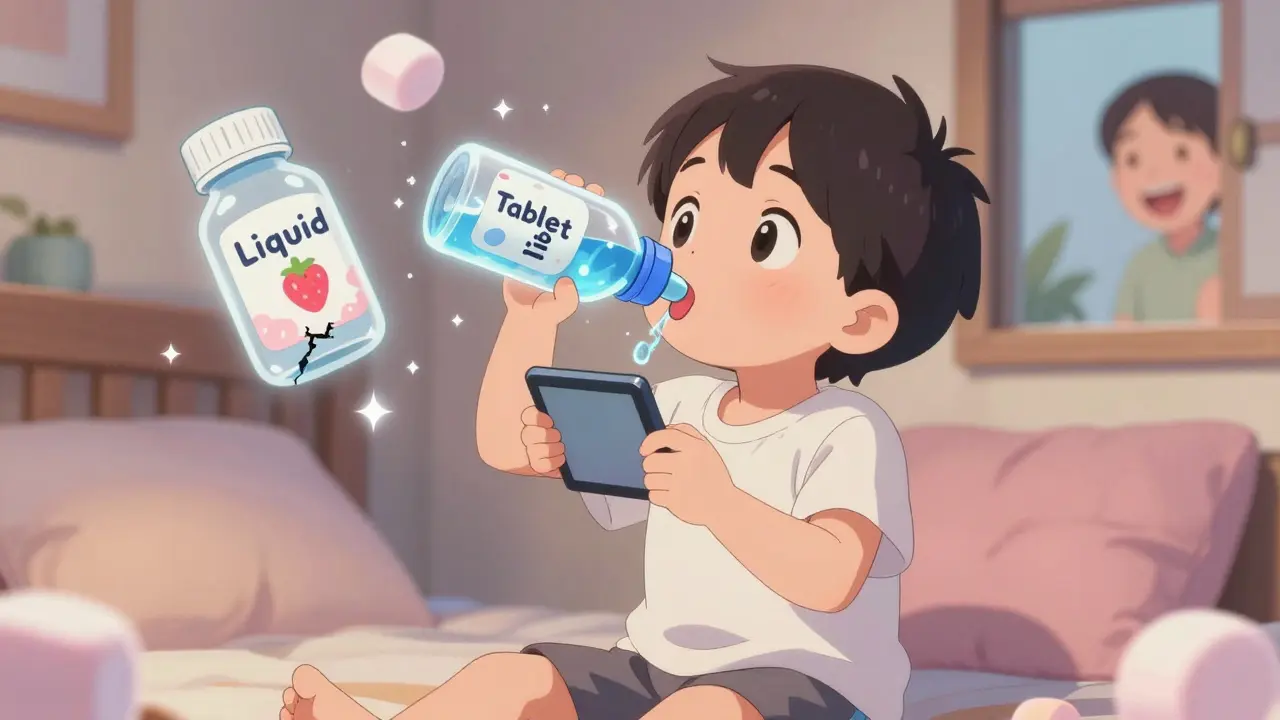
When your child is sick, the last thing you want is a battle over medicine. You’ve got two options in front of you: a sweet-tasting liquid in a syringe or a tiny tablet that seems too small to be real. Which one should you pick? The answer isn’t as simple as "liquids are easier"-especially if your child is older than 2. Modern medicine has changed. Tablets for kids aren’t what they used to be. And in many cases, they’re actually better.
Why Liquids Have Been the Default
For decades, doctors and parents assumed young kids couldn’t swallow pills. That made sense. A 1-year-old doesn’t have the coordination to manage even a small tablet. So liquids became the standard. They’re easy to measure, easy to dose by weight, and they come in flavors like strawberry or grape. But here’s the problem: most of those flavors don’t actually taste like anything real. One parent on Reddit described her child’s "strawberry" antibiotic as tasting like "chemicals and regret." That’s not an outlier. Studies show 68% of kids refuse liquid meds because of bad taste-not because they’re scared of swallowing.And it’s not just taste. Liquids often need refrigeration. Once opened, they expire in 14 to 30 days. If you forget to put it back in the fridge, or if you leave it in the car, it can go bad. Then you’re stuck with a full bottle you can’t use, and you have to refill it-costing more and creating waste. The NHS estimates that up to 45% of liquid pediatric medications require cold storage. That’s a lot of fridge space, and a lot of money lost when meds spoil.
The New Reality: Tablets for Kids Are Smarter Than Ever
Gone are the days of crushing pills and mixing them into applesauce. Today’s pediatric tablets are designed with kids in mind. Mini-tablets as small as 2mm wide-smaller than a grain of rice-are now common. These aren’t crushed pills. They’re made from scratch to be swallowed whole. Some dissolve in your mouth in 30 seconds without water. Others are coated to hide bitter tastes. In a 2012 study of 60 children aged 6 months to 6 years, kids actually preferred swallowing these mini-tablets over liquids, especially in the 6-12 month range. Why? Because the liquid was often too thick, too sweet, or just plain unpleasant.And the numbers don’t lie. The European Medicines Agency (EMA) has been pushing for solid forms since 2013. Their research shows that 66.7% of liquid prescriptions for kids could be replaced with tablets without losing accuracy. For antibiotics, pain relievers, or allergy meds-meds with wide therapeutic windows-tablets work just as well. In fact, they’re more accurate. The FDA found that 12-18% of liquid doses are given wrong because parents use kitchen spoons, eyeball the syringe, or misread the markings. With tablets, you count them. One. Two. Done.
Cost and Waste: The Hidden Downsides of Liquids
Let’s talk money. A 2021 NHS analysis found that switching just 10,000 pediatric liquid prescriptions to tablets saves £7,842 per year. For a medium-sized hospital, that’s over £50,000 in annual savings. Why? Because liquids are expensive to make, store, and dispose of. They need special packaging. They require refrigeration. They expire fast. Tablets? They last 2 to 3 years on the shelf. They’re cheaper to ship. They don’t need coolers. And when you only give your child 2 tablets a day for 7 days, you don’t have half a bottle left to throw away.Plus, tablets mean fewer pharmacy visits. If your child needs a 10-day course of amoxicillin, a liquid might come in a 60mL bottle. You only use 20mL. The rest goes bad. A tablet version gives you exactly 14 pills. You take them all. No waste. No guilt. No extra trip to the pharmacy.
When Liquids Are Still Necessary
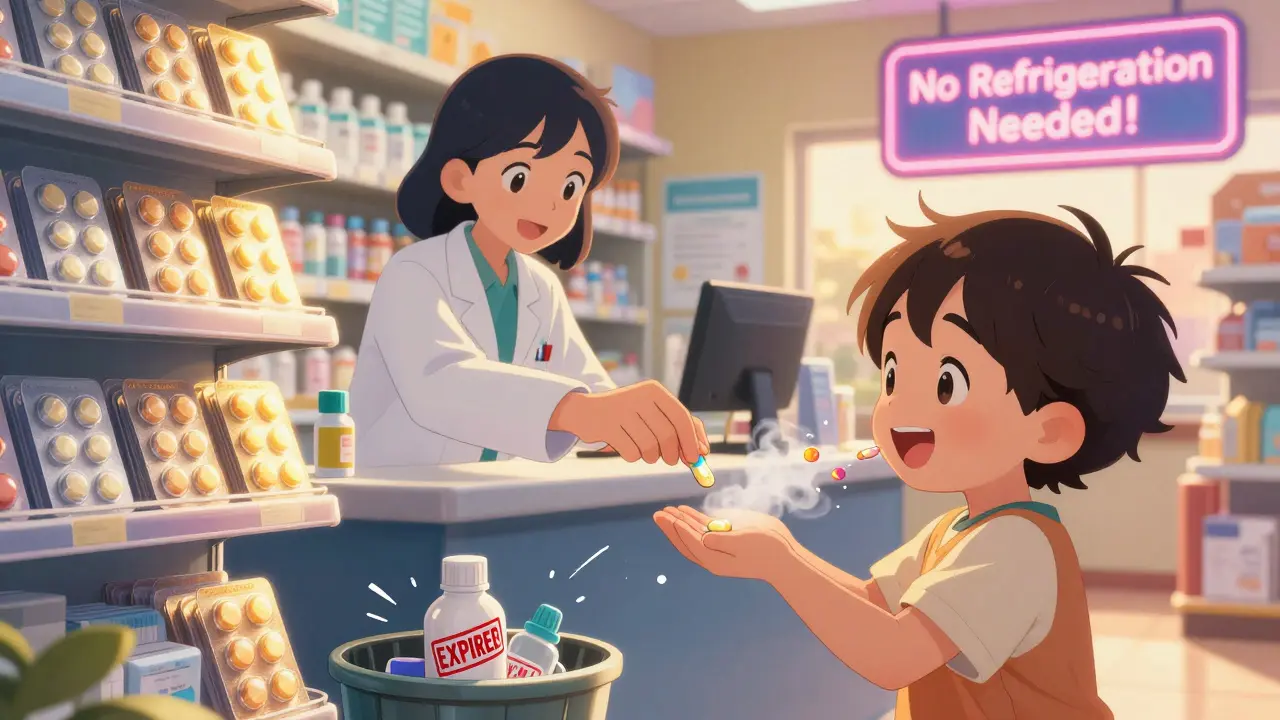
There’s no denying: for babies under 6 months, liquids are still the gold standard. Their swallowing reflex isn’t fully developed. Their weight changes fast. Dosing needs to be precise-down to 0.1mL. That’s hard with tablets. But once your child hits 6 months, you can start introducing tiny tablets. By age 2, many kids can learn to swallow them. By age 4, most can handle standard mini-tablets with practice.Some meds still need liquids. Levothyroxine for thyroid issues. Warfarin for blood thinning. These require exact, changing doses. Liquids let pharmacists tweak the concentration. But even here, new options are emerging. Some hospitals now use sprinkle formulations-tiny coated granules you can mix into food or drop into the mouth. They’re not liquids, but they offer the same flexibility.
How to Teach Your Child to Swallow Tablets
The biggest fear parents have? Choking. But here’s the truth: choking on a properly sized pediatric tablet is incredibly rare. The FDA’s adverse event data from 2010 to 2020 shows less than 0.002% of cases involved choking on tablets designed for kids. That’s lower than choking on a grape.So how do you teach a 3-year-old to swallow a tablet? Start with practice. Use mini-marshmallows or soft bread balls the size of the tablet. Have them sit upright. Place the tablet on the tongue. Have them sip water from a bottle-not a cup. The "pop-bottle method" works like this: they take a big sip from a sealed water bottle, then place the tablet on their tongue. As they swallow the water, the tablet goes down with it. No gagging. No struggle. In studies, over 90% of kids aged 3 and up succeed with this method after one or two tries.
Don’t force it. Don’t rush. Make it a game. One parent told me she used to say, "Let’s see if you can swallow a snowman!" and gave her daughter a tiny white marshmallow. After three tries, she tried a real tablet. Success. Now her 5-year-old takes all her meds without a fight.
What to Look for When Choosing
Not all tablets are created equal. Here’s what to ask your pharmacist:- Is this tablet designed for kids? (Look for "mini-tablet," "orodispersible," or "film-coated")
- Can it be swallowed whole? (Avoid tablets labeled "crushable" unless you’re told it’s safe)
- Does it have a child-friendly coating? (Flavor masking matters-real strawberry taste beats fake)
- Is it stable at room temperature? (No refrigeration needed? Big plus.)
- Is there a dosing guide for tablets? (Some meds still only have liquid dosing info-ask if it’s been studied for tablets)
Also, check the size. A tablet that’s 4mm wide is fine for a 4-year-old. A 6mm tablet? Maybe too big. Stick to what’s recommended for age. Pediatric pharmacists can help you match the tablet size to your child’s ability.
What Experts Are Saying
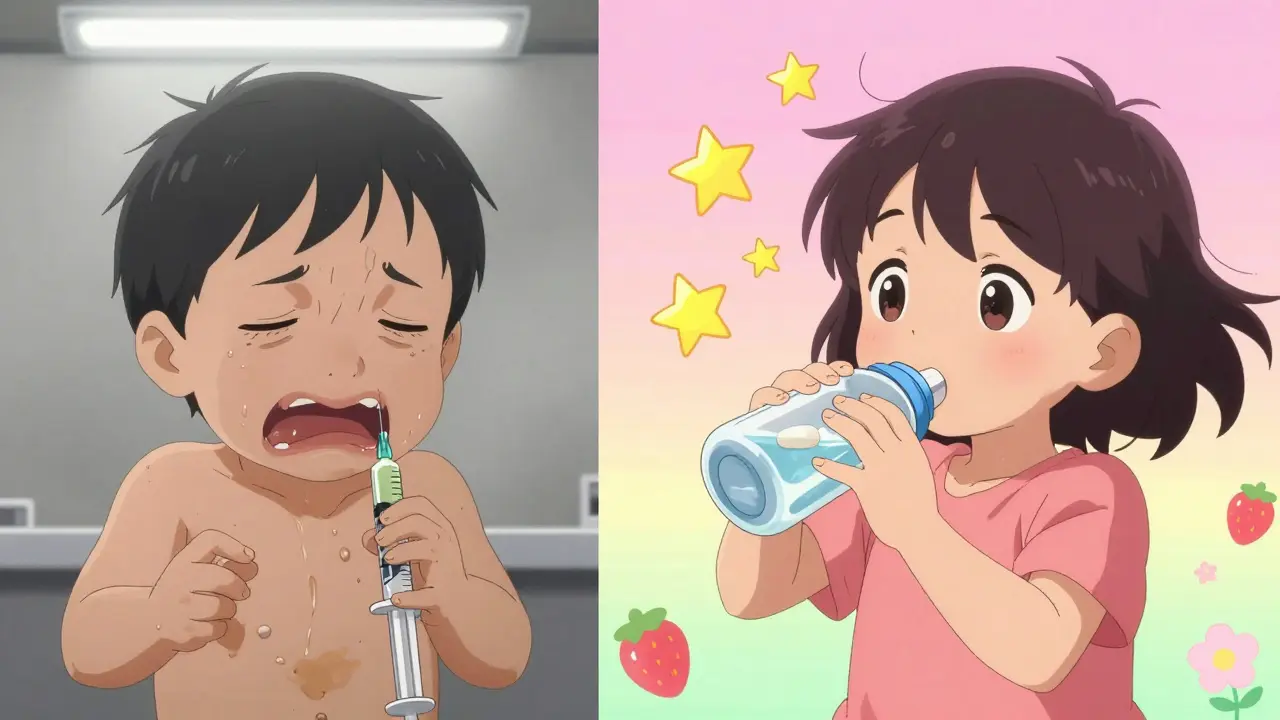
Dr. Jane Standing from Great Ormond Street Hospital says, "The automatic preference for liquid formulations in children is not evidence-based and often counterproductive to long-term medication adherence." She’s not alone. The American Academy of Pediatrics now recommends training kids to swallow tablets starting at age 2. The EMA says the same. Even the WHO updated its 2024 guidelines to encourage solid forms for children as young as 2.Yet, a 2021 survey of 500 U.S. pediatricians found that 62% still default to liquids for kids under 8. Why? Parental pressure. Convenience. Habit. But if you’ve ever spent 20 minutes trying to get a screaming toddler to take a spoonful of medicine, you know: tablets are the better long-term solution.
The Future Is Solid
The market is shifting fast. Between 2015 and 2022, the number of pediatric solid formulations approved in the EU and U.S. jumped by 220%. The FDA’s 2023 draft guidance says: "Develop age-appropriate solid formulations, not automatic liquids." And it’s not just about pills. Researchers are now testing 1mm micro-tablets that can be sprinkled on food or swallowed whole-blurring the line between liquid and solid.By 2030, experts predict solid forms will make up 55-60% of pediatric prescriptions. That’s up from 35% today. Why? Because kids take them more consistently. Because they’re cheaper. Because they’re more accurate. And because, once taught, most kids actually prefer them.
Final Thoughts: It’s Not About Age-It’s About Fit
There’s no one-size-fits-all answer. For a 3-month-old? Liquid. For a 5-year-old with an ear infection? Try a tablet. For a 10-year-old on antibiotics? Definitely a tablet. The key is matching the form to the child-not the other way around.Don’t be afraid to ask your doctor or pharmacist: "Is there a tablet version?" If they say no, ask why. Is it because the medicine doesn’t come in one? Or because no one’s ever thought to try? You’re not being difficult. You’re being smart.
And if your child resists? Start slow. Practice with soft foods. Use the bottle method. Celebrate the wins. One tablet at a time.
Can I crush a tablet and mix it with food if my child won’t swallow it?
Only if the label says it’s safe. Many tablets have special coatings-time-release, enteric-coated, or taste-masking-that get ruined when crushed. Crushing can change how the medicine works, make it less effective, or even cause side effects. Always check with your pharmacist first. If the tablet isn’t crushable, ask if there’s a sprinkle formulation or a liquid alternative.
Are tablets more expensive than liquids?
Usually not. In fact, tablets are often cheaper per dose. Liquids cost more to produce, store, and package. They require special bottles, syringes, and refrigeration. Tablets are simpler to make and last longer. A 2021 NHS study found that switching to tablets saved £7,842 per 10,000 prescriptions. That’s money saved for families and hospitals alike.
My child is 18 months old. Should I try tablets now?
It’s possible, but not always necessary. At 18 months, some kids can swallow mini-tablets (as small as 2mm) with practice. Others still need liquids. Start by asking your doctor if a tablet version exists and if it’s approved for your child’s age. If yes, try it with soft food or using the bottle method. If they gag or refuse, go back to the liquid. No pressure. The goal is to build confidence over time, not force it.
Why do some pediatricians still prescribe liquids even for older kids?
Habit and pressure. Many doctors were trained to assume kids can’t swallow pills. Parents often ask for liquids because they think it’s easier. But research shows that once kids are taught how to swallow tablets, they prefer them. The real barrier isn’t ability-it’s lack of education. Ask your doctor: "Is there a tablet version?" and "Can you show me how to teach my child to swallow it?"
Do tablet flavors matter?
Yes-more than you think. A tablet labeled "strawberry" that tastes like artificial candy will be rejected. But one that tastes like real fruit? Kids take it without a fuss. Look for tablets with natural flavoring or film coatings that mask bitterness without fake sweetness. Ask your pharmacist: "Does this tablet actually taste like what it says?" If they don’t know, it’s worth checking reviews or trying a sample.
If you’re still unsure, ask your pharmacist for a sample. Many pharmacies keep trial tablets on hand. Try one at home with a snack. See how your child reacts. You might be surprised.



Comments
Mike Hammer
February 14, 2026 AT 14:50My 4-year-old used to scream when I tried to give her liquid antibiotics. Then we tried those tiny coated tablets-like, literally the size of a poppy seed-and she swallowed them like candy. No struggle. No mess. Just one sip of water from a sealed bottle and boom. She even asked for them next time. The bottle trick is magic. Seriously, try it. It’s not about forcing them-it’s about teaching them like you’d teach them to ride a bike.
Now she takes all her meds like a champ. No more 20-minute battles. No more wasted medicine. I wish I’d known this sooner.
Charlotte Dacre
February 15, 2026 AT 08:40So let me get this straight-we’ve been force-feeding kids chemical-flavored sludge for decades because we assumed they couldn’t swallow a pill… and now you’re telling me the real problem was our own laziness? Classic. Next you’ll tell me we should stop using baby food jars and just give toddlers forks. Oh wait-we did. And they survived.
Kapil Verma
February 15, 2026 AT 23:00USA and UK still clinging to outdated methods while India and China have been using mini-tablets for years. Why? Because we raised our kids to be resilient, not pampered. My daughter swallowed her first tablet at 14 months. No tears. No drama. Just a little water and a pat on the head. You think medicine should be a dessert? No. It’s medicine. Learn to take it like a human.
Erica Banatao Darilag
February 17, 2026 AT 19:25I appreciate this detailed breakdown. As a parent of a child with chronic medication needs, I’ve seen both sides. The waste from expired liquids is staggering-especially when insurance only covers one refill per month. Tablets have saved us money, time, and stress. The only thing I wish more pharmacists did was proactively offer the tablet option instead of waiting for us to ask. It shouldn’t be a battle to get the right form.
Also, the taste point is critical. My child rejected three different "strawberry" liquids before we found a tablet with real fruit extract. It made all the difference.
Betty Kirby
February 19, 2026 AT 10:52My kid gagged on a tablet once. Now I’m terrified. How do I know it’s not going to kill her? I’ve seen videos. One wrong swallow and-
Mike Hammer
February 20, 2026 AT 14:18Choking on a pediatric tablet is rarer than choking on a grape. The FDA data says less than 0.002% of cases. And if you’re using the bottle method with soft foods as practice? You’re already ahead of 90% of parents. It’s not about luck-it’s about technique. Try it with a mini-marshmallow first. You’ll see.
Daniel Dover
February 21, 2026 AT 04:09Tablets win. Simple. No fridge. No expiration. No measuring. Just count and go. Why is this even a debate?
Esha Pathak
February 22, 2026 AT 05:22There’s a deeper truth here-society infantilizes children by assuming they can’t handle simple tasks. Swallowing a pill isn’t a milestone-it’s a basic human skill. We teach them to tie shoes, ride bikes, write their names. Why not this? The real question is: why are we still treating kids like fragile objects instead of capable beings? The answer lies in fear. And fear is not a medical protocol.
Michael Page
February 22, 2026 AT 23:55I’ve been a pharmacist for 18 years. I’ve seen parents cry because they couldn’t get their kid to take a liquid. I’ve also seen them laugh when they realized their 5-year-old could swallow a tablet. The shift isn’t just clinical-it’s emotional. Kids feel proud when they do it. Parents feel relieved. It’s one of those rare wins in pediatrics where everyone benefits.
And yes, I keep trial tablets behind the counter. Just ask.
Joe Grushkin
February 23, 2026 AT 09:35Of course tablets are better. Because clearly the only reason we ever used liquids was because doctors are lazy and parents are idiots. I’m sure the WHO didn’t just update their guidelines-they were probably bribed by Big Pharma to sell more pills. Let’s be real. The real story is profit. Not progress.
Sarah Barrett
February 23, 2026 AT 19:18The most compelling argument here isn’t the cost or the convenience-it’s adherence. Kids who take their meds consistently recover faster. They miss less school. Parents miss less work. The ripple effect is enormous. And yet, we still treat pediatric medication as a chore instead of a cornerstone of health. This isn’t just about pills. It’s about how we view children’s autonomy, dignity, and capability. Maybe the real revolution isn’t in the tablet-it’s in the mindset.
Also, I’m now asking for tablet versions on every prescription. Even if I have to teach my kid to swallow them. It’s worth it.