
Measuring Your Medication Adherence: A Simple Checklist for Better Health
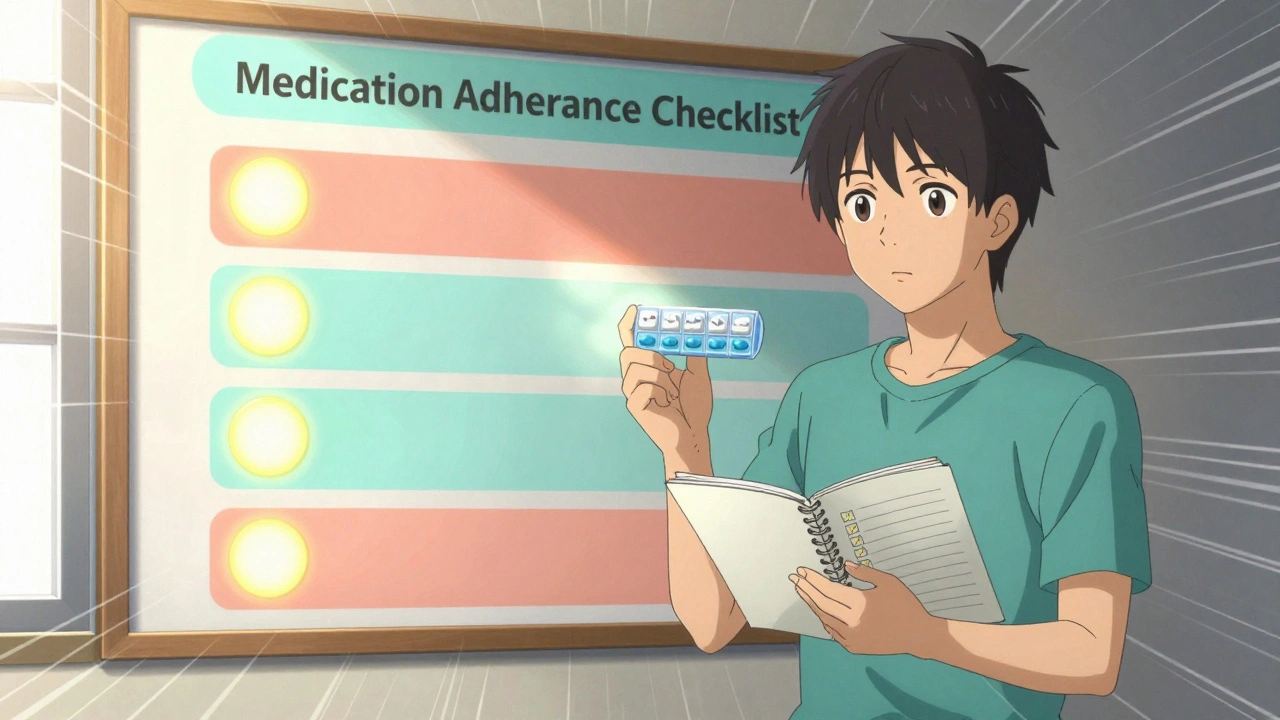
Why Medication Adherence Matters More Than You Think
If you’re taking medication for high blood pressure, diabetes, cholesterol, or any long-term condition, skipping doses isn’t just a small mistake-it’s a serious risk. More than half of people with chronic illnesses don’t take their meds as prescribed. And it’s not because they’re forgetful or lazy. Often, it’s because the system doesn’t make it easy. Missing pills can lead to hospital visits, worsening symptoms, or even life-threatening complications. The good news? You can track and improve your adherence with simple tools-and you don’t need fancy tech to start.
What Medication Adherence Really Means
Adherence isn’t just about picking up your prescription. It’s about taking the right dose, at the right time, for as long as your doctor recommends. Experts break this into three parts:
- Initiation: Did you start the medicine when you were supposed to?
- Implementation: Are you taking it correctly-dose, timing, frequency?
- Persistence: Did you keep taking it, or did you stop early?
Most people focus on implementation. But if you never started, or quit after two weeks, none of the other steps matter. That’s why tracking all three helps you see the full picture.
The 5-Point Checklist to Measure Your Adherence
You don’t need an app or a smart pill bottle to know if you’re on track. Use this simple, proven checklist. Answer honestly-this is for you, not your doctor.
- Do you refill your prescriptions on time? Check your pharmacy records. If you’re running out more than 5 days before your next refill is due, you might be skipping doses. If you’re refilling early often, you might be taking too much.
- Can you count your pills at the end of the month? Open your pillbox or bottle. Count the pills left. Compare it to how many you should have. If you’re missing more than 2 pills in a 30-day cycle, you’re likely not taking them as prescribed.
- Do you use reminders? Did you set alarms? Put pills next to your toothbrush? Use a pill organizer? If you’re relying on memory alone, you’re at high risk for missing doses. Studies show people who use reminders are 40% more likely to stay on track.
- Have you skipped doses because of side effects, cost, or confusion? If you’ve stopped taking meds because they made you feel sick, cost too much, or you didn’t understand the instructions-this isn’t non-adherence, it’s a communication problem. Write down why you skipped. Bring it to your next appointment.
- Do you feel your meds are working? If you’re not seeing improvement-or if symptoms got worse-you might be inconsistent with your doses. Don’t assume the medicine doesn’t work. Often, it’s the pattern of use that’s off.
Score yourself: 0-2 points? You need help. 3-4 points? You’re doing okay but could improve. 5 points? You’re hitting the target. Most health plans consider 80% adherence (taking meds 24 out of 30 days) as the minimum for good control. That’s your goal.
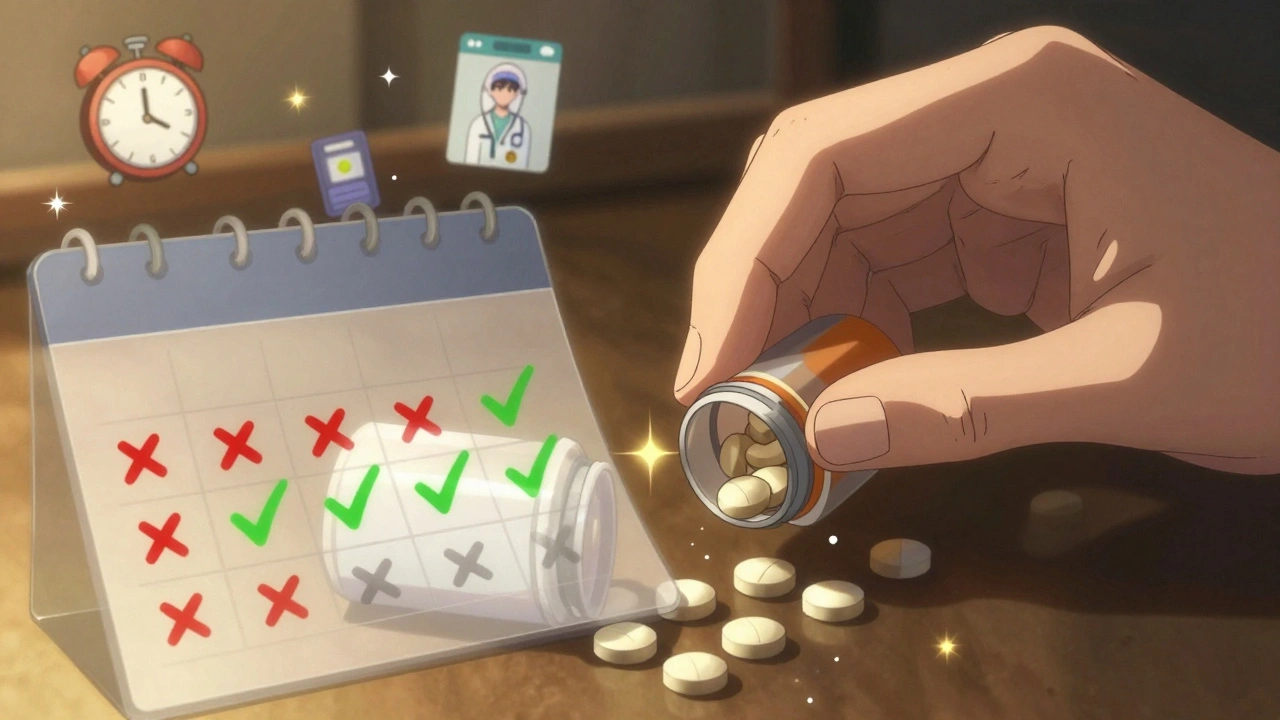
What Works Better Than Memory
Memory fails. Even if you’re organized, stress, travel, or a change in routine can throw you off. Here are tools that actually work:
- Pill organizers: Weekly or monthly boxes with morning/afternoon/evening slots. Buy one with a lock if you’re worried about overuse.
- Phone alarms: Set two alarms per dose. Label them: “Take BP med” or “Insulin now.” Don’t just say “Meds.” Be specific.
- Medication diary: Keep a small notebook. Each time you take a pill, check it off. At the end of the week, review. Did you miss any? Why?
- Pharmacy apps: Most pharmacies (like CVS, Walgreens, or your local one) have apps that send refill reminders and tell you when your next dose is due.
One study found that people using pill organizers with alarms improved adherence by 38% in just 6 weeks. Simple tools. Big results.
Why Prescription Refill Data Isn’t Enough
Your doctor might look at how often you refill your prescriptions. But here’s the catch: you can pick up your pills and never open the bottle. Or you might take half a dose because you’re scared of side effects. Or you share pills with a family member. Pharmacy records can’t see any of that.
That’s why health systems use something called Proportion of Days Covered (PDC). It calculates how many days you had your medicine available over a set time. If you have a 30-day supply and refill on day 28, your PDC is high. But if you refill on day 15, you might be taking extra. PDC is the industry standard-but it’s still just a guess. That’s why combining it with your own checklist gives you the real picture.
When to Talk to Your Doctor
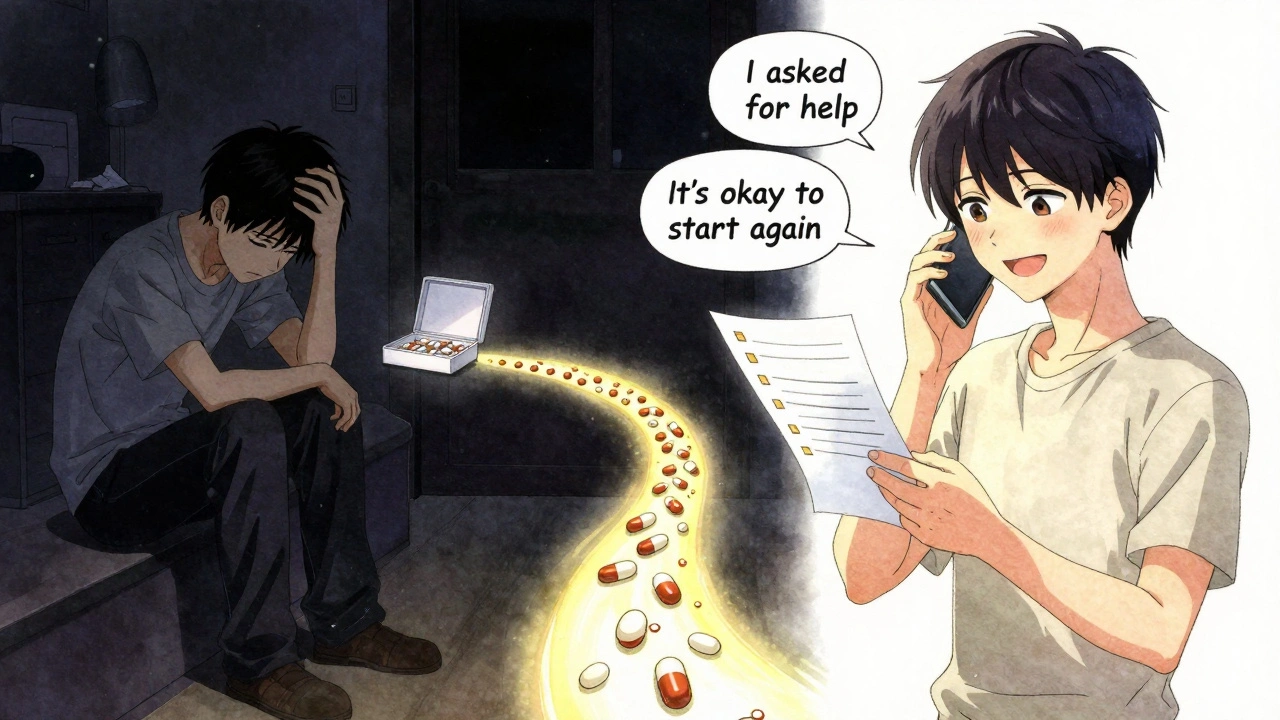
If your checklist shows you’re missing doses, don’t wait for your next appointment. Call your doctor or pharmacist. Say this:
“I’ve been having trouble taking my meds like I should. I’m not sure why. Can we figure out how to make it easier?”
That’s all you need to say. You’re not admitting failure-you’re asking for help. Doctors hear this more often than you think. In fact, 62% of them say patients rarely bring up adherence issues unless asked directly.
They can help you with:
- Switching to once-daily pills
- Getting cheaper alternatives
- Setting up mail-order refills
- Connecting you with patient assistance programs
Some clinics even use a simple technique called BATHE to talk about adherence:
- Background: “What’s been going on with your meds?”
- Affect: “How does that make you feel?”
- Trouble: “What’s the biggest problem?”
- Handling: “What have you tried?”
- Empathy: “That sounds really tough.”
This approach increases honest answers by nearly 50%. You’re not being judged-you’re being heard.
What’s New in Adherence Tools (2025)
Technology is catching up. Smart pill bottles now send alerts if you don’t open them. Apps like AiCure use your phone camera to confirm you took your pill. Some insulin pens track doses automatically. But here’s the truth: most of these cost money, need Wi-Fi, and require you to be tech-savvy.
For most people, the best tool is still a paper checklist and a phone alarm. The FDA and health regulators are pushing for better tracking-but they’re not replacing the human connection. Your doctor still needs to know how you’re really doing.
Final Thought: It’s Not About Perfection
You don’t have to take every pill perfectly. Life happens. You’ll miss one. Maybe two. That’s okay. What matters is noticing when it happens-and fixing it before it becomes a pattern. Use the checklist. Track for one month. Talk to your care team. Small steps lead to big changes.
Medication adherence isn’t about discipline. It’s about design. Make it easy. Make it visible. Make it part of your routine. And if you slip? Start again the next day. You’ve got this.
How do I know if I’m taking my meds correctly?
Use the 5-point checklist: track refills, count pills, use reminders, note why you skip, and check if symptoms improve. If you’re missing more than 2 doses in a month, you’re below the 80% adherence threshold most doctors aim for. Don’t guess-track.
Is it okay to skip a dose if I feel fine?
No. Many medications, like those for blood pressure or cholesterol, work even when you feel fine. Stopping them can cause your condition to worsen silently. High blood pressure doesn’t always cause symptoms-but it still damages your heart and kidneys. Always follow your prescription unless your doctor says otherwise.
Can I use a pill organizer for all my meds?
Most yes-but check with your pharmacist first. Some pills shouldn’t be removed from their original packaging (like sublingual tablets or capsules that break down quickly). Others need to be stored in the fridge. A pharmacist can help you sort what’s safe to move.
Why does my doctor care if I miss a few pills?
Missing doses increases your risk of hospitalization, stroke, heart attack, or kidney failure-especially with chronic conditions. It also makes treatment less effective, which can lead to stronger drugs, higher costs, and more side effects down the line. Your doctor isn’t policing you-they’re trying to keep you out of the hospital.
Are there free tools to help me track my meds?
Yes. Most pharmacies have free apps with refill reminders. You can use your phone’s alarm clock. A $5 pill organizer from the drugstore works better than most expensive apps. Write it down in a notebook. No tech needed. The cheapest tool is the one you’ll actually use.
What if I can’t afford my meds?
Don’t skip doses to save money. Talk to your pharmacist or doctor. Many drug companies offer free or low-cost programs. Some pharmacies have $4 generic lists. Medicare Part D and state programs can help too. There are options-you just need to ask.
How long does it take to build a habit of taking meds regularly?
Studies show it takes about 21 to 30 days to form a habit. Link your meds to something you already do daily-brushing your teeth, eating breakfast, or turning off the lights. After a month, it’ll feel automatic. Stick with the checklist for that first month. That’s when most people turn the corner.
Next Steps: Start Today
Grab a notebook or open a note on your phone. Write down:
- Your name
- Your meds (name and dose)
- When you take them
- One reminder method you’ll try this week
Then, do one thing: take your next dose on time-and check it off. That’s the first step to better health. You don’t need to fix everything at once. Just start.





Comments
Elliot Barrett
December 8, 2025 AT 13:19Why are we even doing this? Everyone knows people forget meds. No checklist fixes laziness.
Maria Elisha
December 8, 2025 AT 17:00lol i just throw all my pills in a bag and hope for the best. if i feel sick i take one. if i don't, i don't. it's not rocket science.
precious amzy
December 10, 2025 AT 02:15One must question the epistemological foundations of adherence metrics. Are we measuring behavior, or are we pathologizing human temporality? The checklist assumes a Cartesian subject who can compartmentalize existence into discrete, measurable acts-yet the body remembers what the mind forgets, and the mind rebels against the tyranny of the pillbox. To reduce pharmacological responsibility to a binary score is to ignore the existential weight of chronic illness: not a problem to be optimized, but a condition to be endured.
Carina M
December 11, 2025 AT 00:37It is profoundly irresponsible to suggest that a $5 pill organizer constitutes adequate medical compliance. The very premise of this article reflects a dangerous conflation of convenience with clinical efficacy. Patients require structured, physician-monitored interventions-not DIY hacks masquerading as public health policy. The normalization of ‘good enough’ adherence is a systemic failure disguised as empowerment.
Andrea Beilstein
December 11, 2025 AT 14:32you know what's funny about all this? we talk about pills like they're the enemy or the savior but they're just chemicals in a capsule. the real issue is we live in a world that doesn't let people rest. you take meds because you're exhausted from surviving but you're too tired to remember them. maybe the real checklist is: are you allowed to breathe without a doctor's permission? i don't need an app. i need a world that doesn't make me choose between rent and refills
Ajit Kumar Singh
December 12, 2025 AT 08:05in India we dont have all this fancy apps and pill boxes but we still take medicine because we know if we dont our parents suffer. my grandmother took her BP pills every day even when she had no money for food. she said the pill was her prayer. you think this checklist is for rich people? no it is for people who still believe in doing what they must even when life gives them nothing
Lisa Whitesel
December 13, 2025 AT 15:1280% adherence is a lie. 80% means you're still missing 6 doses a month. That's not 'okay'-that's negligence. If you're not at 95%+, you're actively endangering yourself and the healthcare system. Stop celebrating mediocrity.
William Umstattd
December 14, 2025 AT 02:30You're all missing the point. The checklist is fine. The problem is that doctors don't care until you're in the ER. I missed doses for two years because my insurance denied the generic. I didn't know until I collapsed. No one asked me why. No one looked at my refill history and said, 'Hey, you haven't picked this up in 45 days.' This isn't about discipline-it's about a system that abandons people until it's too late. So yes, use the pillbox. But also demand better.