
Preventing and Treating Postoperative Ileus Caused by Opioids
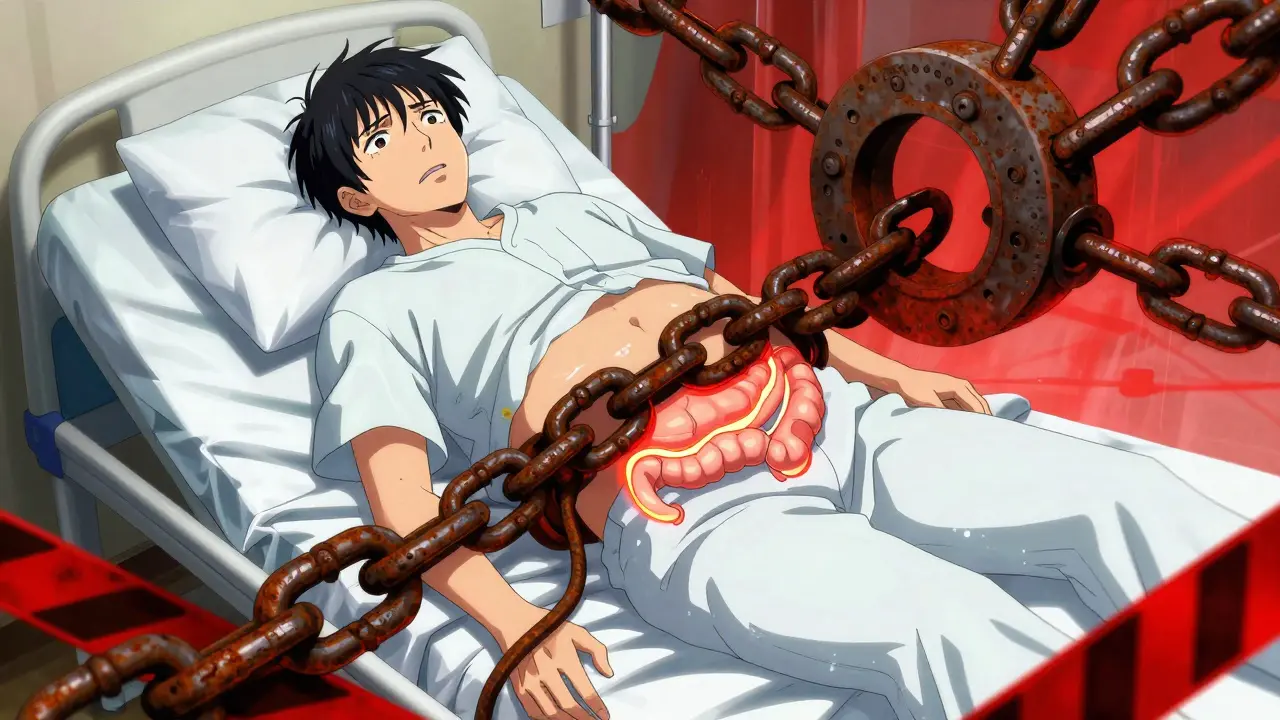
Post-Surgery Gut Recovery Estimator
Use this tool to see how specific medical strategies (Multimodal Analgesia) and behavioral changes (Early Ambulation/Gum) potentially reduce the duration of gut paralysis compared to traditional opioid-heavy care.
Key Takeaways
- POI is a temporary paralysis of the gut that often lasts more than 3 days post-surgery.
- Opioids slow down the gut by activating mu-opioid receptors in the intestinal walls.
- Multimodal analgesia (using a mix of non-opioid drugs) can reduce POI incidence by 25-35%.
- Peripheral opioid antagonists like alvimopan can speed up gut recovery by nearly a day.
- Early movement and chewing gum are simple, effective ways to stimulate bowel function.
How Opioids Stop Your Gut in Its Tracks
To understand why your gut stops, you have to look at how Opioids work. Most people know them for blocking pain signals in the brain, but these drugs also bind to mu-opioid receptors located directly on the neurons of the myenteric plexus-the "brain" of your gut. When these receptors are activated, they don't just dull pain; they inhibit the contractions that push food and waste through your system.
This isn't just a mild slowdown. In some experimental models, activating these receptors can slash colonic motility by up to 70%. It's a double whammy: the stress of surgery releases your body's own endogenous opioids, and then the medical team administers pharmaceutical opioids for pain. The result is a significant increase in small bowel transit time-sometimes by 100%-meaning things take twice as long to move through you as they should.
The clinical symptoms are unmistakable. You'll likely experience abdominal distension, a complete inability to tolerate eating or drinking, and the dreaded "silent abdomen" where no bowel sounds are heard during an exam. For many, this manifests as hard, dry stools and intense bloating, which can make the recovery period feel even more painful than the surgery itself.
The Cost of a "Slow" Recovery
POI isn't just an inconvenience; it's a massive burden on the healthcare system and the patient. When the bowel doesn't wake up, patients can't be discharged. Data shows that POI typically adds about 2 to 3 extra days to a hospital stay. In the U.S. alone, this translates to an estimated $1.6 billion in annual costs.
There's also a human cost. Patients receiving high doses of opioids (over 50 morphine milligram equivalents in the first 48 hours) report bloating that is over three times more severe than those on lower doses. More tellingly, it takes them significantly longer to have their first bowel movement-averaging 5.3 days compared to just 2 days for those on minimal opioid regimens. This delay creates a vicious cycle where the patient feels worse, potentially requiring more medication, which further slows the gut.
Switching the Strategy: Multimodal Analgesia
The old way of doing things was simple: give the patient an opioid drip and hope for the best. The modern approach, championed by the ERAS Society (Enhanced Recovery After Surgery), is Multimodal Analgesia. This means using several different types of pain relief to keep the total dose of opioids low.
Instead of relying solely on morphine or fentanyl, doctors now combine a variety of tools. For example, a protocol might include scheduled IV acetaminophen (Tylenol) and ketorolac (an NSAID), alongside regional anesthesia or nerve blocks. By attacking pain from multiple angles, surgeons can keep opioid use below 30 morphine milligram equivalents in the first 24 hours. This shift has been shown to drop the incidence of POI from 30% down to about 18%.
In orthopedic cases, like hip replacements, the difference is stark. Patients who get spinal anesthesia combined with non-opioid a-analgesics have POI rates of only 8.5%, whereas those on general anesthesia and heavy opioids see rates climb to over 22%.

Medical Interventions to Jumpstart the Bowel
When prevention isn't enough and the gut remains paralyzed, doctors can use specific medications called Peripheral Opioid Receptor Antagonists. These are clever drugs that block the mu-opioid receptors in the gut but cannot cross the blood-brain barrier. This means they stop the gut-slowing effects without taking away the patient's pain relief.
| Medication | Primary Action | Impact on Recovery | Key Constraint |
|---|---|---|---|
| Alvimopan | Blocks peripheral mu-receptors | Reduces recovery time by 18-24 hours | Contraindicated in bowel obstructions |
| Methylnaltrexone | Peripheral antagonist | 30-40% faster return of function | High cost per dose ($120-$150) |
| IV Acetaminophen | Non-opioid pain relief | Reduces overall POI incidence | Limited potency for severe acute pain |
While these drugs are effective, they aren't for everyone. For instance, if a patient has a physical bowel obstruction, these antagonists are strictly forbidden. Furthermore, the cost of drugs like methylnaltrexone can be a hurdle for some facilities, making them more common in academic medical centers than in rural clinics.
The "POI Bundle": Simple Hacks That Work
You don't always need expensive drugs to get the gut moving. Nurses and recovery teams often use "POI bundles"-a set of low-tech interventions that mimic the body's natural signals to start digesting.
- Chewing Gum: It sounds silly, but chewing gum four times a day tricks the brain into thinking food is arriving, which stimulates the release of digestive hormones and triggers motility.
- Early Ambulation: Getting out of bed and walking within 4 to 6 hours of surgery is critical. Movement helps stimulate the intestines and can reduce the duration of POI by an average of 22 hours.
- Scheduled Non-Opioids: Instead of giving pain meds only when the patient asks, scheduled doses of acetaminophen keep pain stable and prevent the need for "rescue" opioids.
When combined, these simple steps have been shown to reduce the average duration of POI from over 4 days to just 2.7 days. It proves that movement and biological "tricks" are just as important as the pharmacy.

What to Watch For and How to Handle It
If you or a loved one are recovering from surgery, keep an eye on the "big three" markers of gut recovery: the time it takes to pass gas (flatus), the time to the first bowel movement, and the ability to drink 1,000mL of fluid without vomiting.
Ideally, you want to see gas within 72 hours and a bowel movement within 96 hours. If these milestones are missed, it's time to talk to the surgical team about adjusting the pain management plan. Be careful, however, with rapid transitions. Switching from IV opioids to oral versions too quickly can sometimes trigger withdrawal symptoms in a small percentage of patients, which can last several days and complicate the recovery process.
Does chewing gum actually work for POI?
Yes. Chewing gum acts as a "sham feeding" mechanism. It stimulates the cephalic-vagal reflex, which tricks your body into releasing gastrointestinal hormones and increasing motility without introducing actual food into a paralyzed gut.
Can't I just take a strong laxative to fix it?
Not necessarily. Traditional laxatives can sometimes cause more distress or cramping if the bowel is completely immobile. Peripheral opioid antagonists like alvimopan are more effective because they target the specific receptor causing the slowdown rather than just adding pressure to the system.
Will my pain increase if the doctor reduces my opioids?
It can, which is why a multimodal approach is used. If opioids are reduced below 20 morphine milligram equivalents without replacing them with other analgesics (like IV acetaminophen or regional blocks), pain scores can increase by 2-3 points. The goal is to swap, not just subtract.
How long does a typical case of opioid-induced POI last?
While it varies, clinically significant POI usually lasts more than 3 days. In rural settings or where traditional care is used, it can average over 5 days, but with modern ERAS protocols, it is often reduced to under 3 days.
Is there a risk to using peripheral opioid antagonists?
The primary risk is for patients with a mechanical gastrointestinal obstruction. In these rare cases (about 0.3-0.5% of patients), using an antagonist can be dangerous. Doctors must confirm there is no physical blockage before prescribing them.
Next Steps for Recovery
If you are heading into surgery, ask your surgeon about their multimodal analgesia plan. Specifically, ask if they use "opioid-sparing" techniques or if they have a protocol for early mobilization. If you're already in the hospital, don't wait for the nurse to tell you to move-ask for help getting out of bed as soon as you're cleared. Small wins, like a short walk down the hallway or a few pieces of sugar-free gum, can be the difference between going home on Friday or staying until next Tuesday.
Recent Post




© 2026. All rights reserved.