
Medication Side Effects: Common Reactions and When to Seek Help

Most people take medication to feel better, not worse. But what happens when the drug meant to help you starts causing new problems? Side effects are more common than you think - and knowing which ones are normal versus dangerous can make all the difference.
What Counts as a Side Effect?
A side effect, also called an adverse drug reaction (ADR), is any unwanted or harmful response to a medicine taken at the right dose. These aren’t mistakes. They’re predictable parts of how drugs interact with your body. Even common over-the-counter pills like ibuprofen or diphenhydramine (Benadryl) can cause drowsiness, dry mouth, or stomach upset. That doesn’t mean you’re doing something wrong. It just means your body is reacting.Most Common Side Effects You’ll Actually Experience
You don’t need to panic over every little change. The majority of side effects are mild and temporary. According to Harvard Health and MedStar Health, these are the top ones patients report across nearly all medication types:- Nausea or upset stomach
- Constipation or diarrhea
- Drowsiness or fatigue
- Dizziness or lightheadedness
- Headache
- Dry mouth
- Rash or mild itching
Why Do These Happen?
It’s not random. Side effects happen because drugs don’t just target one part of your body. Take blood pressure meds like metoprolol - they slow your heart to lower pressure, but they can also make you tired or dizzy because they affect your nervous system too. Antidepressants or anxiety drugs like Xanax can cause drowsiness because they act on brain chemicals that control alertness. Even acid reflux pills like omeprazole can cause constipation or headaches - not because they’re broken, but because your gut and brain are connected to your stomach’s acid production. Gastrointestinal issues are especially common. Why? Because most pills pass through your digestive tract. Your stomach and intestines are the first to meet the drug, so they’re the most likely to react.When a Side Effect Becomes Dangerous
Not all side effects are harmless. Some are serious - and they need immediate attention. The FDA defines a serious reaction as one that causes:- Death
- Life-threatening conditions
- Hospitalization
- Permanent damage
- Birth defects
- Swelling in your face, lips, tongue, or throat - this could mean anaphylaxis, a life-threatening allergic reaction.
- Difficulty breathing or wheezing - even if it starts mild, it can get worse fast.
- A spreading rash with blistering or peeling skin - this could be Stevens-Johnson Syndrome or toxic epidermal necrolysis, rare but deadly skin reactions.
- High fever with swollen glands, liver pain, or dark urine - signs of DRESS syndrome, a severe immune reaction.
- Unexplained bruising, bleeding, or black stools - could point to internal bleeding from blood thinners or NSAIDs.
- Fast, fluttering, or irregular heartbeat - some medications affect heart rhythm, and this can be fatal.
- Sudden confusion, memory loss, or hallucinations - especially in older adults on benzodiazepines like Xanax or sleep aids.
- Thoughts of self-harm or suicide - this has been linked to certain antidepressants, epilepsy drugs, and even some birth control pills.
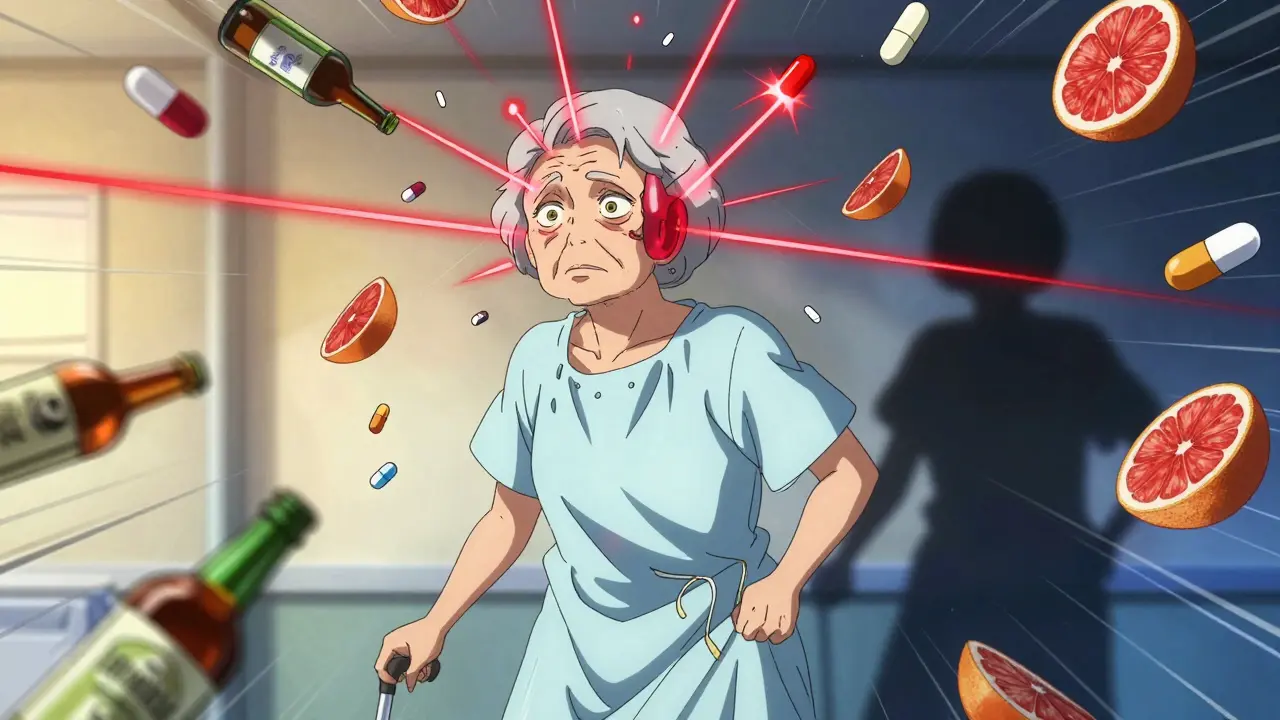
Special Risks for Older Adults and People on Multiple Drugs
People over 65 are at much higher risk. The 2021 National Ambulatory Medical Care Survey found they experience adverse reactions at more than three times the rate of adults aged 45-64. Why? Three big reasons:- They often take five or more medications at once - increasing the chance of dangerous interactions.
- As you age, your liver and kidneys don’t process drugs as quickly, so they build up in your system.
- Many older adults have conditions like diabetes or heart disease that make side effects worse.
Drug Interactions You Might Not Know About
Side effects don’t always come from one drug alone. Mixing medications - or even food - can turn a mild reaction into a crisis.- Alcohol + opioids or sleep meds - this combo can slow your breathing to dangerous levels. It’s killed thousands.
- Grapefruit juice + statins or blood pressure drugs - grapefruit blocks enzymes that break down these drugs, causing toxic levels to build up.
- NSAIDs (like Aleve) + blood thinners - this raises your risk of stomach bleeding.
- Antibiotics + birth control - some antibiotics can make birth control pills less effective.
Cancer Treatments and Their Unique Side Effects
Chemotherapy and radiation don’t just target cancer. They damage fast-growing cells - which includes hair follicles, bone marrow, and the lining of your gut. That’s why common side effects include:- Extreme fatigue
- Hair loss (usually temporary)
- Nausea and vomiting
- Low blood counts (leading to infections or bleeding)
- Diarrhea or constipation
- Loss of appetite or trouble swallowing
- Infertility or early menopause (if treatment targets the pelvis)
When to Call Your Doctor (Not Just Wait It Out)
You don’t have to suffer through every side effect. Here’s when to reach out:- The side effect lasts more than two weeks.
- It gets worse instead of better.
- It interferes with your daily life - you can’t sleep, work, or eat.
- You’re taking multiple drugs and start feeling off.
- You’re over 65 and notice confusion, dizziness, or falls.
How to Report Side Effects - And Why It Matters
Less than 5% of all adverse reactions get reported to health authorities. That means most data on drug safety comes from a tiny fraction of cases. Your report could save someone else’s life. In the U.S., you can report side effects through the FDA’s MedWatch program. You don’t need to be a doctor - patients can file reports directly. In the UK, use the Yellow Card Scheme. In Europe, it’s EudraVigilance. The FDA reviewed over 1.8 million reports in 2023. The highest number came from immunomodulators and blood thinners - drugs that can have hidden dangers. When enough people report the same reaction, the FDA can issue warnings, update labels, or even pull a drug off the market.What You Can Do Today
1. Read the patient information sheet that comes with your prescription. It lists the most common and serious side effects. 2. Keep a side effect journal - write down what you feel, when it happens, and how bad it is. 3. Ask your pharmacist - they know how your pills interact with each other. 4. Use trusted sources like the National Library of Medicine’s drug database to check side effects - not random blogs or social media. 5. Report anything unusual - even if you’re not sure. It’s better to be safe.Frequently Asked Questions
Are all side effects dangerous?
No. Most side effects are mild and temporary - like a headache or dry mouth. These often go away after a few days or weeks as your body adjusts. But if a side effect is new, worsening, or affects your ability to function, don’t ignore it. Some mild reactions can signal something more serious.
Can over-the-counter drugs have serious side effects?
Absolutely. NSAIDs like ibuprofen and naproxen can cause stomach bleeding, kidney damage, or high blood pressure with long-term use. Even antihistamines like Benadryl can cause confusion, urinary retention, or heart rhythm problems - especially in older adults. Just because something is sold without a prescription doesn’t mean it’s risk-free.
Why do some people get side effects and others don’t?
Genetics, age, liver and kidney function, other medications, and even diet play a role. Two people taking the same drug at the same dose can have completely different reactions. That’s why personalized medicine - adjusting doses based on individual factors - is becoming more common.
How long should I wait before calling my doctor about a side effect?
If it’s mild and you’ve only had it for a day or two, give it a little time. But if it’s moderate to severe - like dizziness that makes you stumble, nausea that won’t go away, or a rash that spreads - call your doctor within 24 hours. Don’t wait a week. Early intervention can prevent hospitalization.
Can I just stop taking the medication if the side effects are bad?
No. Stopping suddenly can be dangerous. Some drugs cause rebound symptoms - like high blood pressure or seizures - if stopped abruptly. Others, like antidepressants, can cause withdrawal. Always talk to your doctor first. They may lower your dose, switch you to another drug, or add a medication to manage the side effect.
Is it worth reporting a side effect if it’s not serious?
Yes. Even small, common side effects help regulators understand how drugs behave in real life. If thousands of people report the same mild reaction, it can lead to updated warnings on the label - helping future patients avoid problems. Your report matters, even if it seems small.





Comments
Terri Gladden
January 3, 2026 AT 20:41OMG I took ibuprofen for a headache and woke up with a rash that looked like someone spilled hot sauce on me 😳 I thought it was a new laundry detergent but NOPE it was the Advil. Went to the ER. They were like 'oh yeah this happens' and I was like 'WHY DIDN'T YOU WARN ME?!' I'm still scared to take anything now.
melissa cucic
January 5, 2026 AT 13:34The distinction between 'common' and 'serious' side effects is critically important, and yet, it is frequently conflated by both patients and providers. The FDA's operational definition-based on incidence thresholds and clinical outcomes-is both statistically robust and clinically meaningful. One must not conflate discomfort with danger, nor dismiss discomfort as trivial. A nuanced understanding of pharmacodynamics and individual variability is essential for informed decision-making.
en Max
January 7, 2026 AT 07:53It is imperative to recognize that pharmacokinetic variability-particularly in hepatic metabolism via CYP450 enzymes and renal clearance-is a primary determinant of adverse event profiles. In geriatric populations, reduced glomerular filtration rates and diminished hepatic enzyme activity necessitate dose adjustments. Moreover, polypharmacy introduces complex drug-drug interactions that are often underreported in clinical trials. A comprehensive medication reconciliation is not optional-it is a clinical imperative.
Angie Rehe
January 8, 2026 AT 17:11You people act like side effects are some kind of surprise. Newsflash: EVERY drug has side effects. If you're taking something that changes your brain chemistry, your gut, your hormones-of course your body's gonna freak out. The system is designed to make you feel like you're broken, not that the drug is the problem. Stop blaming yourself. Start blaming Big Pharma for hiding the worst ones in the tiny print.
Dee Humprey
January 10, 2026 AT 08:41I keep a little notebook next to my meds. Day 1: dizzy. Day 3: dry mouth. Day 5: weird taste. Day 7: still dizzy but less. Now I know what’s normal vs what’s 'oh crap I need to call'. Also, if you're on 5+ meds? Ask your pharmacist to do a med sync. They’ll catch stuff your doctor misses. 🙌
John Ross
January 11, 2026 AT 15:02The pharmacovigilance infrastructure in the U.S. is fundamentally broken. Less than 5% reporting? That’s not negligence-it’s systemic collapse. The FDA’s MedWatch portal is a bureaucratic graveyard. Meanwhile, off-label use, direct-to-consumer advertising, and industry-funded trials create a feedback loop of underreporting. We are not just patients-we are unpaid surveillance workers for a broken system.
Michael Rudge
January 12, 2026 AT 02:28Oh wow, you actually read the patient leaflet? How quaint. Most people just Google 'does this drug make you horny?' and call it a day. You're lucky you didn't end up in a TikTok trend where people take Benadryl to get high. Maybe next time, don't trust the internet. Or your doctor. Or your own liver.
Ethan Purser
January 12, 2026 AT 13:50I think we’re all just guinea pigs in a giant pharmaceutical experiment and nobody wants to admit it. You take a pill, your body rebels, you’re told it’s 'normal', but what if it’s not your body? What if it’s the *system*? What if the side effects are the real symptoms and the original diagnosis was just a cover? 🤔 I stopped all meds. Now I eat turmeric and stare at the moon. It’s working better than anything they gave me.
Doreen Pachificus
January 13, 2026 AT 03:36I’ve been on sertraline for 3 years. Dry mouth, mild nausea the first week, then nothing. But I noticed my hands shake sometimes. Never mentioned it. Just assumed it was caffeine. Then I read this and realized-wait, is this a side effect? I’m gonna ask my doctor next visit.
Rory Corrigan
January 13, 2026 AT 14:08We are all just temporary vessels for chemical reactions. The body is a symphony of electrons and enzymes, and drugs? They’re just noise in the music. Maybe the side effect isn’t a mistake-it’s the universe whispering, 'you’re not supposed to be here like this.' 🌌💊
Jack Wernet
January 14, 2026 AT 17:20The data presented herein is both comprehensive and clinically relevant. However, it is essential to acknowledge that patient-reported outcomes often diverge from clinical trial metrics due to selection bias and attrition. Furthermore, cultural perceptions of symptom tolerance may influence reporting behavior. A multidisciplinary approach involving pharmacists, clinicians, and behavioral health specialists is recommended to optimize safety outcomes.
Charlotte N
January 16, 2026 AT 05:54I took that one antibiotic and got diarrhea for two weeks. I thought it was food poisoning. I didn't connect it until I saw this. I'm going to start writing everything down now. I didn't even know I could report it. I thought only doctors could. Wow.
Catherine HARDY
January 16, 2026 AT 12:34Did you know the FDA gets paid by drug companies to approve their drugs? That’s why they downplay side effects. They’re not looking out for you. They’re looking out for stock prices. And those 'mild' side effects? They’re just the tip of the iceberg. Wait till you see what they hide in the long-term studies. They don’t want you to know. But I do. And now you do too. 👁️