Adherence Measurement: How to Track If Medications Are Actually Working
When you take a pill every day, you assume it’s working. But adherence measurement, the process of tracking whether patients take their meds as prescribed. Also known as drug compliance, it’s not about willpower—it’s about real behavior, hidden gaps, and the quiet dangers of skipping doses. Most studies show that up to half of people with chronic conditions don’t take their medicines correctly. Not because they’re lazy, but because the system doesn’t help them remember, understand, or stick with it.
Adherence measurement isn’t just a hospital form you fill out once a year. It’s what happens when you forget your blood pressure pill because you were rushed, or stop your antidepressant because you felt better after two weeks, or skip your insulin because the needle scared you. These aren’t mistakes—they’re signals. And medication adherence, the consistent use of prescribed drugs over time. Also known as pill taking habits, it’s the invisible thread that connects your treatment to your health outcome. Without tracking it, doctors can’t tell if a drug failed—or if you just didn’t take it. That’s why tools like pill trackers, app reminders, and even smart bottles are becoming part of standard care. But the real problem isn’t the tech—it’s the silence. People don’t admit they skip doses because they’re scared of being judged. That’s why the best adherence measurement starts with honesty, not gadgets.
What makes adherence measurement so tricky is that it’s personal. For someone on thyroid meds, missing a dose might mean fatigue for a day. For someone on warfarin, it could mean a stroke. And for mental health meds? Skipping even one day can crash your mood. That’s why non-adherence solutions, practical strategies to help patients stick with their treatment plans. Also known as drug compliance interventions, it’s not about nagging or guilt—it’s about simplifying, supporting, and listening. The posts below show real cases: how wearables catch missed doses through sleep changes, how pharmacists help people organize pills so they don’t get confused, how depression makes people stop meds even when they know they need them. These aren’t abstract ideas. They’re daily struggles with real consequences.
You don’t need to be perfect. You just need to be aware. Adherence measurement isn’t about scoring yourself—it’s about finding what works for your life. Whether it’s a phone alert, a pill organizer, or a chat with your pharmacist, the goal is simple: get the medicine you need into your body, the way it was meant to be taken. Below, you’ll find honest stories, smart tools, and clear fixes that actually help people stay on track—without the shame.
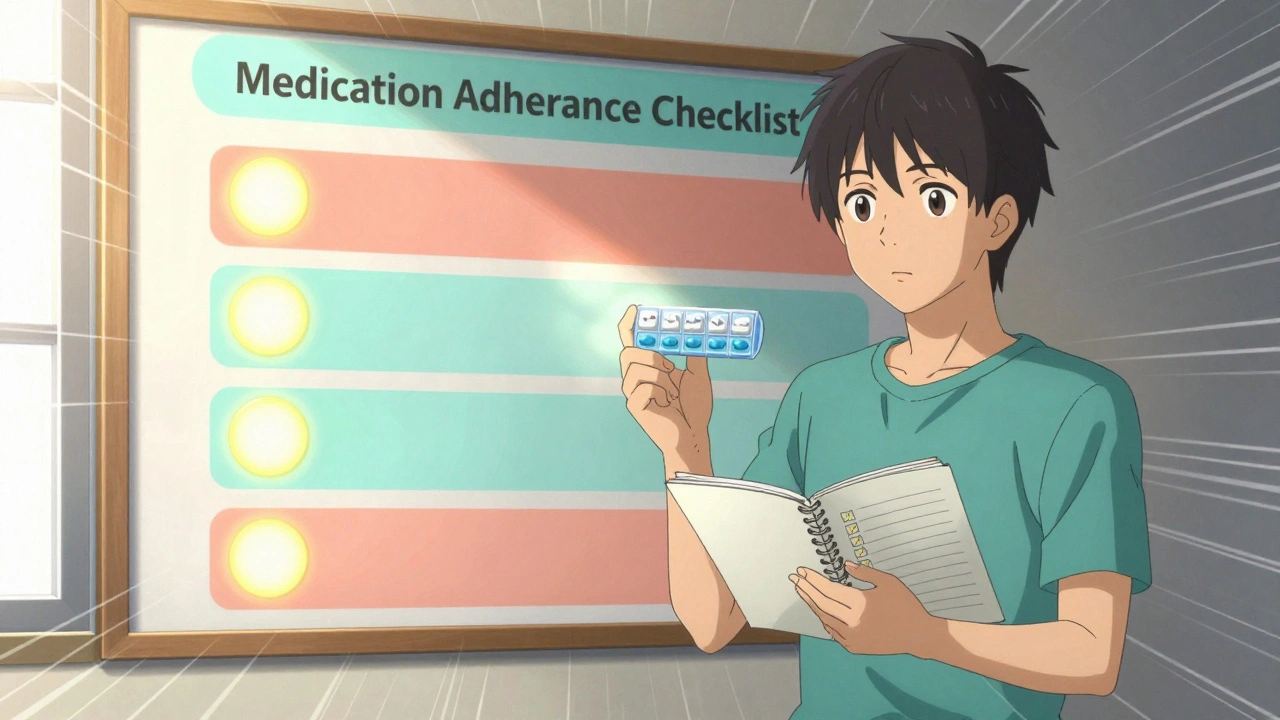
Measuring Your Medication Adherence: A Simple Checklist for Better Health
Learn how to track your medication adherence with a simple, practical checklist. Improve your health by taking pills as prescribed-no apps or gadgets needed.