Medication Checklist: Essential Steps to Stay Safe and Informed
When you take multiple medications, a simple medication checklist, a personalized system to track what you take, when, and why isn’t just helpful—it’s life-saving. Many people don’t realize how easily things go wrong: a new antibiotic raising your blood thinner’s effect, a sleep aid making your blood sugar drop without warning, or a pill stored next to cleaning supplies that loses its power. A solid checklist keeps you in control.
It’s not about memorizing every detail. It’s about having a system. For example, prescription storage, how and where you keep your pills at home matters more than you think. Storing insulin near the stove or keeping antibiotics next to bleach can ruin them—or worse, cause accidental poisoning. Then there’s drug safety, the practice of avoiding harmful interactions and recognizing early warning signs. A 2022 FDA report found that over 1 in 5 hospital admissions for older adults were tied to medication errors, many of which could’ve been caught with a basic checklist. Did you know some antidepressants can mask low blood sugar symptoms if you’re on insulin? Or that clindamycin can trigger a dangerous gut infection you might ignore as "just stomach upset"? These aren’t rare cases. They’re preventable.
Your checklist should include: what you’re taking, why, the dose, when to take it, and who to call if something feels off. It should also track when you last checked your prescriptions for updates—because the FDA releases new safety alerts all the time. You don’t need to read every one, but you should know how to subscribe to them. And if you’re on a blood thinner, a heart medication, or something for thyroid or mental health, your checklist needs to flag potential clashes with over-the-counter stuff, supplements, or even energy drinks. One person’s harmless caffeine boost could be another’s emergency room visit.
What you’ll find below isn’t theory. It’s real-world advice from people who’ve been there: how to spot early signs of dangerous side effects, how to store your labels so you’re never guessing, how to test for fake pills, how to read an FDA alert without getting overwhelmed, and why generics aren’t just cheaper—they’re often just as safe. These aren’t random tips. They’re the exact steps that turn a confusing pile of pills into a clear, safe routine. No fluff. No guesswork. Just what works.
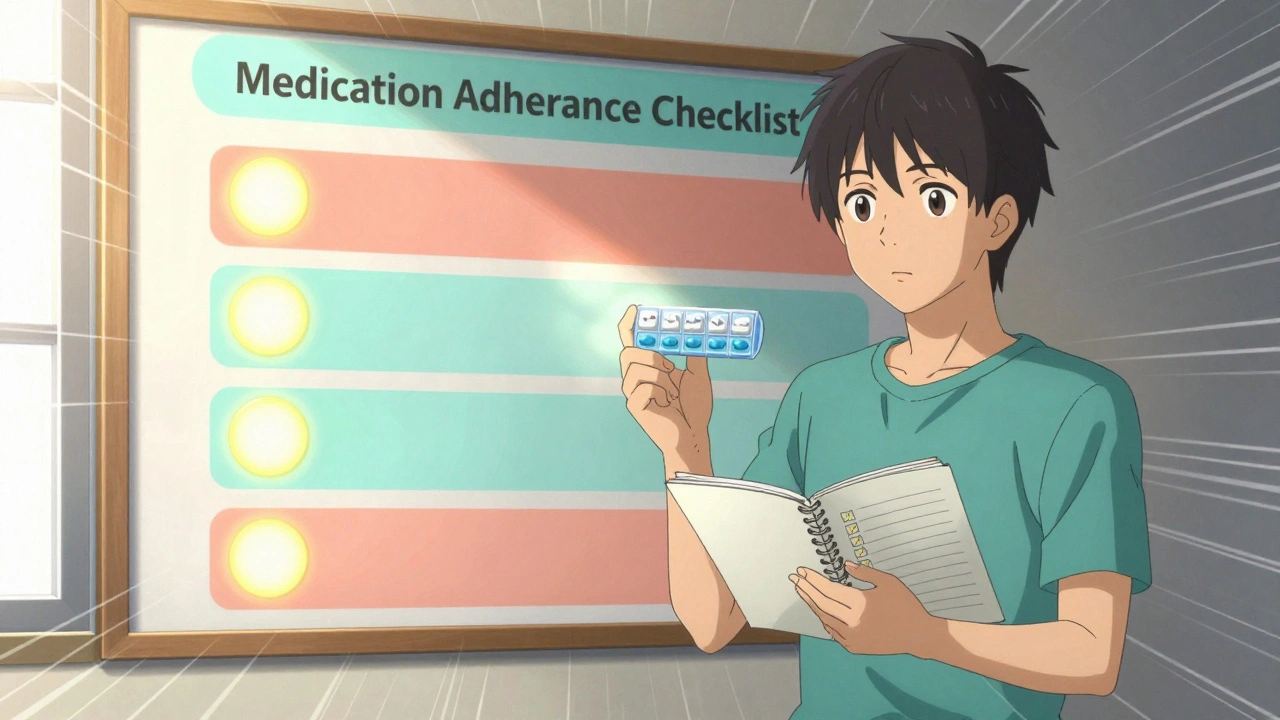
Measuring Your Medication Adherence: A Simple Checklist for Better Health
Learn how to track your medication adherence with a simple, practical checklist. Improve your health by taking pills as prescribed-no apps or gadgets needed.