Take Meds Regularly: Why Consistency Matters and How to Stay on Track
When you take meds regularly, the consistent use of prescribed drugs to manage or treat a health condition. Also known as medication adherence, it’s not about being perfect—it’s about keeping your body in a stable state so the drug can do its job. Missing a dose here and there might seem harmless, but it can undo weeks of progress. For people on blood thinners, antidepressants, or thyroid meds, even one skipped pill can trigger a chain reaction—higher INR, worsening depression, or thyroid swings. This isn’t theory. It’s what doctors see every day in ERs and clinics.
Why do people miss doses? It’s rarely about laziness. medication adherence, the degree to which a patient follows a prescribed treatment plan. Also known as drug compliance, it’s influenced by complex factors—side effects, cost, confusion over timing, or mental health struggles. If you’re on antidepressants and feel worse before you feel better, it’s easy to quit. If you’re juggling five pills at different times of day, it’s easy to forget. If you’re paying $200 a month for a brand-name drug, you might skip doses to make it last. These aren’t bad choices—they’re human responses to broken systems. The good news? Solutions exist. Pharmacist-led check-ins, pill organizers, phone reminders, and switching to once-daily generics all help. One study found that when patients got weekly calls from a pharmacist, adherence jumped by 40%. No magic. Just support.
When you take meds regularly, the consistent use of prescribed drugs to manage or treat a health condition. Also known as medication adherence, it’s not about being perfect—it’s about keeping your body in a stable state so the drug can do its job. you’re not just treating symptoms—you’re preventing worse outcomes. Skipping warfarin? Risk of stroke. Skipping insulin? Diabetic emergencies. Skipping thyroid meds? Fatigue, weight gain, heart strain. These aren’t hypotheticals. They’re documented risks in real patients. And the same goes for mental health meds—stopping SSRIs suddenly can cause brain zaps, dizziness, or rebound anxiety. It’s not "just a pill." It’s a tool that only works when used as intended.
What you’ll find below isn’t a lecture on discipline. It’s a practical toolkit. Real stories. Real fixes. From using wearables to spot early side effects that make you want to quit, to organizing your meds so you never wonder if you took that pill, to understanding why generic drugs can make adherence easier—every post here is built around one truth: taking meds regularly isn’t about willpower. It’s about design. And with the right system, you don’t have to fight yourself to stay on track.
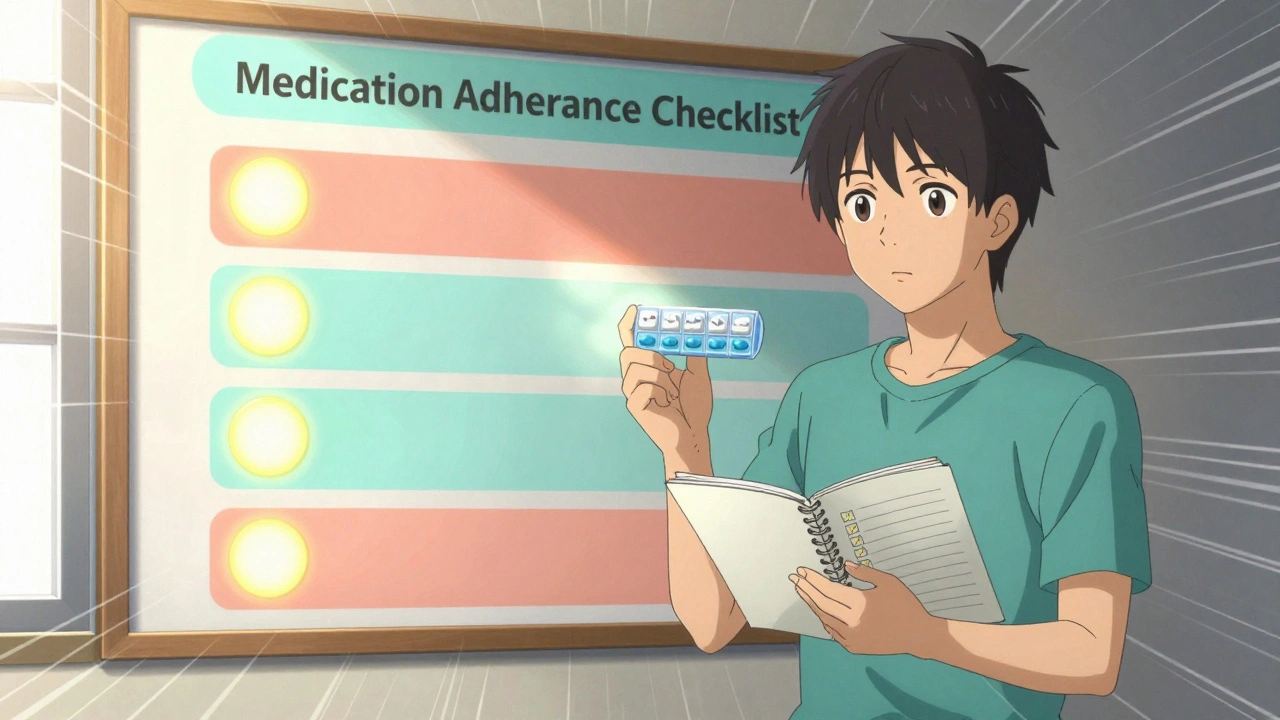
Measuring Your Medication Adherence: A Simple Checklist for Better Health
Learn how to track your medication adherence with a simple, practical checklist. Improve your health by taking pills as prescribed-no apps or gadgets needed.