
Antidepressant Use in Pregnancy: What You Need to Know About Side Effects and Safety
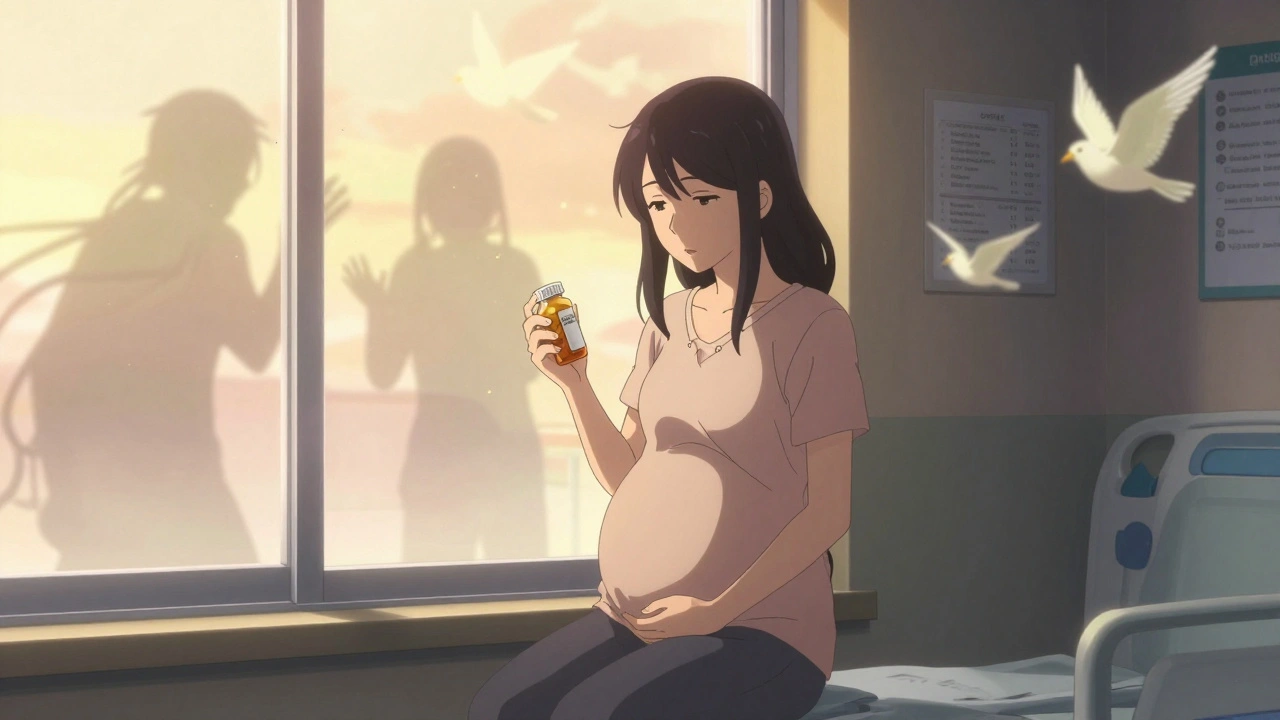
Deciding Whether to Take Antidepressants During Pregnancy Isn’t Simple
When you’re pregnant and struggling with depression, the question isn’t just whether to take antidepressants-it’s whether not taking them might be riskier. Many women stop their medication the moment they find out they’re pregnant, scared of harming the baby. But the truth is, untreated depression carries serious risks too. In fact, mental health conditions are the leading cause of pregnancy-related deaths in the U.S., accounting for nearly a quarter of all such deaths between 2017 and 2019. That’s more than bleeding, high blood pressure, or infection.
What Happens If You Don’t Treat Depression During Pregnancy?
Depression affects about 1 in 7 pregnant women. Left untreated, it doesn’t just make you feel low-it changes how your body functions during pregnancy. Women with untreated depression are 40% more likely to have a preterm birth, 30% more likely to have a baby with low birth weight, and 25% more likely to develop preeclampsia. They’re also half as likely to attend regular prenatal checkups. That means fewer ultrasounds, less monitoring, and delayed detection of complications. And the risk of suicidal behavior triples compared to women without depression.
Which Antidepressants Are Considered Safest?
Not all antidepressants are the same when it comes to pregnancy. The most commonly prescribed and best-studied class is SSRIs-selective serotonin reuptake inhibitors. Among these, sertraline (Zoloft) and citalopram (Celexa) are the top choices for doctors. Why? Because decades of research show they have the lowest risk profile. Sertraline, in particular, has been studied in more than 5 million pregnancies. The data consistently shows no increased risk of major birth defects, growth problems, or long-term developmental delays in children exposed to it in the womb.
Fluoxetine (Prozac) is another option, but it carries a slightly higher risk of a rare but serious condition called persistent pulmonary hypertension of the newborn (PPHN)-about 5 to 6 cases per 1,000 births compared to 2 to 3 in unexposed babies. That’s why many providers avoid it as a first choice unless it’s the only medication that’s worked for you in the past.
Paroxetine (Paxil) is the one SSRI you should avoid if you’re planning to get pregnant or are already pregnant. Studies show it increases the risk of heart defects in babies by 1.5 to 2 times compared to other SSRIs. If you’re on paroxetine and thinking about pregnancy, talk to your doctor about switching before conception.
What About Birth Defects? The Real Risk
Early studies raised alarms about SSRIs and birth defects. But those studies didn’t account for one crucial thing: the depression itself. When researchers compared women taking SSRIs to women with depression who didn’t take medication, the picture changed dramatically. A 2024 review of 29 studies involving over 5 million pregnancies found that the slight increase in birth defect risk seen in initial data disappeared once they controlled for the mother’s mental health condition. The actual risk from SSRIs? Nearly zero. The odds ratio for major congenital anomalies dropped from 1.25 to 1.04-meaning no real increase at all.
The Society for Maternal-Fetal Medicine put it plainly in July 2025: "The available data consistently show that SSRI use during pregnancy is not associated with congenital anomalies, fetal growth problems, or long-term developmental problems." That’s not a guess. That’s based on the largest, most rigorous studies ever done.

Neonatal Adaptation Syndrome: What You Should Expect
One real, documented side effect of SSRIs during pregnancy is neonatal adaptation syndrome (also called neonatal withdrawal or transient neonatal symptoms). About 30% of babies exposed to SSRIs in the third trimester may show mild symptoms after birth-jitteriness, fussiness, breathing trouble, or feeding difficulties. These aren’t birth defects. They’re temporary. Most babies improve within 2 to 14 days without any treatment. No long-term effects have been linked to this condition.
It’s important to know: this doesn’t happen with every baby. And it’s far less common than the risks of untreated depression. If you’re worried, your pediatrician will monitor your baby closely for the first few days. Most hospitals have protocols in place for this.
What About Long-Term Development?
Parents often worry: "Will my child have autism? Will they struggle in school?" A 2022 study of 44,000 children in Norway followed them from birth to age 5. The results? No difference in language development, motor skills, or autism rates between children exposed to SSRIs in utero and those who weren’t. Other large studies in the U.S., Canada, and Sweden have reached the same conclusion.
There’s no evidence that SSRIs cause autism, ADHD, or learning disabilities. The fear comes from old, poorly designed studies that didn’t separate medication effects from the effects of depression itself. Modern research has fixed those flaws-and the results are clear.
What If You Want to Stop Taking Antidepressants?
Many women try to stop their meds as soon as they get pregnant. But here’s the catch: 68% of women who stop antidepressants during pregnancy experience a full relapse of depression. That’s more than twice the rate of those who continue treatment. A 2025 study in JAMA Network Open found that nearly half of pregnant women stopped their antidepressant refills compared to the year before pregnancy-but not one of them increased therapy visits. That’s a dangerous gap. Stopping suddenly can cause withdrawal symptoms like dizziness, nausea, and mood swings. It can also trigger a severe depressive episode.
If you’re thinking of stopping, don’t do it alone. Talk to your doctor. You might be able to lower your dose gradually, switch to a safer medication, or combine medication with therapy. Abrupt discontinuation is never recommended.
What’s the Best Approach? A Personalized Plan
There’s no one-size-fits-all answer. The decision depends on your history: how severe your depression is, whether you’ve had previous episodes, which medications worked before, and whether you’re in crisis right now. For mild depression, therapy alone might be enough. Cognitive behavioral therapy (CBT) is proven to help during pregnancy and has no drug risks.
For moderate to severe depression-or if you’ve needed medication before-the benefits of continuing treatment almost always outweigh the risks. The American College of Obstetricians and Gynecologists and the Society for Maternal-Fetal Medicine both agree: treating depression is safer than leaving it untreated. The key is using the right medication at the lowest effective dose, especially in the first trimester. Sertraline is the gold standard for that.
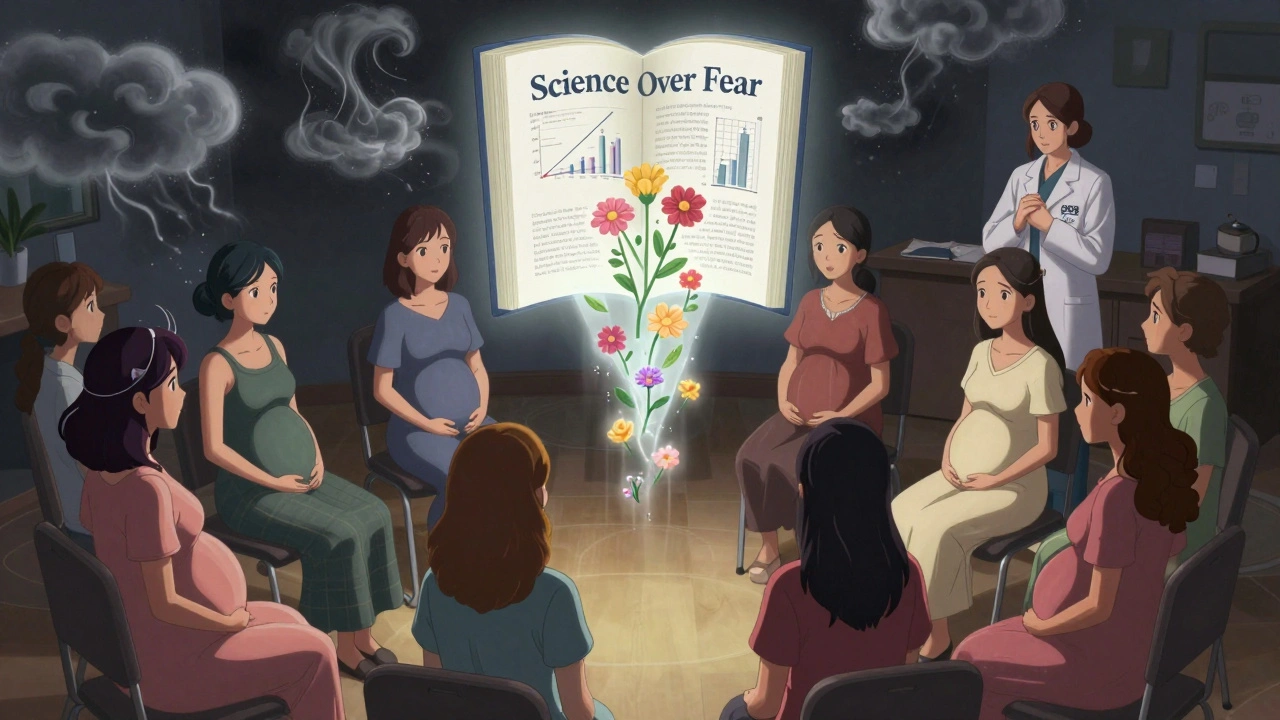
Why the Confusion? The FDA Panel Controversy
In July 2025, an FDA expert panel released a report that caused panic. It suggested SSRIs might carry more risk than previously thought. But within days, ACOG and SMFM pushed back hard. ACOG’s president called the panel "alarmingly unbalanced," pointing out that only one of ten panel members emphasized how critical these drugs are for preventing suicide and maternal death. The panel didn’t include any maternal-fetal medicine specialists. It didn’t consider the latest, most rigorous studies. And it didn’t mention that mental health conditions kill more pregnant women than any other cause.
The result? A wave of fear. Women stopped their meds. Some went without any treatment. That’s exactly what experts warned against. The science hasn’t changed. The guidelines haven’t changed. What changed was the noise-and it’s misleading.
What Should You Do Right Now?
- If you’re pregnant and on antidepressants: Don’t stop. Talk to your OB and psychiatrist together. They can review your medication and adjust if needed.
- If you’re pregnant and not on medication but struggling: Ask for help. Depression isn’t weakness-it’s a medical condition. Therapy, support groups, and medication are all valid options.
- If you’re planning pregnancy: Talk to your doctor about switching off paroxetine if you’re on it. Sertraline or citalopram are safer choices.
- If you’re unsure: Get a second opinion from a perinatal psychiatrist. They specialize in this exact issue.
Non-Medication Options Are Still Important
Medication isn’t the only tool. Exercise, sunlight, sleep hygiene, and therapy can all help. But for many women, these aren’t enough on their own. That doesn’t mean you’re failing. It means your brain needs extra support-just like a diabetic needs insulin. There’s no shame in that.
Combining therapy with medication often works best. CBT helps you build coping skills. Medication helps stabilize your mood enough to engage in therapy. Together, they give you the best shot at staying well during pregnancy and beyond.
Bottom Line: Your Mental Health Matters as Much as Your Baby’s
There’s no perfect choice. But the evidence is clear: untreated depression is far more dangerous than SSRIs. Sertraline and citalopram are safe, well-studied, and effective. The risks of birth defects? Nearly nonexistent. The risk of long-term harm? Not supported by science. The risk of relapse? Very high if you stop.
Choosing to treat your depression isn’t selfish. It’s the most responsible thing you can do-for yourself and for your baby. A healthy mom is the foundation of a healthy child. And you deserve to feel well, no matter what stage of life you’re in.




Comments
Joe Lam
December 5, 2025 AT 08:47This article is basically a pharmaceutical industry propaganda piece dressed up as medical advice. They cherry-pick studies while ignoring the long-term neurodevelopmental data that's been quietly accumulating for years. You think SSRIs are safe? Tell that to the kids in Sweden who are now in their teens showing signs of emotional blunting and social withdrawal. The real risk isn't depression-it's the normalization of chemical containment for complex human experiences.
Jenny Rogers
December 6, 2025 AT 22:54One must consider the ontological implications of pharmacologically altering fetal neurodevelopment. The Cartesian dualism that separates mind from body is a dangerous fallacy in perinatal medicine. To prescribe SSRIs is to implicitly endorse a mechanistic view of consciousness-a view antithetical to the sacred, emergent nature of human life. The data may be statistically insignificant, but ethically, the precedent is catastrophic.
Rachel Bonaparte
December 7, 2025 AT 04:47I read the FDA panel report and I'm not buying it. There's a whole shadow network of pharmaceutical reps cozying up to OB-GYNs. Did you know that the lead author of that '2024 review' got $47,000 from Pfizer last year? And the JAMA study? Sponsored by Lundbeck. They don't want you to know that SSRIs can cause epigenetic changes in the placenta-altering gene expression in ways that might show up in grandchildren. They're silencing the real scientists. I know a nurse who saw 12 babies in one month with unexplained tremors after SSRI exposure. They called it 'neonatal adaptation.' Bullshit. It's a cover-up.
Scott van Haastrecht
December 8, 2025 AT 16:13Let's be real. This whole article is a distraction. The real crisis is that women are being told they need drugs to be good mothers. That's not medicine-that's social control. And the fact that they're pushing sertraline as the 'gold standard' while ignoring the 2023 meta-analysis showing increased risk of autism spectrum traits in male offspring? That's not science. That's corporate gaslighting. I've seen too many women get hooked on these pills and then get blamed for their own emotional collapse when they can't function without them.
Chase Brittingham
December 9, 2025 AT 19:54I had postpartum depression after my first kid and I was terrified to take anything. But I talked to my perinatal psychiatrist and we started me on low-dose sertraline. It didn't make me feel 'happy'-it made me feel like I could breathe again. I was able to hold my baby, sing to her, go to the park. I didn't want to be a 'medicated mom.' But I didn't want to be a ghost either. Therapy helped too. It wasn't perfect, but it was human. You don't have to choose between being a good mom and being yourself. You can be both.
michael booth
December 11, 2025 AT 11:28The evidence is clear. SSRIs are not associated with congenital anomalies when controlling for maternal depression. The Society for Maternal-Fetal Medicine and ACOG are the authoritative bodies here. Dismissing their consensus based on anecdotal fear or ideological bias is medically irresponsible. Treatment is not weakness. It is evidence-based care. The data supports safety. The risks of untreated illness are quantifiable and severe. Please consult your provider before making decisions that impact both your health and your child's.
Heidi Thomas
December 11, 2025 AT 22:53I stopped my antidepressants cold turkey when I got pregnant because I didn't want to be 'that mom' on meds. Ended up in the ER at 28 weeks with suicidal ideation. My OB said I was lucky I didn't lose the baby. Now I'm on sertraline and I'm not ashamed. I'm alive. My kid is fine. The guilt is real but the science is clearer. You don't get bonus points for suffering in silence
Alex Piddington
December 12, 2025 AT 20:05To all the women reading this: you are not broken. You are not failing. Depression is a medical condition, not a moral failing. If your brain needs help to function, that's no different than a pancreas needing insulin. I've worked with hundreds of pregnant women on SSRIs. The vast majority of their children develop normally. The fear you feel? It's understandable. But don't let it silence your voice. You deserve support. You deserve care. You deserve to feel well.
Rudy Van den Boogaert
December 14, 2025 AT 11:01I'm a dad and my wife was on sertraline during both pregnancies. Our kids are 7 and 4. One is a straight-A student, the other is a competitive swimmer. No developmental delays. No autism. No weird behaviors. The only thing we noticed was that my wife was more present. She laughed more. She slept better. She didn't cry every night. That's not a side effect. That's a win.
Ashley Elliott
December 15, 2025 AT 02:49I just wanted to say... thank you for writing this. I was so scared to even ask my doctor about meds. I thought I'd be judged. But when I brought it up, she didn't blink. She just said, 'Let's talk about what's best for you and your baby.' And we did. No shame. No panic. Just care. I'm on citalopram now. And I'm finally sleeping. And that... that means everything.
Chad Handy
December 16, 2025 AT 06:30I've been through three pregnancies and two rounds of SSRIs. I've been hospitalized twice for depression. I've watched my husband cry because he didn't know how to help me. I've held my newborns while sobbing because I felt like a monster. I've taken sertraline, citalopram, and fluoxetine. I've had the 'neonatal jitteriness.' I've had the guilt. I've had the fear. And I've survived. And my kids? They're happy. They're healthy. They're thriving. And I'm here. Not because I'm strong. But because I chose to get help. That's not weakness. That's courage.
Augusta Barlow
December 17, 2025 AT 13:40This is all just a distraction from the real problem: we don't have enough social support for new moms. We don't have paid parental leave. We don't have affordable childcare. We don't have mental health coverage that actually works. Instead of fixing the system, we drug women into compliance. You think sertraline is the answer? Try giving every new mom a $2000/month stipend, a live-in doula, and a 6-month paid leave. Then we'll talk about meds.
Bill Wolfe
December 18, 2025 AT 20:55The FDA panel was right to raise concerns. 🚨 The pharmaceutical industry has spent decades normalizing chemical solutions to systemic problems. 🧬 The fact that we're even having this conversation shows how broken our healthcare system is. 🤕 SSRIs are not 'safe'-they're convenient. And convenience is not the same as care. 🧠 You want to know the real risk? It's not in the data. It's in the silence. The silence of women who are too scared to speak up. The silence of doctors who don't want to lose their drug reps. The silence of a society that would rather medicate than empathize. 🙏