
National Prescription Drug Take-Back Days: What to Expect
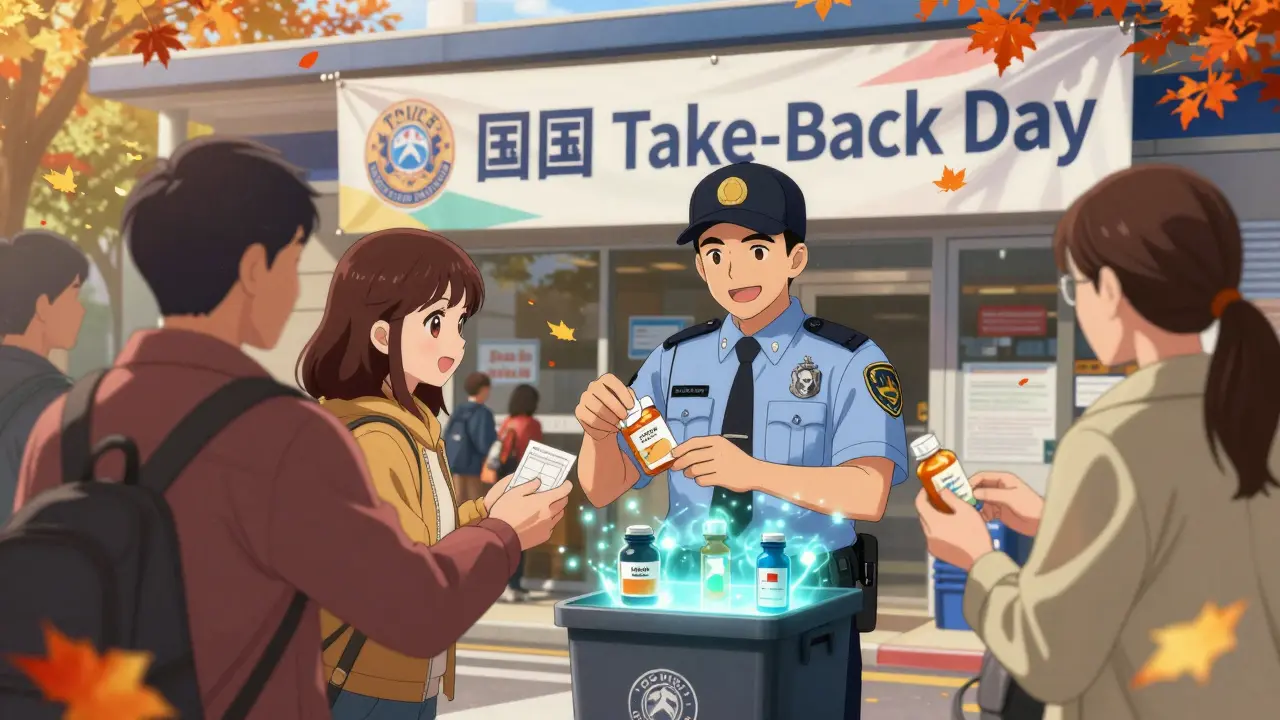
Every year, millions of unused or expired prescription drugs sit in bathroom cabinets, kitchen drawers, and medicine chests across the U.S. Many people don’t know what to do with them-flushing them down the toilet, tossing them in the trash, or just leaving them there. But here’s the truth: prescription drug take-back days are one of the safest, simplest ways to get rid of those pills for good.
What Happens on Take-Back Day?
National Prescription Drug Take-Back Day happens twice a year-once in April and once in October. On the last Saturday of those months, from 10 a.m. to 2 p.m. local time, law enforcement agencies across the country open their doors to collect unwanted medications. You don’t need an appointment. You don’t need to show ID. You don’t even need to explain why you’re dropping them off. Just bring your unused, expired, or extra pills, patches, or capsules, and hand them over.The DEA runs the program with help from nearly 4,500 local police departments, hospitals, pharmacies, and clinics. In April 2025 alone, Americans dropped off over 620,000 pounds of medications. That’s more than 310 tons of pills that won’t end up in a teenager’s medicine cabinet, a pet’s bowl, or a river.
What Can You Bring?
Not everything goes in the collection bin. Here’s what’s accepted:- Pills and tablets (painkillers, antidepressants, blood pressure meds, etc.)
- Capsules and lozenges
- Transdermal patches (like fentanyl or nicotine patches-leave them in their original packaging)
- Liquid medications (like cough syrup), but only if they’re sealed in their original bottles
- Vials and blister packs
Here’s what you can’t bring:
- Needles, syringes, or sharps (those go in a medical waste container)
- Illicit drugs (cocaine, heroin, meth)
- Over-the-counter meds (like ibuprofen or allergy pills)
- Chemotherapy drugs
- Medical devices (inhalers, glucose monitors)
If you’re unsure, check the DEA’s website or call your local collection site ahead of time. Most sites have signs posted with clear examples of what’s allowed.
Why This Matters
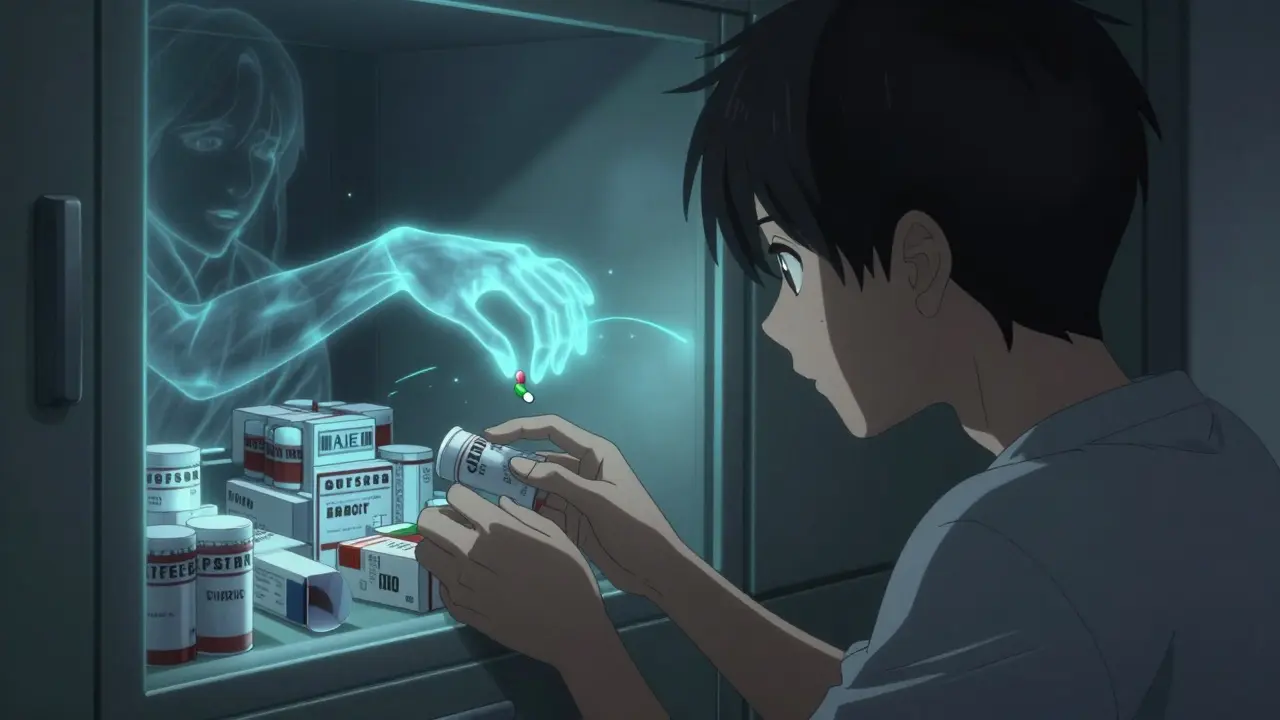
You might think, “It’s just a few old pills. Who cares?” But here’s what happens when those pills stay around:- Over 8 million Americans aged 12 and older misuse prescription painkillers every year.
- More than half of those who misuse them get them from friends or family-often from medicine cabinets.
- Improper disposal contaminates water supplies and harms wildlife.
- Children and pets accidentally ingest leftover meds-over 60,000 emergency room visits each year are due to this.
Take-Back Day isn’t just about cleaning out your cabinet. It’s about breaking the chain of misuse before it starts. The DEA says since 2010, the program has collected nearly 10 million pounds of unused medications. That’s 10 million chances to prevent an overdose, a bad decision, or a tragic accident.
Where to Find a Collection Site
There are thousands of drop-off locations. Most are easy to find:- Local police stations
- Fire departments
- Hospital pharmacies (like University Hospitals in Ohio)
- Big retail pharmacies (CVS and Walgreens often host them)
- Some community centers and government buildings
You can search for your nearest site on takebackday.dea.gov or use the free “Dispose My Meds” app. The site lets you filter by zip code and shows you exact addresses, hours, and what’s accepted. Pro tip: Don’t wait until the day before. Some sites fill up early, especially in busy cities.
What If You Miss the Day?
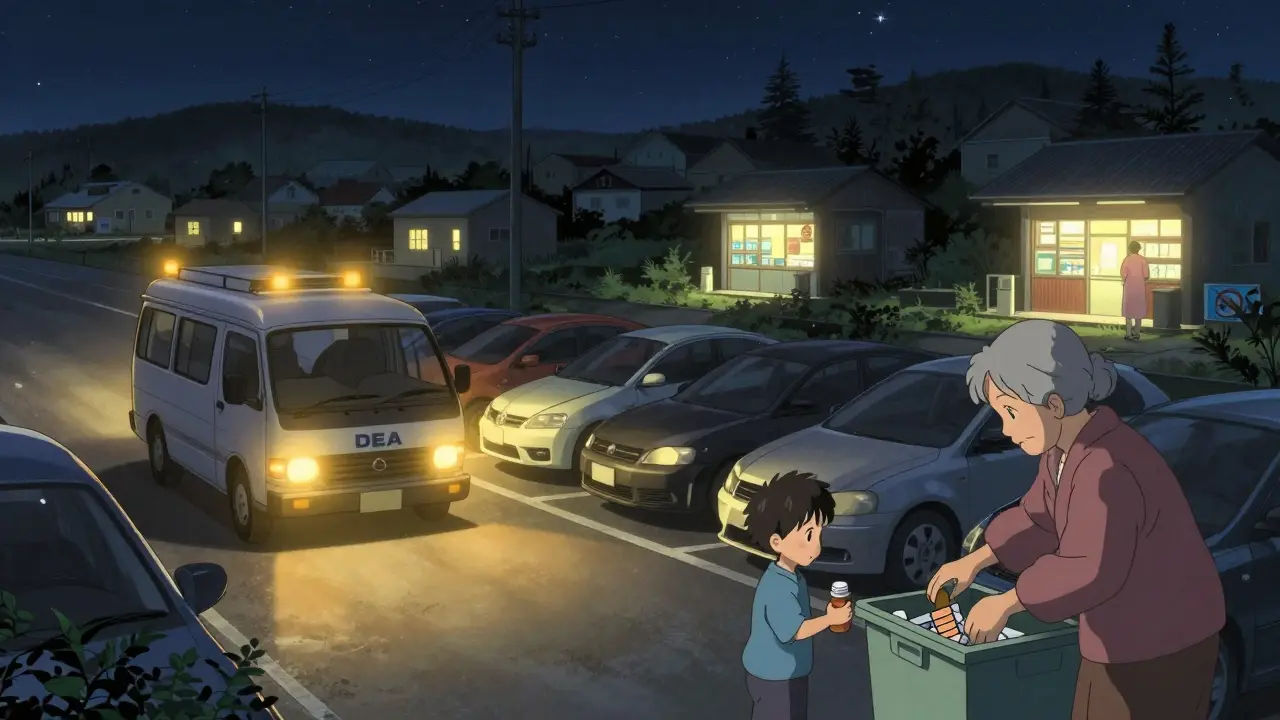
Take-Back Day is the biggest event of the year, but it’s not the only option. There are over 14,000 permanent drug disposal kiosks across the country-mostly in pharmacies and hospitals. Walgreens and CVS have installed them in over 1,200 locations as of August 2025. These kiosks are locked, secure, and available 24/7. You can drop off your meds any day, any time.Some states also run year-round programs. Check your state’s health department website. In South Carolina, for example, over 80 permanent drop boxes are available. If you live in a rural area, the DEA is now sending mobile collection units to towns more than 25 miles from a fixed site. These vans roll in twice a year, just like the big events.
What Happens to the Medications After You Drop Them Off?
Once you hand over your pills, they’re not coming back. Law enforcement officers lock them in secure containers and transport them to licensed disposal facilities. The drugs are incinerated under strict environmental controls-no landfill, no flushing, no recycling. The process meets federal standards set by the Secure and Responsible Drug Disposal Act of 2010. It’s the only method approved by the DEA that guarantees the drugs won’t be recovered or reused.Some people worry that incineration is bad for the environment. But the DEA says the emissions are tightly regulated and far safer than letting those drugs leach into groundwater or be dug out of trash by scavengers.
What People Are Saying
Reddit threads and local health surveys show most people who use the service are glad they did. One user on r/addiction wrote: “Dropped off my mom’s unused opioids at the police station-no questions asked, took 2 minutes, and I know they won’t end up in a teen’s hands.”Common feedback:
- 92% of users appreciate the no-questions-asked policy
- 78% say the locations were convenient
- 65% learned something new about safe disposal
But complaints exist too. Nearly half of those who didn’t participate said they didn’t know about the event until after it was over. Others said the nearest site was too far, especially in rural areas. That’s why the DEA is expanding mobile units and pushing for permanent kiosks in more pharmacies.
How to Prepare
Before you head out:- Go through your medicine cabinet. Look for expired, discontinued, or unused meds.
- Keep pills in their original bottles if possible. It helps staff identify them.
- Remove personal info from labels, but don’t throw out the bottle-some sites ask you to return it.
- Seal liquids in their original containers. No open cups or poured-out bottles.
- Don’t bring sharps, inhalers, or OTC drugs. They’ll be turned away.
Pro tip: Do this every spring and fall. Make it part of your seasonal cleaning routine-like changing smoke detector batteries or checking your fire extinguisher.
What’s Next?
The program is growing. The DEA is testing a new system that will remind patients to dispose of unused prescriptions right after they fill them-through electronic health records. Hospitals using Epic Systems are already trying it out. If it works, it could cut down on unused meds before they even leave the pharmacy.And while Take-Back Day is a big deal, it’s not the whole solution. Only about 19% of Americans properly dispose of their unused meds, according to the American Society of Addiction Medicine. That means 8 out of 10 people are still tossing pills in the trash or flushing them. The goal now is to make permanent disposal as easy as buying a coffee.
For now, mark your calendar: next Take-Back Day is October 25, 2025. Set a reminder. Clean out your cabinet. And do your part to keep your family, your community, and your environment safe.
Can I drop off my pet’s medications on Take-Back Day?
Yes, you can drop off unused pet medications, as long as they’re prescription drugs in solid form-pills, capsules, or patches. Liquid pet meds must be sealed in their original containers. But don’t bring over-the-counter supplements or flea/tick treatments. Those aren’t accepted. If you’re unsure, call the collection site ahead of time.
Do I need to remove the labels from my pill bottles?
You should remove or scratch out your name and personal information for privacy, but don’t throw the bottle away. Many collection sites ask you to return the empty bottle so they can properly identify the medication. If you can’t remove the label, just bring the bottle as-is-the staff will handle it.
What if I have a lot of medications? Can I bring a whole cabinet?
Yes, you can bring as much as you need. There’s no limit. People often bring boxes of old prescriptions, expired antibiotics, or leftover painkillers from surgery. Just make sure everything is in sealed containers or original packaging. If you have a huge amount, call the site ahead of time-they might ask you to come during a less busy window.
Why can’t I flush my old pills anymore?
Flushing pills used to be recommended for certain high-risk drugs, like opioids, but now it’s discouraged. The FDA changed its guidance because flushing contaminates water systems and harms aquatic life. Even trace amounts of drugs in rivers and lakes can affect fish and frogs. Take-Back Day and permanent kiosks are the only safe, approved methods now.
Are there any costs to participate?
No, it’s completely free. There’s no fee, no charge, no hidden cost. The DEA and local law enforcement cover all expenses. You’re not paying for disposal-you’re helping prevent harm. This is a public health service, not a business.
What if I’m not home on Take-Back Day?
You don’t have to wait. There are over 14,000 permanent drug disposal kiosks across the U.S., mostly in pharmacies like CVS and Walgreens. These are available 24/7, so you can drop off meds any time. Check the DEA’s website or use the Dispose My Meds app to find the nearest one.
Comments
Jane Lucas
December 27, 2025 AT 18:40Just dropped off my dad’s old painkillers yesterday. Took 2 minutes. No questions. Felt good.
Miriam Piro
December 29, 2025 AT 05:11They say it’s for safety but let’s be real-this is just another way for the feds to track what meds you had. Why do I need to hand over my grandma’s blood pressure pills? They’re not hurting anyone. And don’t tell me about ‘water contamination’-you think the government doesn’t poison rivers with chemicals they don’t want us to know about? 🤔💧
dean du plessis
December 30, 2025 AT 23:17I live in Cape Town and we dont have this here but i think its a great idea. Why do people keep old meds anyway? Its like hoarding batteries or expired coupons. Just let go man
Monika Naumann
January 1, 2026 AT 12:44It is imperative that citizens adhere to the prescribed protocols for pharmaceutical disposal. The integrity of public health systems depends upon the conscientious compliance of individuals. To dispose of medications haphazardly is not merely irresponsible-it is an affront to societal order and moral duty.
Robyn Hays
January 2, 2026 AT 03:33I love that this exists. My niece found her uncle’s leftover oxy in his old gym bag last year. Scared the crap out of us. Now I do a cabinet sweep every season like it’s spring cleaning. Throw out the expired toothpaste, toss the old socks, and dump the pills. Feels like a tiny act of love for everyone around you 💚
Satyakki Bhattacharjee
January 2, 2026 AT 14:48People are weak. They keep pills because they are afraid to let go. Addiction starts with holding on to things that dont belong to you anymore. Throw it away. Be strong.
Kishor Raibole
January 4, 2026 AT 06:03The institutionalization of pharmaceutical disposal represents a paradigmatic shift in the sociopolitical architecture of personal autonomy. One must question whether the state’s intervention in domestic pharmacological storage constitutes a subtle erosion of individual sovereignty under the guise of public welfare.
John Barron
January 4, 2026 AT 22:15FYI-did you know that incineration releases dioxins? 🤯 The DEA claims it’s ‘regulated’ but they don’t tell you the emissions are still 3x higher than EPA’s safe threshold for rural zones. I’ve got a PhD in environmental toxicology. This program is a PR stunt. Also, why are they not using chemical neutralization? It’s cheaper and greener. 🤷♂️ #ScienceOverPropaganda
Liz MENDOZA
January 5, 2026 AT 10:54I brought my mom’s old antidepressants last year. She didn’t even remember she had them. We cried a little. Then we hugged. That’s what this is for-not just safety. It’s about closure. Thank you to everyone who runs these events. You’re doing holy work.
Anna Weitz
January 6, 2026 AT 22:57The real problem is doctors overprescribing. Why do I need 90 pills for a 7-day infection? They give you a whole bottle then act surprised when you dont finish it. This is a bandaid on a bullet wound. Fix the system not the trash can
Paula Alencar
January 8, 2026 AT 11:36I cannot express the profound gratitude I feel toward the DEA and its affiliated agencies for establishing this vital public health initiative. The meticulous organization, the unwavering commitment to environmental stewardship, and the compassionate, nonjudgmental environment provided at each collection site are nothing short of exemplary. As a healthcare professional with over two decades of experience, I have witnessed firsthand the devastating consequences of pharmaceutical misuse-particularly among adolescents and elderly populations. The fact that over 620,000 pounds of medications were collected in April 2025 alone is not merely a statistic; it is a testament to the power of collective responsibility. I urge every citizen to treat this not as a chore, but as a sacred ritual of care-for your family, your community, and the planet. Let us not forget: every pill discarded properly is a life potentially saved. May this program continue to expand, and may we all remember that true safety begins with a single, quiet act of surrender.