
Panic Disorder: Understanding Panic Attacks, Agoraphobia, and Effective Treatments
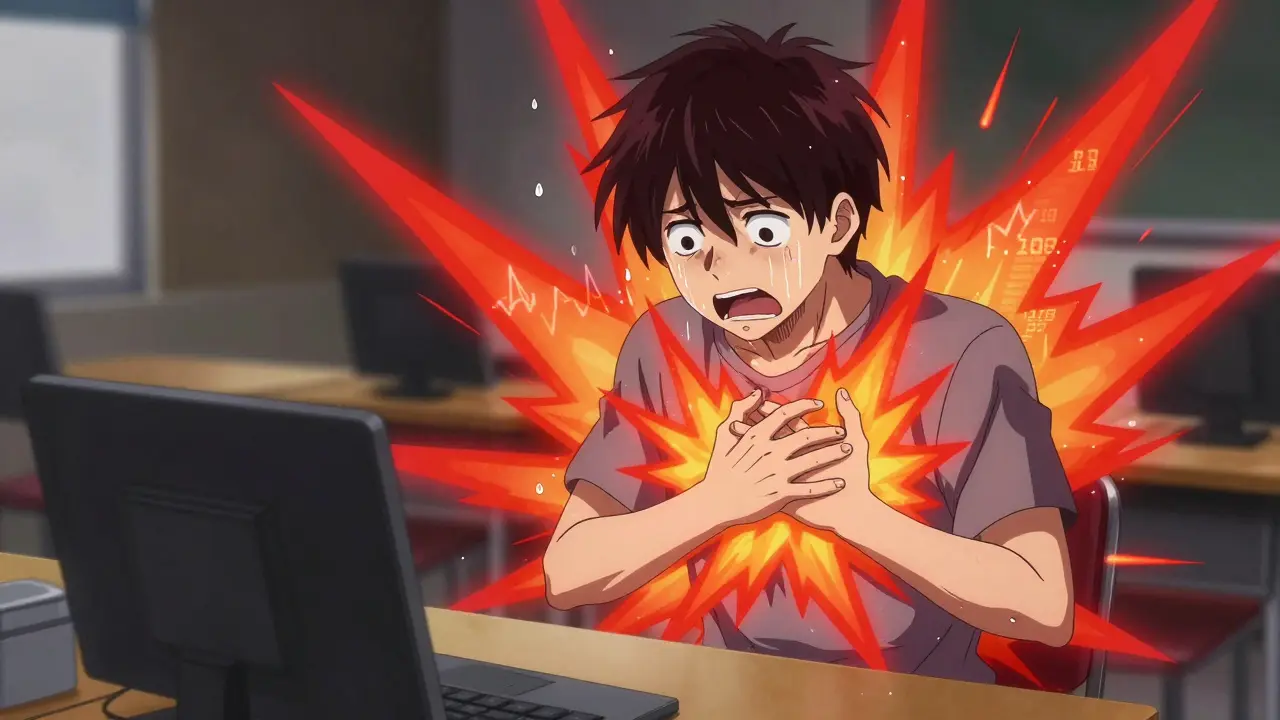
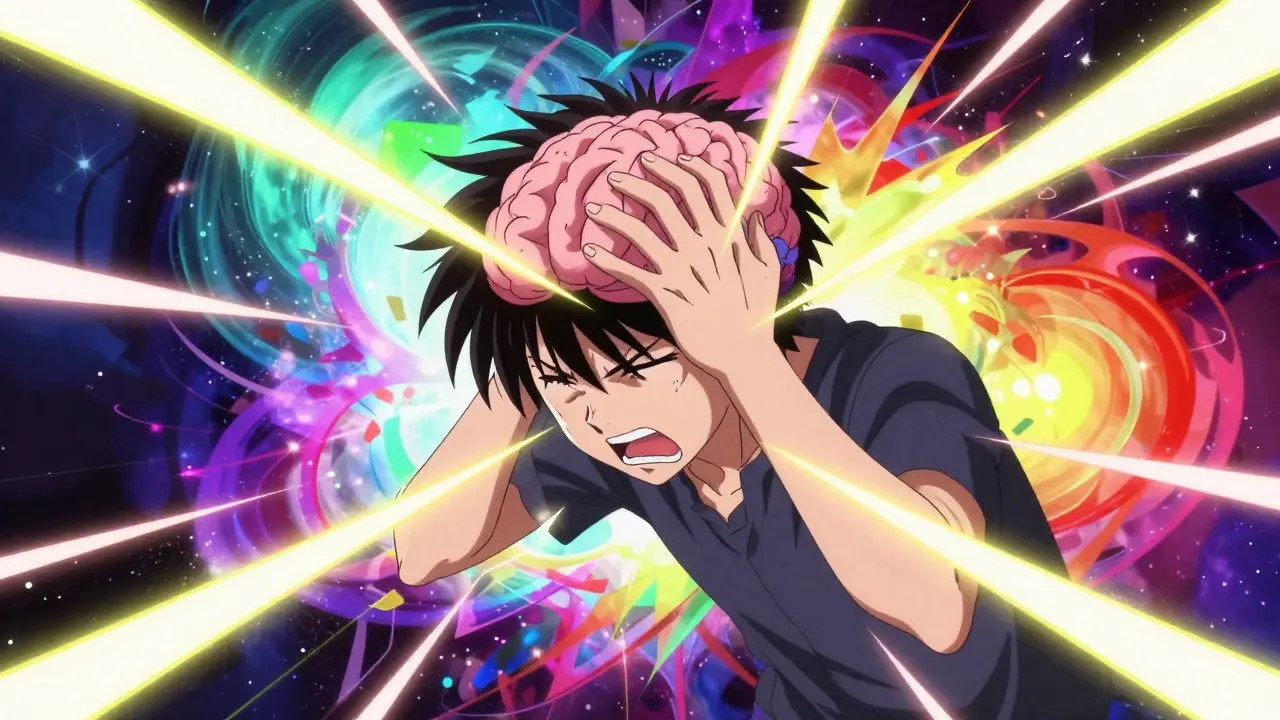
Imagine waking up one morning and your heart starts hammering like it’s trying to escape your chest. Your breath vanishes. Your hands go numb. You think you’re having a heart attack. But the ER doctor says your heart is fine. Nothing’s physically wrong. Yet the fear doesn’t leave. It lingers. And then it happens again. And again. This isn’t just stress. This is panic disorder.
What Exactly Is a Panic Attack?
A panic attack isn’t just feeling nervous. It’s a full-body alarm system going off for no clear reason. You don’t need to be in danger. You don’t need to be stressed. One minute you’re sitting at your desk, the next you’re convinced you’re dying. Symptoms hit fast-within seconds-and peak within 10 minutes. Heart rate spikes above 120 beats per minute. Sweat pours out. Your chest tightens. You feel like you can’t breathe. You might feel like you’re losing control, going crazy, or about to pass out.The body’s fight-or-flight system is firing like it’s being chased by a bear. But there’s no bear. Just your brain misreading harmless physical signals as life-threatening. That’s the core of panic disorder: your brain thinks your own heartbeat, your own breath, your own dizziness is a sign of disaster.
According to clinical data, nearly every person who has panic attacks feels palpitations (98%), sweating (75%), trembling (72%), and fear of dying (80%). Some feel choking, chest pain, nausea, or dizziness. Others feel detached from reality-like they’re watching themselves from outside their body. These aren’t imaginary. They’re real physical reactions. But they’re not dangerous.
How Panic Disorder Turns Into Agoraphobia
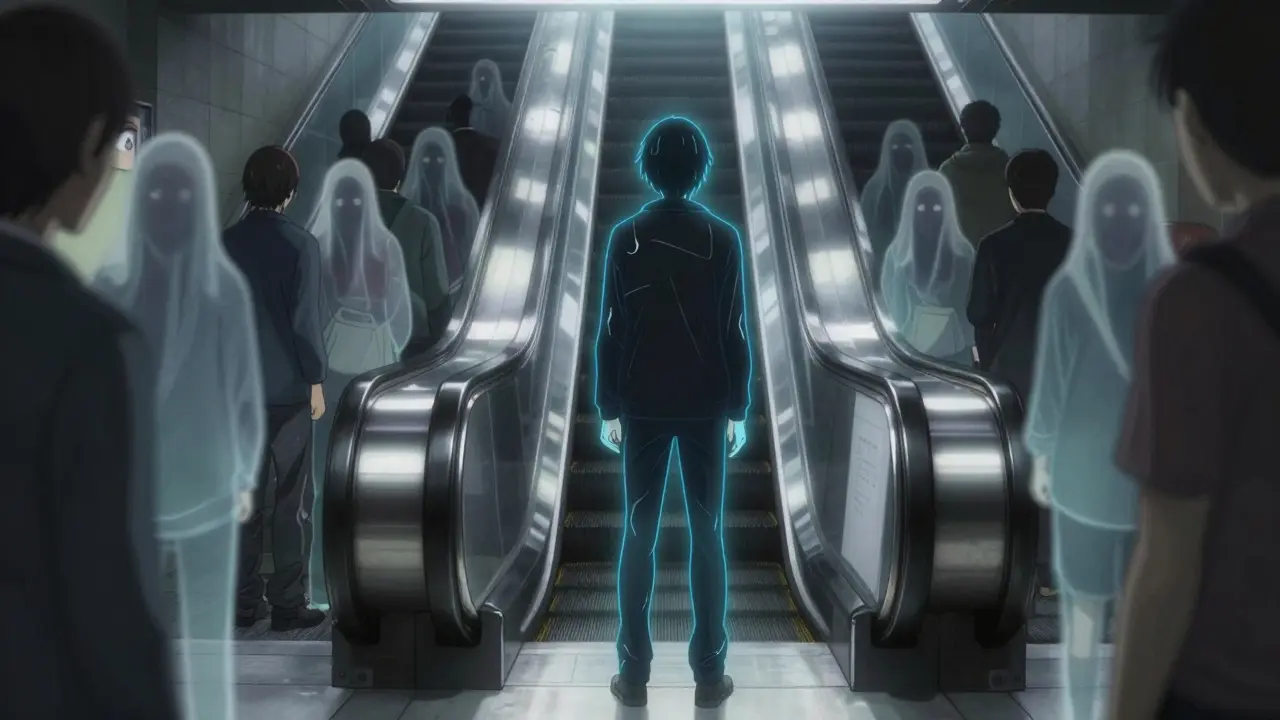
After a few panic attacks, something shifts. You start dreading the next one. Not just the attack itself, but where it might happen. The bus. The supermarket. A crowded room. Being alone outside. You begin avoiding places that feel unsafe. That’s agoraphobia.Agoraphobia isn’t just fear of open spaces. It’s fear of being trapped, helpless, or unable to escape if panic strikes. Sixty-two percent of people with panic disorder avoid public transportation. Fifty-nine percent avoid crowds. Seventy-two percent avoid leaving home alone. Some people end up stuck inside their homes for months. Their world shrinks to the size of their living room.
This isn’t laziness. It’s survival. Your brain is trying to protect you. But the more you avoid, the more your fear grows. Avoidance teaches your brain that the place you escaped from was dangerous. So next time, you avoid even more. It’s a spiral.
Studies show that between 30% and 50% of people with panic disorder develop agoraphobia. And the longer it goes untreated, the harder it is to break free. That’s why early treatment matters.
Why This Happens: The Science Behind Panic
Panic disorder doesn’t come from one thing. It’s a mix of biology, brain wiring, and life experiences.Neuroscience shows the amygdala-the brain’s fear center-is overactive in people with panic disorder. It reacts 25% more strongly to threat signals than in people without the condition. That means your brain is hypersensitive. A normal rise in heart rate? To you, it’s a signal of doom.
Genetics play a role too. If a close family member has panic disorder, your risk goes up by 30% to 48%. It’s not destiny, but it means your nervous system might be wired for higher anxiety.
Then there’s anxiety sensitivity-the fear of fear itself. People who score high on anxiety sensitivity believe that physical symptoms like a racing heart mean something terrible is happening. That belief turns a normal bodily sensation into a panic trigger. One study found people with high anxiety sensitivity were nearly five times more likely to develop full-blown panic disorder.
Life stress often acts as the trigger. Sixty-five percent of first panic attacks happen within six months of a major life event: a breakup, job loss, death of a loved one, or even a big move. Your nervous system, already on edge, snaps.
What Works: Evidence-Based Treatment
The good news? Panic disorder is one of the most treatable anxiety conditions. And you don’t need to take medication forever.The gold standard is cognitive behavioral therapy, or CBT. It’s not talk therapy. It’s training. You learn how panic works. You learn to stop fighting the symptoms. And you slowly face the situations you’ve been avoiding.
CBT has three main parts:
- Cognitive restructuring: You challenge the thoughts that fuel panic. When your heart races, you don’t think, “I’m having a heart attack.” You learn to say, “This is just anxiety. It’s uncomfortable, but it won’t kill me.”
- Interoceptive exposure: You deliberately bring on panic-like sensations-spinning until dizzy, breathing fast until you feel lightheaded, holding your breath. You learn these sensations are scary, but harmless. Your brain stops seeing them as threats.
- In vivo exposure: You slowly go back to the places you’ve avoided. First, you stand outside your house. Then you walk to the mailbox. Then you drive to the corner store. Then you take the bus. Each step is practiced until the fear drops.
Studies show 70% to 80% of people see major improvement after 12 to 15 weekly CBT sessions. Symptom reduction is usually 50% to 70%. And the benefits last. Unlike medication, CBT teaches skills that stick.
Medication: When and How It Helps
Medication isn’t the first line of treatment-but it can be a helpful tool, especially if panic is severe or you’re too overwhelmed to start therapy.SSRIs like sertraline and paroxetine are the most common. They don’t work overnight. It takes 4 to 8 weeks to see results. But once they kick in, they reduce panic attacks by 60% to 75%. They also help with the constant worry and dread that follows attacks.
Side effects? Yes. Weight gain, low libido, emotional numbness. About 40% of people on paroxetine report feeling emotionally flat. That’s why some people stop taking them-even if they’re working.
Benzodiazepines like alprazolam (Xanax) work fast. They calm panic within minutes. But they’re risky. Long-term use leads to dependence in 30% to 40% of users. Withdrawal can be worse than the original panic. That’s why doctors now limit them to short-term use only.
The best results come from combining CBT with SSRIs. One 2023 study found 85% of people in combined treatment achieved full remission-compared to 65% to 70% with just one approach. Medication helps you get stable enough to do the hard work of therapy.
What Doesn’t Work-and Why
Many people try to manage panic on their own. They avoid caffeine. They meditate. They breathe deeply. These help a little. But they don’t fix the core problem: the fear of fear.Some turn to alcohol or drugs to numb the anxiety. That might feel good in the moment. But it makes panic worse over time. Your brain gets used to the chemical crutch. When it’s gone, panic returns stronger.
Emergency room visits are common. Fifty-two percent of people with panic disorder go to the ER thinking they’re having a heart attack. That’s understandable. But it doesn’t solve anything. You leave with a clean bill of health-and no plan to stop the next attack.
Ignoring panic doesn’t make it go away. Avoiding triggers makes it grow. Waiting too long to get help is the biggest mistake. On average, people wait 7.2 years before getting a proper diagnosis. That’s over seven years of living in fear.
Digital Tools and New Hope
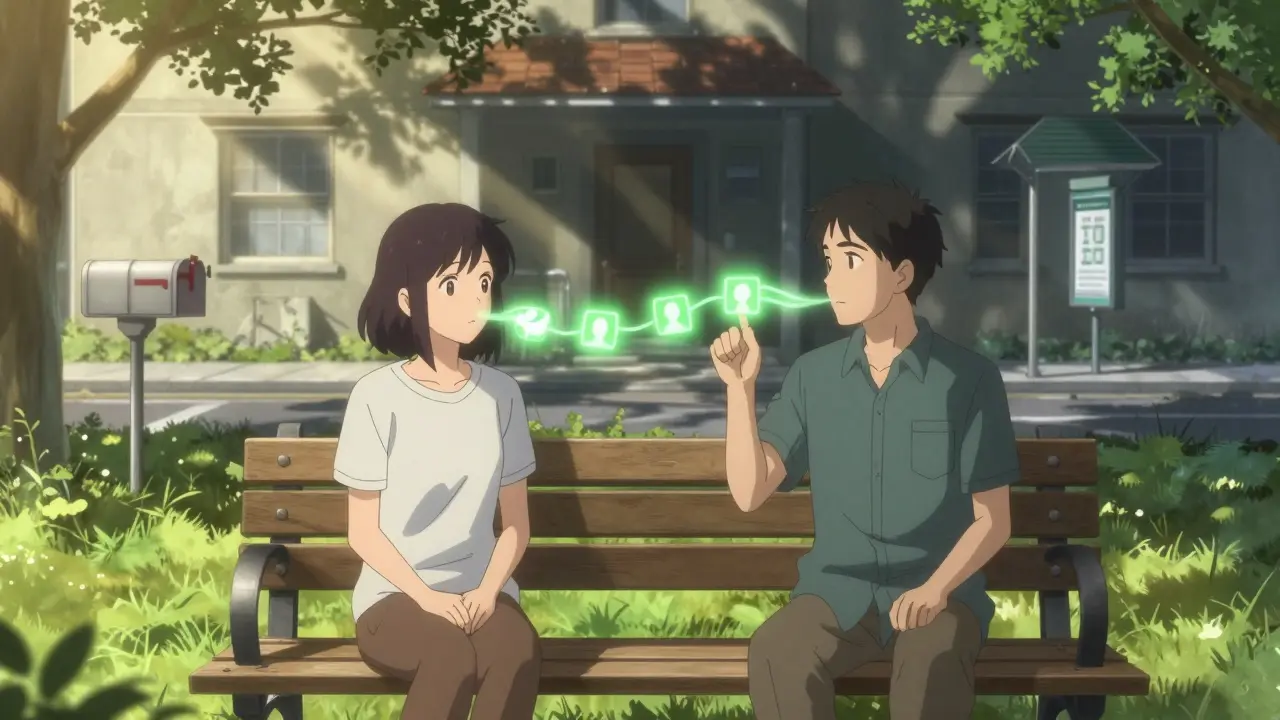
Technology is changing how people get help. Apps like CalmWave, developed by Columbia University, deliver CBT through a smartphone. You do 40-minute weekly modules: breathing exercises, thought logs, exposure challenges. One trial showed a 65% adherence rate and a 40% reduction in panic attacks after 12 weeks.In May 2023, the FDA approved the first digital therapeutic for panic disorder. CalmWave uses biometric feedback-tracking your heart rate and breathing-to guide you through exposure exercises in real time. In a 24-week trial, 62% of users went into full remission.
There’s also research into personalized medicine. Scientists are studying genetic markers, brain scans, and heart rate patterns to predict who will respond best to CBT vs. medication. This isn’t science fiction. It’s happening now.
What Recovery Looks Like
Recovery isn’t about never feeling anxious again. It’s about no longer being ruled by fear.One woman, after three years of avoiding buses, started taking one ride a week with her therapist. She sat near the back. She practiced slow breathing. She let the panic come. It didn’t kill her. The next week, she rode longer. Then she rode alone. Six months later, she was commuting to work without panic.
Another man, on paroxetine for a year, felt emotionally numb. He switched to CBT alone. He lost the weight. He got his emotions back. He still gets nervous sometimes. But now he knows: it’s just anxiety. It will pass.
Long-term studies show 65% of people who get proper treatment stay in remission. But 25% have relapses-usually after a major life stress. That’s why maintenance matters. Quarterly check-ins. Keeping up with breathing exercises. Knowing the signs. Having a plan.
Panic disorder doesn’t define you. It’s a condition. And like any condition, it can be managed. You don’t have to live in fear. You don’t have to be trapped in your home. You don’t have to keep going to the ER. Help exists. And it works.
Can panic attacks cause a heart attack?
No. Panic attacks do not cause heart attacks. While panic attacks can cause chest pain, rapid heartbeat, and shortness of breath-symptoms that mimic a heart attack-they don’t damage the heart muscle or trigger cardiac arrest. Emergency rooms often see people with panic attacks who believe they’re having a heart attack, but medical tests consistently show no physical heart damage. The fear of dying during a panic attack is real, but the physical danger is not.
Is agoraphobia the same as being afraid of open spaces?
No. Agoraphobia is often misunderstood as just fear of open spaces, but it’s more complex. It’s the fear of being in situations where escape might be hard or help unavailable if panic strikes. This includes crowds, public transport, elevators, bridges, or even being alone outside the house. People with agoraphobia may avoid any situation they associate with panic-even if it’s not “open.” The core issue is feeling trapped or helpless, not the physical space itself.
How long does CBT take to work for panic disorder?
Most people start seeing improvement after 4 to 6 weeks of weekly CBT sessions. Significant symptom reduction-usually 50% to 70%-typically occurs after 12 to 15 sessions. Some people feel better sooner, especially with consistent practice of exposure exercises. The key is consistency. Daily practice outside sessions, like breathing drills or short exposure walks, speeds up progress.
Can you recover from panic disorder without medication?
Yes, many people recover fully without medication. Cognitive behavioral therapy (CBT) alone has a success rate of 70% to 80% in clinical trials. The goal of CBT is to retrain your brain’s response to panic symptoms, so you no longer fear them. Medication can help speed up recovery, especially in severe cases, but it’s not required. Long-term success is higher when you learn coping skills rather than relying on pills.
Why do some people feel emotionally numb on SSRIs?
SSRIs increase serotonin levels in the brain, which reduces anxiety-but can also blunt emotional responses in some people. About 40% of users report feeling emotionally flat, less motivated, or disconnected from joy. This isn’t universal, but it’s common enough to be noted in clinical guidelines. If this happens, talk to your doctor. Adjusting the dose, switching medications, or combining SSRIs with therapy can help. Never stop taking them suddenly-withdrawal can worsen panic symptoms.
Is panic disorder genetic?
Yes, genetics play a role. Twin studies show that if a close relative has panic disorder, your risk increases by 30% to 48%. This doesn’t mean you’ll definitely get it, but your nervous system may be more sensitive to stress and anxiety triggers. Environmental factors-like trauma or major life changes-are usually needed to activate the condition. Genetics load the gun; environment pulls the trigger.
What’s the best way to support someone with panic disorder?
Don’t tell them to “calm down” or “stop overreacting.” Instead, say: “I’m here with you,” or “This will pass.” Stay calm yourself. Help them focus on slow breathing. Don’t push them to face fears before they’re ready. Encourage professional help, but don’t force it. Learn about panic disorder so you understand it’s not just “nerves.” Your patience and steady presence can make a huge difference.
Next Steps: What to Do Right Now
If you recognize yourself in this:- Write down your last three panic attacks: What happened? Where? What thoughts ran through your head?
- Find a therapist trained in CBT for anxiety. Look for someone who does exposure work-not just talk.
- Download a free app like Panic Relief or CalmWave. Start with one breathing exercise a day.
- Don’t avoid your fears. Start small. Walk to the end of your street. Sit in a quiet café for five minutes. Build from there.
- If you’re on medication, don’t quit cold turkey. Talk to your doctor about tapering or combining it with therapy.
Panic disorder doesn’t have to be a life sentence. It’s a signal-not a sentence. And with the right tools, you can take your life back.


Comments
Kelly Beck
January 5, 2026 AT 07:11Okay but like… I had my first panic attack in a Target and I thought I was dying 😭 I kept thinking ‘this is it, I’m gonna collapse right here next to the cereal’ but I just… sat on the floor and cried and then a stranger brought me water?? I didn’t even know her name. That’s when I realized people are weirdly kind when you’re falling apart. CBT saved me. Not meds. Not yoga. Just sitting with the fear until it stopped screaming. Now I go to Target weekly. And I buy the gummy worms. No shame.
Also, if you’re reading this and you’re stuck inside? Start with the porch. Just sit. Five minutes. Your brain will freak out. Let it. It’s just a glitch. Not a death sentence. You got this. 💪❤️
Molly McLane
January 6, 2026 AT 18:51I’ve been a therapist for 18 years and I still get choked up reading posts like this. Panic disorder isn’t weakness-it’s your nervous system screaming because it’s been overworked, misunderstood, and ignored. The worst part? People think you’re ‘just anxious’ like it’s a mood. Nah. It’s a full-system overload. CBT isn’t just ‘think positive.’ It’s rewiring your amygdala like you’re updating firmware. And yeah, it’s brutal. But 70% success rate? That’s not luck. That’s science. If you’re scared to start therapy? I get it. I was too. But your future self will hug you for it.
Also-agoraphobia isn’t laziness. It’s trauma. And healing isn’t linear. Some days you’ll leave the house. Some days you’ll cry in the shower. Both count.
Keep going. You’re not broken. You’re rebuilding.
Katie Schoen
January 7, 2026 AT 01:18So basically your brain is like a 2008 MacBook trying to run Windows 11. Every little thing crashes it. ‘Heartbeat? OH NOES. A BEAR.’ ‘Breathing? FIRE. EMERGENCY.’
CBT is the software update. You don’t need a new computer. You just need to stop letting your brain run on 2008 settings. Also, Xanax is like duct tape on a leaking pipe. Works for a sec. Then it explodes. And now you’ve got water everywhere. Just sayin’.
Also-yes, you can recover without meds. I did. And I still drink coffee. Shocking, I know.
Beth Templeton
January 8, 2026 AT 06:06CBT works. Stop wasting time.
Tiffany Adjei - Opong
January 9, 2026 AT 05:35Okay but let’s be real-CBT is just exposure therapy with a fancy name. And the ‘retraining your brain’ thing? That’s neuroplasticity 101. Everyone knows that. What’s not talked about is how expensive and inaccessible it is. My therapist charged $200/hour. I had to work two jobs to afford it. Meanwhile, the guy who wrote this article? Probably owns three homes. So yeah-congrats on your 70% success rate. What about the 30% who can’t afford to sit in a room and ‘breathe through it’ while their landlord is knocking?
Also-digital apps? Cute. But my phone dies after 2 hours. And my WiFi cuts out when I’m most panicked. So thanks for the ‘tech solution’ that ignores real life.
And SSRIs making you numb? That’s not a side effect. That’s the point. They’re not fixing you. They’re just turning you into a zombie who doesn’t care enough to panic. Brilliant.
Meanwhile, I’m still in my apartment. And I’m fine. Maybe I don’t want to ‘recover.’ Maybe I just want to be left alone.
Ryan Barr
January 9, 2026 AT 11:5970% efficacy? That’s barely above placebo territory. And CBT’s long-term durability? Underpowered studies with selection bias. The real solution is pharmacogenomics-personalized SSRIs based on CYP450 polymorphisms. But no, let’s just have people breathe into paper bags like it’s 1987.
Also, ‘agoraphobia isn’t laziness’-how quaint. It’s a behavioral avoidance pattern rooted in maladaptive conditioning. You don’t need a therapist. You need a behaviorist with a Skinner box.
Cam Jane
January 9, 2026 AT 17:16Y’all are overcomplicating this. I had panic disorder. I didn’t have a fancy therapist. I didn’t have insurance. I had a YouTube video called ‘Panic Attack? Do This Now’ and a friend who texted me every day at 3pm to ask if I’d left the house yet.
Here’s what actually worked:
- I started walking to the mailbox. Every day. Even if I shook the whole way.
- I stopped saying ‘I can’t’ and started saying ‘I’m scared, but I’m doing it anyway.’
- I stopped watching news before bed. (Biggest game-changer.)
- I let myself cry. Not ‘calm down.’ Just cry.
CBT? Great if you can afford it. But you don’t need it to start healing. You just need one tiny step. And someone who says ‘I’m here.’
And if you’re on meds and feel numb? Talk to your doc. But don’t quit cold. That’s like yanking a plug out of a running engine.
You’re not broken. You’re just tired. Rest. Then move. One foot. Then another.
Dana Termini
January 9, 2026 AT 17:21I’ve had panic attacks since I was 16. I’m 42 now. I’ve tried everything. CBT. Medication. Acupuncture. Essential oils. Cold showers. Breathwork. Hypnosis. None of it ‘cured’ me. But here’s what changed: I stopped fighting it. I stopped seeing panic as the enemy. It’s just noise. Loud, scary noise. But noise. I don’t need to silence it. I just need to sit with it. Let it pass. Like a storm.
My world didn’t shrink. I just stopped trying to control it. And that’s when I started living again.
There’s no magic fix. But there’s peace. And it’s quieter than you think.
Wesley Pereira
January 11, 2026 AT 16:23CBT’s efficacy is legit, but let’s not pretend it’s a panacea. The real issue? Healthcare capitalism. You can’t ‘expose’ yourself to public transit when you’re working two gigs just to afford rent. And ‘digital therapeutics’? Cool. But if your phone’s on a 2-year contract with no data, you’re SOL.
Also-SSRIs aren’t ‘zombifying’ you. They’re dialing down the amygdala’s hyperreactivity. You’re not losing your emotions-you’re getting back the bandwidth to feel *anything* besides panic. And yeah, some people feel flat. That’s not failure. That’s neurochemistry. Adjust the dose. Swap the med. But don’t equate numbness with weakness.
And to the person who said ‘I don’t want to recover’? Valid. But don’t let that be the end of the story. Sometimes healing isn’t about going back to normal. It’s about building a new one. Even if it’s small. Even if it’s quiet.
Also-your brain isn’t broken. It’s just overworked. Like a server in a data center running at 98% CPU. Time to reboot. Not with a hammer. With a gentle reset.