
Antiemetics and QT Prolongation: Ondansetron Risks and Safe Use Today

Ondansetron QT Prolongation Risk Checker
Patient Risk Assessment
Risk Assessment Results
When you’re feeling sick to your stomach after chemo or surgery, ondansetron can feel like a lifesaver. It works fast, it’s widely available, and for years, doctors reached for it without a second thought. But between 2012 and now, the story has changed. A quiet but serious danger emerged: ondansetron can stretch out the heart’s electrical recharge time - a condition called QT prolongation - and in rare but deadly cases, trigger a dangerous heart rhythm called torsades de pointes. This isn’t theoretical. It’s happened. And if you’re giving or receiving this drug, you need to know exactly when it’s safe - and when it’s not.
What QT Prolongation Really Means
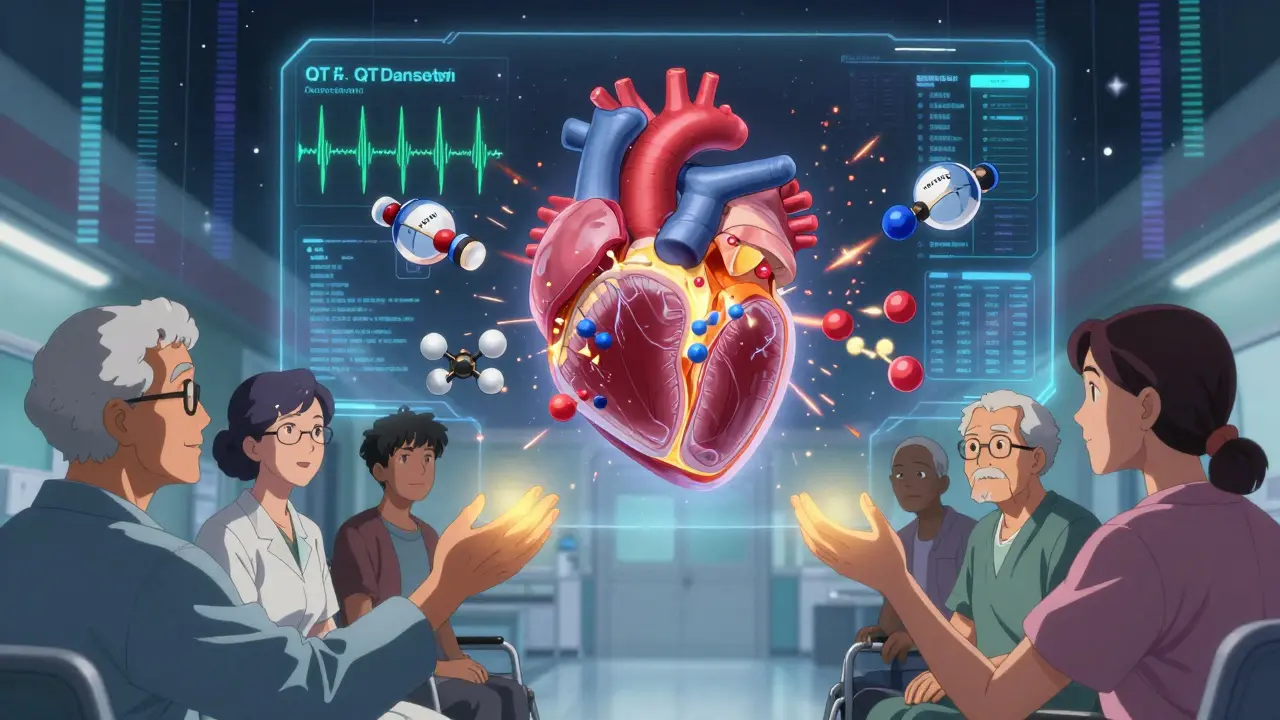
Your heart doesn’t just beat. It charges and discharges like a battery. The QT interval on an ECG measures how long that charging phase takes. If it gets too long, the heart can’t reset properly. That’s when the next beat might come in chaos - a wild, uncontrolled rhythm called torsades de pointes. It doesn’t always cause symptoms. Sometimes, it just shows up as a weird blip on the monitor. Other times, it collapses a patient into cardiac arrest. And it doesn’t take much to trigger it. A QTc over 500 milliseconds is a red flag. Even a 60-millisecond increase from baseline can double the risk of serious arrhythmia.Why Ondansetron Is Different
Ondansetron blocks serotonin receptors to stop nausea. But it also blocks something else: the hERG potassium channels in heart cells. These channels let potassium flow out to help the heart reset. Block them, and the heart takes longer to recharge. That’s the root of the problem. The FDA found this out the hard way. In 2012, after a mandatory study, they issued a warning: a single 32 mg IV dose of ondansetron could lengthen the QT interval by up to 20 milliseconds. That’s not a small number. It’s the difference between a safe rhythm and a ticking time bomb. The agency immediately banned that dose and capped IV doses at 16 mg. Later, many hospitals cut it further - to 8 mg - especially in high-risk patients. Here’s the kicker: oral ondansetron is much safer. A 24 mg oral dose - even for chemo patients - doesn’t carry the same risk. The danger comes from how fast the drug hits the bloodstream. IV delivery = rapid spike = higher chance of trouble. Oral = slower absorption = lower risk.Who’s at Real Risk?
Not everyone who gets ondansetron will have a problem. But some people are walking into danger without knowing it.- Patients with pre-existing long QT syndrome - even if undiagnosed
- People with heart failure or slow heart rhythms
- Those with low potassium or magnesium - common in cancer patients on chemo
- Older adults - especially over 75
- People taking other QT-prolonging drugs: antibiotics like azithromycin, antidepressants like citalopram, antifungals like fluconazole

How Other Antiemetics Compare
Ondansetron isn’t the only antiemetic with this risk - but it’s one of the most commonly used. Here’s how others stack up:| Drug | Class | Max QTc Increase (ms) | IV Dose Limit | Cardiac Risk Level |
|---|---|---|---|---|
| Ondansetron | 5-HT3 antagonist | 20 | 16 mg IV | High |
| Dolasetron | 5-HT3 antagonist | 25 | Not recommended for IV use | Very High |
| Granisetron | 5-HT3 antagonist | 8 | 3 mg IV | Low |
| Palonosetron | 5-HT3 antagonist | 9.2 | 0.25 mg IV | Low |
| Droperidol | Butyrophenone | 15 | 2.5 mg IV | Medium |
| Prochlorperazine | Phenothiazine | 12 | 10 mg IV | Medium |
Palonosetron and granisetron are now preferred in patients with heart issues. The American Society of Clinical Oncology updated its 2023 guidelines to recommend palonosetron over ondansetron for those with cardiac risk factors. Why? Because it works just as well for nausea - but with far less heart risk.
What Hospitals Are Doing Now
Since the FDA warning, hospitals didn’t just change a dose. They changed their whole system.- Baseline ECGs are now routine for patients with heart disease, electrolyte imbalances, or on multiple QT-prolonging drugs
- Many institutions cap IV ondansetron at 8 mg for anyone over 65 or with any cardiac history
- Hypokalemia (potassium under 3.5) and hypomagnesemia (magnesium under 1.8) must be corrected before giving IV ondansetron
- Pharmacists now verify QTc calculations before high-dose administration - 87% of academic centers require this
- Some ERs and ORs now mandate 4-hour cardiac monitoring after IV ondansetron in high-risk patients
What to Do If You’re Prescribed Ondansetron
If you’re getting ondansetron, here’s your checklist:- Ask: Is this IV or oral? Oral is much safer.
- Ask: Do I have a history of heart rhythm problems, heart failure, or long QT syndrome?
- Ask: Have my potassium and magnesium levels been checked recently?
- Ask: Am I taking any other drugs that can prolong QT? (List them)
- Ask: Can we use granisetron or palonosetron instead? Especially if I’m over 65 or have heart disease.
Alternatives That Work
You don’t need to accept nausea as unavoidable. There are safer options:- Palonosetron - longer-lasting, lower QT risk, now preferred for high-risk patients
- Granisetron - especially transdermal patch - minimal cardiac impact
- Dexamethasone - a steroid with strong anti-nausea effects and no QT risk
- Aprepitant/fosaprepitant - NK1 receptor antagonists, excellent for delayed nausea, no cardiac risk
The Bigger Picture
Ondansetron isn’t going away. It’s still the most prescribed antiemetic in the U.S., with nearly 19 million prescriptions in 2022. But its use is changing. IV use has dropped 22% since 2012. The market for safer alternatives has grown 15% annually. That’s not because the drug stopped working. It’s because we learned how to use it better. The future is personalized. Researchers are now studying whether a patient’s CYP2D6 gene status - which affects how fast they break down ondansetron - can predict who’s at highest risk. Poor metabolizers get higher drug levels, longer exposure, and greater QT prolongation. That’s the next step: not just avoiding high doses, but matching the dose to the person.Final Takeaway
Ondansetron is a powerful tool. But like any powerful tool, it can hurt if used carelessly. The era of “just give 8 mg or 16 mg and hope for the best” is over. We now know the risks. We know who’s vulnerable. We know how to prevent harm. The goal isn’t to stop using ondansetron. It’s to use it wisely - with awareness, with checks, and with alternatives ready. For most people, a simple 4 mg IV dose or an oral tablet is enough. For those with heart risks? There are better choices. And those choices aren’t experimental. They’re standard. They’re proven. They’re safe.Don’t let a drug meant to stop nausea become the reason someone’s heart stops.
Can ondansetron cause sudden cardiac arrest?
Yes, but it’s rare. Ondansetron can trigger torsades de pointes, a life-threatening heart rhythm that can lead to sudden cardiac arrest - especially with IV doses over 16 mg, in patients with pre-existing heart conditions, low potassium or magnesium, or when combined with other QT-prolonging drugs. The FDA has documented 142 cases of ondansetron-associated torsades between 2012 and 2022, nearly all involving high-dose IV use.
Is oral ondansetron safe for the heart?
Yes, oral ondansetron carries significantly lower risk. The FDA confirms that single oral doses up to 24 mg do not require dosage adjustment for QT prolongation. The danger comes from rapid IV delivery, which spikes blood levels quickly. Oral absorption is slower, so the heart has time to adjust. For most patients, especially those without heart issues, oral is the safer route.
What’s the maximum safe IV dose of ondansetron?
The FDA recommends no single IV dose exceed 16 mg. However, many hospitals now limit it to 8 mg for patients over 65, those with heart disease, or anyone with electrolyte imbalances. For high-risk patients, some institutions use as little as 4 mg. Always check your hospital’s protocol - and never assume 16 mg is automatically safe.
Are there antiemetics that don’t affect the QT interval?
Yes. Dexamethasone, aprepitant/fosaprepitant, and the transdermal granisetron patch have minimal to no QT-prolonging effects. Palonosetron also has a much lower risk than ondansetron. These are now preferred for patients with cardiac risk factors. The American Society of Clinical Oncology updated its 2023 guidelines to recommend palonosetron over ondansetron in high-risk patients.
Should I get an ECG before taking ondansetron?
If you have heart disease, a history of irregular heartbeat, are over 65, or are taking other medications that prolong QT (like certain antibiotics or antidepressants), yes - an ECG is recommended. Many hospitals now require it before giving IV ondansetron to high-risk patients. Baseline QTc should be under 450 ms in men and 470 ms in women. If it’s already prolonged, alternatives should be used.
What if I’m already on a QT-prolonging drug?
Avoid IV ondansetron if possible. The risk multiplies when you combine drugs that prolong QT. Common culprits include citalopram, azithromycin, fluconazole, and domperidone. Talk to your doctor about switching to a safer antiemetic like dexamethasone or palonosetron. If ondansetron is absolutely necessary, use the lowest possible dose, correct electrolytes first, and monitor your heart closely.





Comments
Vince Nairn
January 6, 2026 AT 14:15So let me get this straight... we're giving people a drug that can stop their heart just to keep them from puking? And we call this medicine? I mean I get it, chemo's brutal, but maybe we should've tested if the cure was worse than the disease before making it the gold standard. Now we're playing whack-a-mole with ECGs and potassium levels like it's some kind of medical arcade game.
Adam Gainski
January 6, 2026 AT 14:54This is actually one of the clearest summaries I've seen on ondansetron risks. The shift from 32mg IV to 8mg in high-risk patients is a textbook example of how pharmacovigilance works. What's impressive is how quickly hospitals adapted - it's rare to see such a widespread, evidence-based change in practice without a major lawsuit first. Palonosetron is definitely the new go-to for oncology patients with cardiac history.
Elen Pihlap
January 8, 2026 AT 02:10I had ondansetron after my surgery and I felt so bad after! My heart was racing and I thought I was dying! Why didn't they warn me?? I'm never taking it again!!
Sai Ganesh
January 8, 2026 AT 20:50In India, we still use ondansetron liberally, especially in rural hospitals where ECG machines are rare. This post is a wake-up call. We need better training for nurses and pharmacists here. The cost of alternatives like palonosetron is still prohibitive for most patients. Maybe generic versions should be prioritized in public health programs.
Katrina Morris
January 9, 2026 AT 04:59i didnt even know this was a thing!! my uncle got ondansetron after his chemo and he was fine so i just assumed it was safe. so if you have heart issues or are old or have low potassium you should probaly avoid it? like... what if you dont know you have low potassium? is there a test for that? sorry im just trying to understand
Andrew N
January 10, 2026 AT 16:05Funny how everyone's acting shocked. This has been known since the 90s. The FDA just finally caught up because someone died in a clinical trial and the lawyers got involved. The real issue is that pharmaceutical companies market drugs based on efficacy, not safety profiles. Ondansetron's popularity was driven by marketing, not science. Now they're pushing palonosetron the same way. Same playbook.
Aparna karwande
January 11, 2026 AT 04:42This is why Western medicine is broken. You poison people with chemicals, then you spend billions trying to undo the damage you created. In Ayurveda, we use ginger, cardamom, and fennel for nausea. No ECG needed. No potassium checks. No hospital monitoring. Just natural remedies that have worked for thousands of years. Why are we still listening to Big Pharma when nature already gave us the answer?
Jessie Ann Lambrecht
January 11, 2026 AT 04:53I'm a nurse in an oncology unit and this post hits home. We used to hand out ondansetron like candy. Now we do baseline ECGs, check K+ and Mg++ every time, and we have a checklist on the med cart. The change has been huge. I've seen patients who would've coded on 16mg IV survive on 4mg with a palonosetron backup. It's not about fear - it's about smart, thoughtful care. And yes, oral is almost always fine. Don't panic, just ask questions.
Mina Murray
January 11, 2026 AT 23:08This is all a lie. The FDA banned 32mg because the drug company was losing money on the IV version and wanted to push the more expensive oral tablets. The QT prolongation is a myth created by the AMA to justify more ECGs and lab tests. I've read the original 2012 study - the sample size was 17 people and 12 of them were on other drugs. They just wanted to scare doctors into using more profitable alternatives. You're being manipulated.
Rachel Steward
January 13, 2026 AT 08:58The real tragedy here isn't ondansetron. It's the entire paradigm of pharmacological intervention. We treat symptoms as if they're the disease. Nausea isn't the enemy - it's a signal. Suppressing it with serotonin blockers ignores the root cause: chemotherapy-induced gut inflammation, vagal nerve dysregulation, even psychological distress. We're medicating away the body's wisdom. And now we're layering on cardiac monitoring like it's a Band-Aid on a hemorrhage. The system isn't broken. It's designed this way - to commodify fear and sell solutions.
Christine Joy Chicano
January 14, 2026 AT 19:02This is such an important and well-structured breakdown. I especially appreciate how you highlighted the difference between IV and oral administration - that's the key insight most patients miss. The table comparing antiemetics is gold. I'm sharing this with my oncology support group. For anyone reading this: if your doctor reaches for ondansetron without asking about your meds or heart history, politely insist on a conversation about alternatives. You have the right to know the risks. Knowledge isn't just power - it's protection.