
Fake generic drugs: how counterfeits enter the supply chain
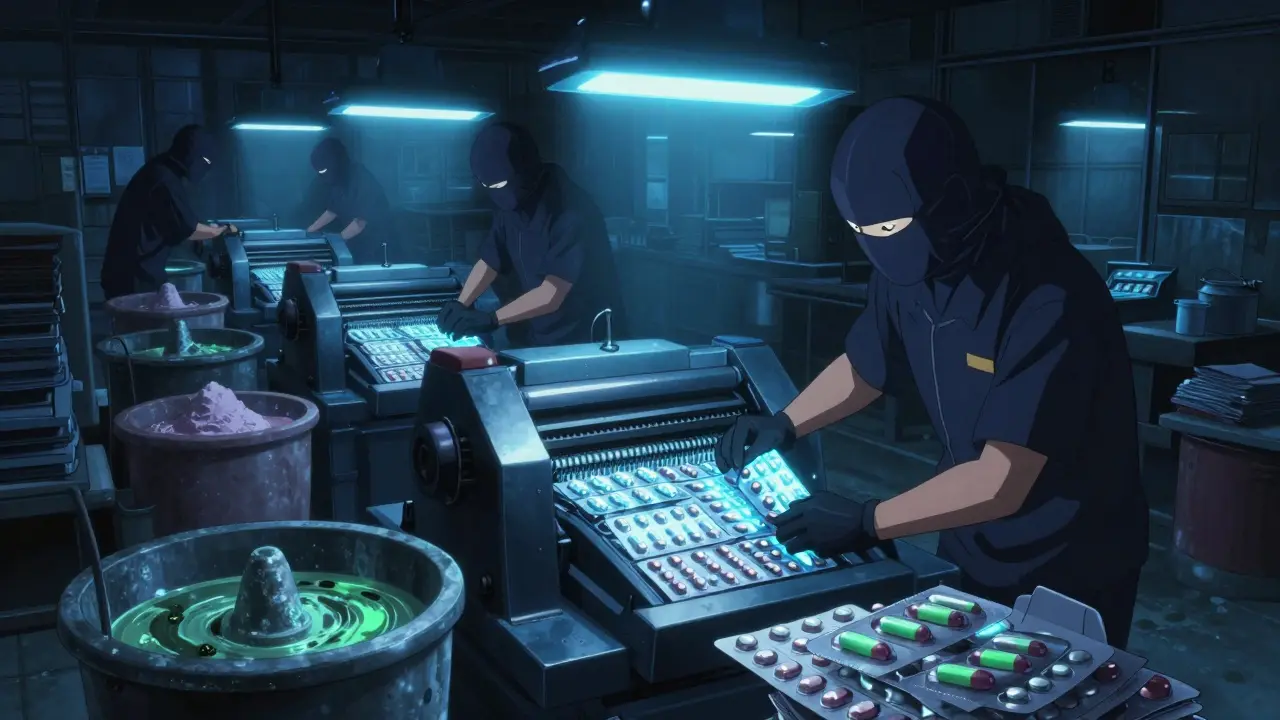
Every year, millions of people take generic drugs because they’re affordable and just as effective as brand-name versions. But what if the pill you swallowed wasn’t real? What if it had no active ingredient, or worse - something toxic? This isn’t science fiction. Counterfeit generic drugs are flooding global supply chains, and they’re slipping through cracks that most people never even know exist.
How fake drugs are made
Counterfeiters don’t need a lab the size of a hospital. Many operate out of small warehouses in countries with weak oversight - places like parts of Southeast Asia, Eastern Europe, and West Africa. These operations use cheap, off-the-shelf printing machines to copy packaging down to the font size and color. Some even replicate the slight imperfections on legitimate blister packs so they look authentic under a flashlight. The real danger isn’t just bad packaging. It’s what’s inside. Instead of the real active ingredient - say, atorvastatin for high cholesterol - counterfeiters use cheap fillers like chalk, talc, or even powdered floor cleaner. Sometimes they add a tiny amount of the real drug to trick tests, but not enough to work. Other times, they use chemically similar but dangerous substances. In one 2021 case, a counterfeit antimalarial drug contained a toxic industrial dye used in printing ink. Patients didn’t get better. Some died.How they sneak into the legal supply chain
You might think pharmacies only get drugs from trusted suppliers. Not always. Counterfeiters use three main routes to get into the system:- Parallel importation: A drug sold legally in one country - say, India - is bought in bulk and resold in another - like Nigeria - where regulations are looser. Along the way, fake versions get mixed in.
- Grey market distributors: These are unauthorized middlemen who buy legitimate stock, then add fake products to bulk shipments. Pharmacies don’t know the difference until patients stop responding to treatment.
- Online pharmacies: The National Association of Boards of Pharmacy found that 95% of online pharmacies selling prescription drugs operate illegally. Many look like real sites, with professional logos and fake reviews. You order “Lipitor,” get a pill that’s the wrong color, shape, and taste - and no one checks.
Even legitimate distributors get fooled. In 2008, contaminated heparin - a blood thinner - entered the U.S. supply chain through a Chinese supplier. The adulterated ingredient killed 149 people. The contamination wasn’t intentional, but it showed how easily fake or substandard material can slip through multiple layers of distribution.
Why generics are the main target
Generic drugs make up over 90% of all prescriptions filled in the U.S. and similar rates in Europe. They’re cheaper, so they’re in high demand. But that also makes them the perfect target for fraudsters. The profit margin on fake generics is huge. A single pill of a real brand-name drug might cost $10 to produce. A counterfeit version costs pennies. Sell it for $3, and you’re making a 3,000% markup. With global sales of generic drugs hitting $438 billion in 2022, counterfeiters see a massive opportunity. The most common fake drugs? Antibiotics, blood pressure meds, antimalarials, and diabetes pills. These are taken daily, so patients don’t notice right away if they’re not working. By the time symptoms return, it’s too late. A 2022 survey of 1,200 pharmacists across 45 countries found that 68% had seen suspected counterfeit drugs in their stores - and 32% couldn’t tell real from fake just by looking.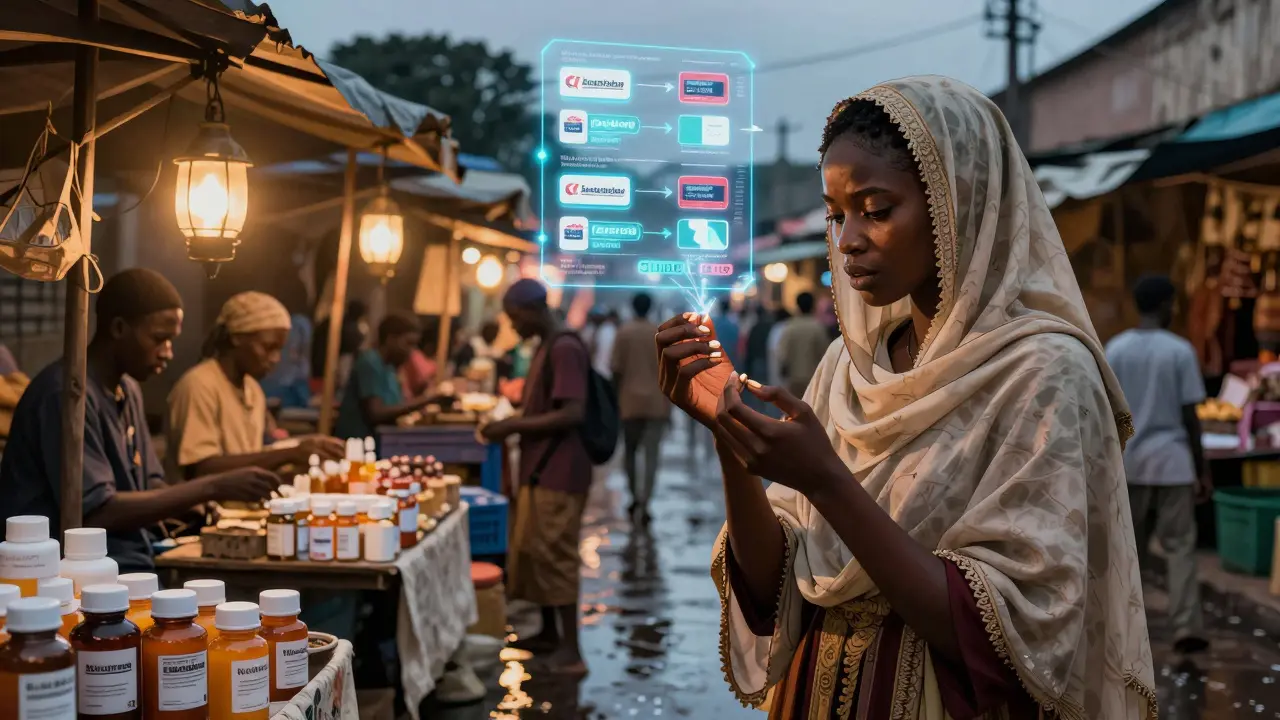
The tracking system that’s missing
One of the biggest reasons fake drugs get through is that most countries don’t track medicine from factory to pharmacy. The U.S. passed the Drug Supply Chain Security Act in 2013, requiring full tracing by 2023. But only 22 out of 194 WHO member states have fully working track-and-trace systems. In places like sub-Saharan Africa, where 42% of all falsified medicines are found, there’s no digital system at all. Even where systems exist, they’re not foolproof. Some use barcodes that can be copied. Others rely on paper logs that can be forged. The only reliable method right now combines physical markers - like holograms that change color under light - with invisible chemical tags or DNA sequences embedded in the pill coating. But these cost $0.02 to $0.05 per unit. For a $1 generic drug, that’s a 5% price hike. Most manufacturers won’t pay it.How to spot a fake (and what to do)
You can’t always tell by sight, but there are red flags:- The pill looks different - wrong color, size, or scoring
- The packaging has blurry text, misspellings, or mismatched fonts
- The bottle doesn’t have a lot number or expiration date
- The pharmacy isn’t licensed - check your state’s pharmacy board website
- You bought it online without a prescription
If something feels off, don’t take it. Report it. In the U.S., you can file a report with the FDA’s MedWatch system. In Australia, contact the TGA. Pharmacists are trained to check for anomalies, but they need help. A 2023 study showed that after just 8 hours of training, pharmacists improved counterfeit detection rates by 70%.
What’s being done - and what’s not
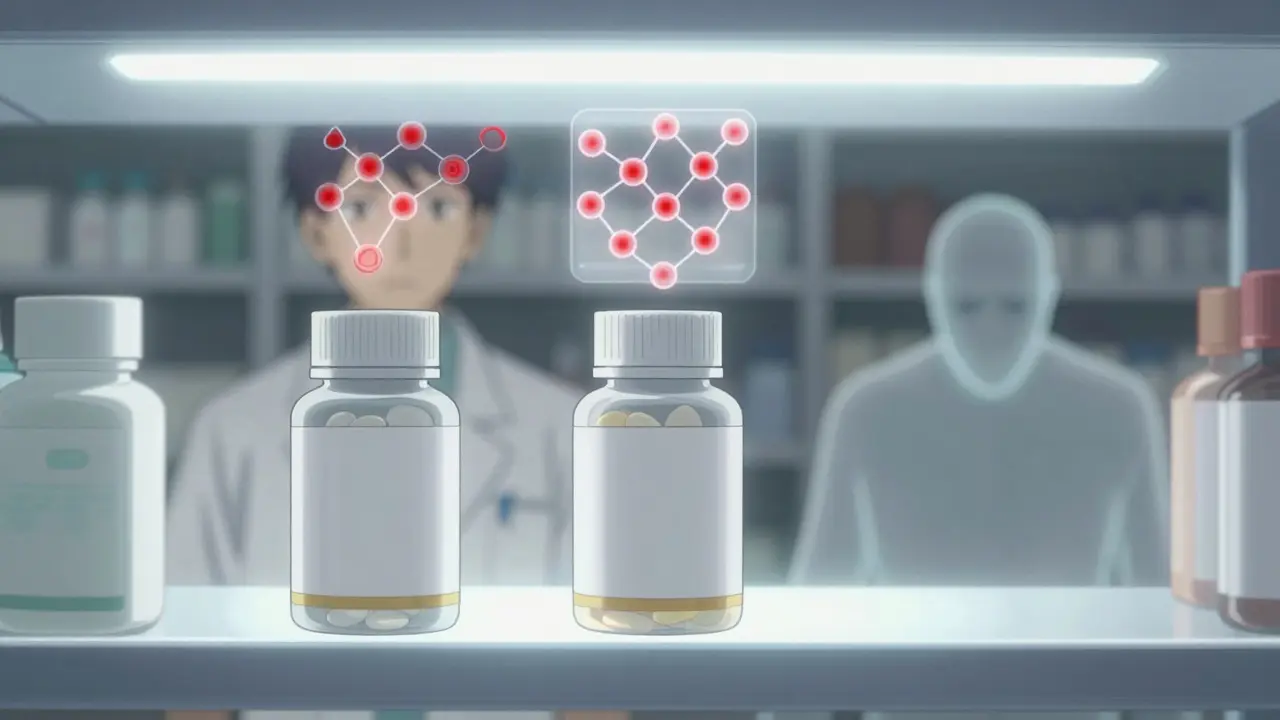
Some companies are fighting back. Pfizer has stopped over 302 million counterfeit doses since 2004 by working with customs, police, and pharmacies. The EU’s Falsified Medicines Directive cut fake drug penetration by 18% since 2020 by requiring unique identifiers on every package. Blockchain systems like MediLedger are testing tamper-proof tracking with 97% accuracy. But progress is slow. AI is now being used to create fake packaging that passes visual inspection. In February 2023, Europol seized cancer drugs with AI-generated holograms that looked identical to the real thing. No human could tell the difference. Meanwhile, in low-income countries, patients still buy drugs from street vendors because they have no other option. Without affordable, universal serialization, global efforts will keep falling short.What you can do
- Only buy from licensed pharmacies. If it’s not on your state or national pharmacy board’s website, don’t trust it. - Avoid online pharmacies that don’t require a prescription. Legitimate ones always ask for one. - Check your pills. Compare them to the description on the manufacturer’s website. - Report suspicious drugs. Your report could save a life. - Ask your pharmacist: “Is this drug traceable?” If they don’t know, it’s a red flag.Fake drugs don’t just hurt individuals - they erode trust in medicine. When a patient takes a counterfeit antibiotic and doesn’t get better, they may stop trusting all drugs. That’s how outbreaks spread. That’s how diseases come back. And that’s the real cost of counterfeit medicine.
How common are fake generic drugs?
In developed countries, counterfeit drugs make up about 1% of the market. But in low- and middle-income countries, that number jumps to 10-30%. Africa alone accounts for 42% of all falsified medicines globally. The World Health Organization estimates that 1 in 10 medical products in developing regions are substandard or fake.
Can you tell fake drugs apart from real ones by looking at them?
Sometimes, but not always. Many counterfeiters now use high-quality printing and exact color matching. The differences can be as small as a slightly off font size or a missing lot number. The most reliable way is to compare the pill to the manufacturer’s official description or use a verified app that scans packaging codes - if your country has one.
Are online pharmacies always illegal?
No - but 95% of them are. The National Association of Boards of Pharmacy found that only 5% of online pharmacies meet safety standards. Look for the VIPPS seal (Verified Internet Pharmacy Practice Sites) in the U.S., or check if the site requires a valid prescription and lists a physical address and licensed pharmacist.
Why don’t governments just ban fake drugs?
It’s not that simple. Counterfeiters operate across borders, often in countries with weak enforcement. Even when seizures happen, the factories just reopen under new names. Without global cooperation, standardized tracking, and real penalties for violators, enforcement is like playing whack-a-mole.
Do counterfeit drugs cause real deaths?
Yes. The 2008 heparin contamination killed 149 people in the U.S. alone. In 2017, fake antimalarial drugs in West Africa were linked to over 100,000 preventable deaths. A 2021 study in the American Journal of Tropical Medicine found that 77% of counterfeit drugs detected were oral medications - the kind people take daily. When those fail, patients die.
Comments
Steven Pam
February 22, 2026 AT 22:08Just read this and my jaw dropped. I’ve been taking my blood pressure med for years and never thought to check if it was real. I buy it from CVS, but now I’m gonna pull the bottle out tonight and compare the pill to the manufacturer’s site. Scary stuff.
Turns out, the little things matter - like the scoring on the pill or the font on the bottle. I never knew that.
Michael FItzpatrick
February 23, 2026 AT 01:45What really kills me is how we treat generic drugs like they’re second-class citizens. We’ll pay $200 for a branded pill but act like a $2 generic is some kind of discount bin experiment. Meanwhile, the same factories that make the real stuff often make the fake ones - it’s not about origin, it’s about oversight.
And yeah, the supply chain is a sieve. I’ve seen warehouses in Indiana with 30 different brands of metformin, all labeled differently, none traceable. No one’s auditing this. No one’s even trying.
John Smith
February 23, 2026 AT 21:40So let me get this straight - we’re panicking about fake pills but still let Walmart sell them like they’re cereal? How about we stop pretending this is a medical issue and call it what it is: capitalism’s dumpster fire.
Nandini Wagh
February 23, 2026 AT 21:43Oh honey, you think this is bad? In Mumbai, half the pharmacies sell 'generic' insulin that’s just sugar water. People die quietly. No headlines. No FDA alerts. Just a grandmother who stopped urinating at night and never woke up.
And we’re all too busy scrolling to notice.
Larry Zerpa
February 24, 2026 AT 00:39Let’s be real - the whole system is rigged. The FDA doesn’t have the manpower to inspect 12,000+ foreign manufacturing sites. So they pick a few. The rest? Lucky guess. Meanwhile, the big pharma companies lobby against traceability because it cuts into their margins.
They don’t want you to know your pill came from a warehouse in Bangalore with no HVAC and a guy named Raj who prints labels on a 2009 HP printer.
Christopher Wiedenhaupt
February 25, 2026 AT 22:38Interesting read. I work in logistics for a mid-sized distributor and can confirm: parallel imports are a nightmare. We had a shipment of amoxicillin from India that passed all our internal checks - until a pharmacist in Ohio noticed the batch number didn’t match the country’s registry. Turned out, the label was perfect, but the shipping manifest was forged.
It took three weeks to trace back. We pulled 14,000 units. No one got hurt. But it was close.
Timothy Haroutunian
February 27, 2026 AT 04:05I’ve been saying this for years. The entire drug supply chain is a pyramid scheme built on trust and bad math. You think the government cares? They care about votes. And votes come from people who don’t know the difference between a pill and a candy.
Meanwhile, the real solution? Ban generics. Make everyone pay full price. Then maybe we’ll stop pretending this is healthcare and start treating it like a luxury service.
Oh and stop using the word ‘affordable’ like it’s a virtue. It’s just a euphemism for ‘we don’t care if it works’.
Ashley Johnson
February 27, 2026 AT 12:20EVERYTHING is fake now. The pills, the vaccines, the water. I’ve been researching this since 2018. The government is in on it. They want us dependent on bad meds so we stay sick and keep buying. The holograms? They’re tracking chips. The lot numbers? GPS locators. They’re putting nanobots in your blood through your blood pressure pills.
And they’re laughing. All of them. Every single person in this thread.
Gwen Vincent
February 28, 2026 AT 20:53My mom took a counterfeit diabetes pill last year. She didn’t know. Her sugar spiked, she ended up in the ER. They found out because the pill had a weird taste - like metal and burnt plastic. She’s fine now, but it took three months to trace the bottle.
It came from a pharmacy in Arizona that had no license. We reported it. No one called back.
I just hope someone reads this and checks their meds.
Erin Pinheiro
March 1, 2026 AT 01:44Ugh I can’t believe people still buy online without a prescription. It’s like driving drunk and hoping you don’t hit a tree. You think you’re saving money? You’re just gambling with your life.
And don’t even get me started on how some pharmacies just slap on a label and call it ‘generic equivalent’. No one checks. No one cares.
Holley T
March 2, 2026 AT 01:04Okay but let’s be honest - if we had universal healthcare and government-run pharmacies, this wouldn’t be an issue. The entire problem is profit-driven. Private companies don’t care if you live or die as long as the invoice clears.
And now they’re using AI to make fake packaging? That’s not innovation. That’s evil with a business plan.
Someone should sue the entire FDA for negligence. Not just for failing to act - but for enabling this by refusing to fund traceability systems.
It’s not a technical problem. It’s a moral one.
Valerie Letourneau
March 3, 2026 AT 07:20As a Canadian pharmacist with 22 years of experience, I can confirm that the issue is systemic. We have a centralized, federally regulated supply chain here - and even we’ve had incidents. A batch of metformin from China in 2019 contained trace amounts of NDMA - a known carcinogen. We pulled 87,000 units.
But here’s the difference: we tracked every vial. We knew where it came from. We knew who distributed it. We had the legal tools to act.
Most countries don’t. And until we have global standards - not recommendations, not guidelines - we’re just rearranging deck chairs on the Titanic.
Khaya Street
March 3, 2026 AT 17:53In South Africa, we don’t even have the luxury of choosing. If you can’t afford the brand-name, you take what’s on the shelf - and hope. I’ve seen mothers trade food for medicine. They don’t care if it’s fake. They care if it stops the fever.
Technology won’t fix this. Compassion will. But compassion doesn’t show up in boardrooms.
We need global aid - not audits. Not inspections. Aid.
Shalini Gautam
March 4, 2026 AT 10:18As someone from India, I’m proud of our pharma industry. We make 20% of the world’s generic drugs. But yes - there are bad actors. Not the factories, not the workers - the middlemen. The ones who repack, relabel, and smuggle. They’re the problem.
We need to punish them. Not ban generics. Not blame India. Fix the supply chain. Invest in blockchain. Train pharmacists. And stop acting like this is a Western problem - it’s a global one.
Brandice Valentino
March 4, 2026 AT 19:50Ugh I just got my refill and the pill looked… off? Like, the imprint was slightly crooked. I didn’t say anything because I’m tired and I don’t want to be that person. But now I’m paranoid. What if it’s fake? What if I’ve been taking chalk for six months? I’m gonna Google my drug name right now. I swear I’m gonna cry if it’s not real.