Nosebleeds Linked to Medications: Common Causes and How to Prevent Them
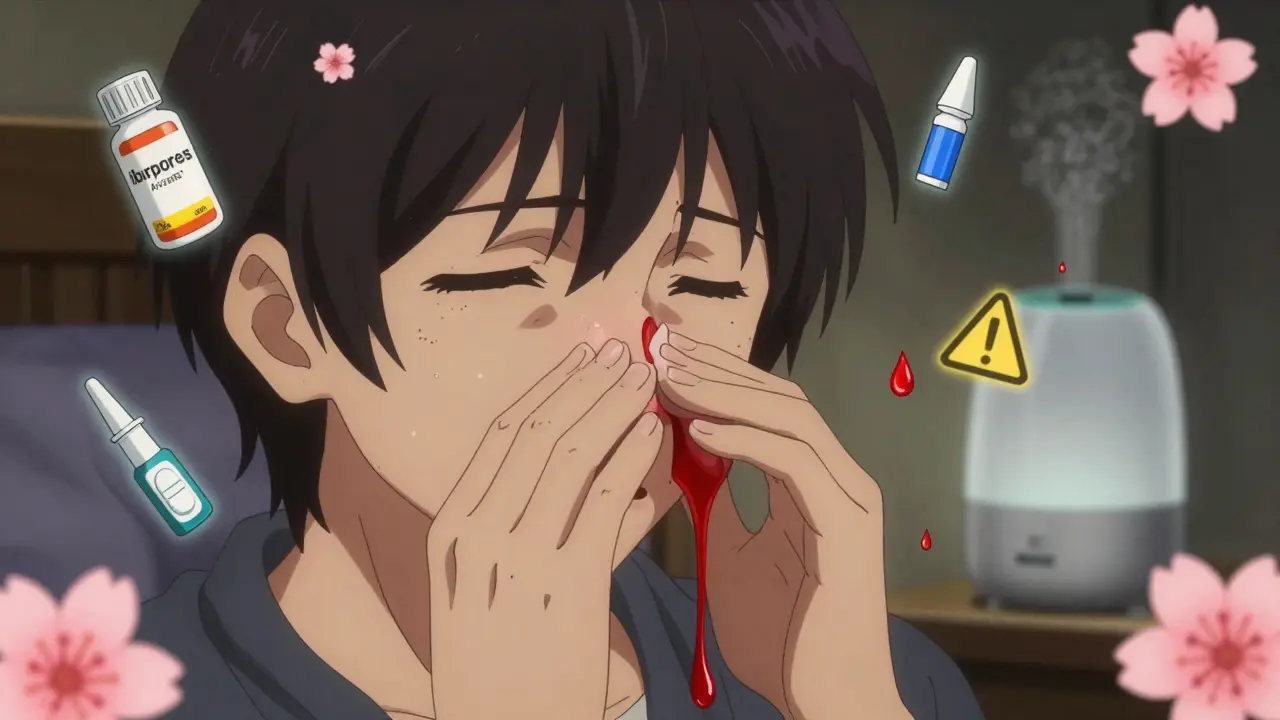
Medication-Linked Nosebleed Risk Calculator
How to use this calculator
Select medications you're taking and answer a few questions about your risk factors. We'll calculate your nosebleed risk score and provide personalized prevention tips.
Your Medications
Additional Risk Factors
Your Nosebleed Risk Score
Prevention Tips
Most people think nosebleeds are just a nuisance-maybe from dry air, a bump on the nose, or picking too hard. But if you’re on medication, that little trickle might not be harmless. In fact, nosebleeds are one of the most common side effects of everyday drugs, and many people don’t realize their pills are to blame.
About 60% of people will have at least one nosebleed in their lifetime, according to research from the New England Journal of Medicine. But for those taking certain medications, the risk jumps significantly. It’s not just rare drugs-common painkillers, blood thinners, and even allergy sprays can turn your nasal passages into a fragile zone. The good news? You can stop most of them before they start.
Which Medications Cause Nosebleeds?
Not all medications cause nosebleeds the same way. Some thin your blood. Others dry out your nose. Either way, the result is the same: a tiny blood vessel in your nasal lining ruptures.
- NSAIDs like ibuprofen (Advil, Motrin), naproxen (Aleve), and ketoprofen interfere with platelets-the cells that help blood clot. Even a single dose can make you bleed longer than usual.
- Aspirin, even the low-dose 81mg kind taken for heart health, suppresses clotting. It’s one of the most frequent culprits, especially in older adults.
- Anticoagulants like warfarin (Coumadin) and antiplatelets like clopidogrel (Plavix) are designed to prevent clots. But that means even minor trauma-like a sneeze or dry air-can trigger bleeding.
- Decongestant sprays like oxymetazoline (Afrin) give quick relief, but using them for more than 3 days causes rebound swelling and dryness. The nasal lining becomes brittle, and blood vessels pop easily.
- Heparin, often used in hospitals, can trigger a rare but serious reaction called heparin-induced thrombocytopenia (HIT), which includes nosebleeds as a warning sign.
These aren’t obscure drugs. Millions take them daily. And if you’re on more than one, the risk multiplies.
Why Your Nose Is So Vulnerable
The inside of your nose isn’t just skin. It’s packed with tiny blood vessels-especially in a spot called Kiesselbach’s plexus, near the front of the nasal septum. This area has no protective fat or muscle. Just thin tissue over a network of capillaries.
When you take NSAIDs or aspirin, your body makes fewer clotting signals. When you use decongestant sprays, the lining dries out and cracks. Anticoagulants stretch out your clotting time. Each of these changes makes that delicate network more likely to burst.
And it’s not just about the drug. Your environment matters too. Dry winter air, heating systems, and low humidity all strip moisture from your nose. Add medication on top, and you’ve got a perfect storm.
Who’s Most at Risk?
Some people are more likely to get medication-induced nosebleeds:
- Adults over 45-blood vessels naturally become more fragile with age.
- People with high blood pressure-higher pressure means more strain on weakened vessels.
- Those with bleeding disorders-even small changes in clotting can trigger bleeding.
- Pregnant individuals-hormones cause blood vessels in the nose to expand, making them easier to rupture.
- Children-they pick their noses more often, and their nasal passages are smaller and more sensitive.
If you fall into one of these groups and take any of the medications listed above, you’re already in a higher-risk category. That doesn’t mean stop taking your meds-but it does mean you need to be proactive.

How to Prevent Medication-Induced Nosebleeds
Prevention isn’t about avoiding medicine. It’s about protecting your nose while you stay on the drugs you need.
- Switch to acetaminophen for pain or fever. Unlike NSAIDs or aspirin, Tylenol doesn’t affect platelets. If you’re taking ibuprofen for headaches, try acetaminophen first. It’s safe, effective, and won’t increase bleeding risk.
- Moisturize daily. Apply a thin layer of petroleum jelly (Vaseline) inside each nostril, twice a day-morning and before bed. Saline nasal gel or spray works too. Do this even if you don’t feel dry. Prevention beats reaction.
- Use a humidifier. Especially in winter, indoor air drops below 30% humidity. A cool-mist humidifier near your bed keeps nasal passages moist all night. It’s cheap, simple, and backed by multiple health systems.
- Avoid nasal sprays longer than 3 days. Decongestants like Afrin feel great at first, but after day three, they start damaging your nose. If congestion lasts longer, see a doctor. There are safer long-term options.
- Don’t pick, rub, or blow too hard. Even gentle rubbing can rupture a vessel already weakened by medication. If you need to clear your nose, do it softly.
These steps aren’t optional for high-risk users. They’re essential. And they work.
What to Do When a Nosebleed Starts
If you get a nosebleed while on medication, don’t panic. Most stop on their own-but how you handle it matters.
- Pinch the soft part of your nose-just below the bridge-for 10 to 15 minutes. Don’t peek. Set a timer. Most people think 5 minutes is enough. It’s not.
- Sit upright and lean slightly forward. Tilting your head back lets blood run down your throat. That can cause nausea, vomiting, or even choking.
- Don’t use decongestant sprays during the bleed. They may seem like a quick fix, but they don’t help stop the bleeding. Save them for after, if needed.
- Apply a cold compress to the bridge of your nose or the back of your neck. Cold helps constrict vessels.
If the bleeding doesn’t stop after 15 minutes, or if you feel dizzy, faint, or notice bleeding from other areas (gums, skin, urine), get medical help immediately.

When to Call Your Doctor
Not every nosebleed needs a visit. But these signs do:
- Bleeding lasts longer than 20 minutes despite pressure
- You’re on blood thinners and bleed for more than 10 minutes
- You have frequent nosebleeds-more than 3 or 4 in a week
- You notice bruising easily, or bleeding from gums or cuts
- The nosebleed followed a fall, injury, or blow to the face
For people on anticoagulants, even a small nosebleed can be a red flag. Your doctor may check your INR (a blood test that measures clotting time) or adjust your dose. Never stop these meds on your own. The risk of stroke or clotting is often higher than the risk of nosebleeds.
The Role of Your Pharmacist
Many people don’t realize pharmacists can help with this. If you’re on multiple medications and keep getting nosebleeds, ask your pharmacist to review your regimen. They can spot interactions, suggest alternatives, or flag drugs that are likely causing trouble.
For example, if you’re taking aspirin for heart protection and ibuprofen for arthritis, your pharmacist might recommend switching the arthritis drug to a non-NSAID option. Or if you’re on warfarin and using Afrin daily, they’ll warn you about the double risk.
Pharmacists aren’t just pill dispensers. They’re your frontline defense against medication side effects.
Final Thought: Don’t Ignore the Signs
Nosebleeds are common. But when they happen often, or when you’re on medication, they’re not just annoying-they’re a signal. Your body is telling you something’s off.
Don’t assume it’s just dry air. Don’t assume it’s normal. And don’t stop your meds without talking to your doctor. The right balance-protecting your nose while keeping your treatment on track-is possible. It just takes awareness, simple habits, and a little communication with your care team.
Can over-the-counter painkillers cause nosebleeds?
Yes. Common OTC painkillers like ibuprofen, naproxen, and aspirin can cause nosebleeds because they interfere with platelet function, which slows blood clotting. Even occasional use can increase risk, especially in people with dry nasal passages or those on other blood-thinning medications. Acetaminophen (Tylenol) is a safer alternative because it doesn’t affect clotting.
Is it safe to use nasal sprays if I get frequent nosebleeds?
Only if you use them correctly. Decongestant sprays like oxymetazoline (Afrin) should never be used for more than 3 days in a row. Overuse causes rebound congestion and damages nasal tissue, making nosebleeds worse. Saline sprays, however, are safe and recommended daily to keep nasal passages moist. They help prevent, not trigger, bleeding.
Should I stop taking blood thinners if I get nosebleeds?
No. Never stop blood thinners like warfarin or clopidogrel without talking to your doctor. These medications prevent strokes and heart attacks. Stopping them can be far more dangerous than a nosebleed. Instead, focus on prevention: moisturize your nose, avoid NSAIDs, use a humidifier, and report frequent bleeding to your provider. They may adjust your dose or check your INR levels.
Why do nosebleeds happen more in winter?
Winter air is dry, and indoor heating cuts humidity even further. When humidity drops below 30%, the lining of your nose dries out and cracks. This exposes fragile blood vessels. If you’re also taking NSAIDs, aspirin, or decongestants, the risk multiplies. Using a humidifier and applying petroleum jelly daily can prevent most winter nosebleeds.
Can children get nosebleeds from medications?
Yes. Children are more prone to nosebleeds overall because their nasal blood vessels are closer to the surface and they tend to pick their noses. If they’re on medications like aspirin (rarely used now) or NSAIDs for chronic conditions, the risk increases. Always check with a pediatrician before giving any OTC pain reliever to a child with frequent nosebleeds. Acetaminophen is usually the safest choice.
Do I need to see a specialist for medication-related nosebleeds?
Usually not. Most cases improve with simple changes: moisturizing, avoiding NSAIDs, using a humidifier, and stopping decongestant sprays. But if nosebleeds continue after 2-4 weeks of prevention, or if you have other bleeding signs (bruising, gum bleeding), see your doctor. They may refer you to an ENT specialist or hematologist to rule out other causes like high blood pressure or clotting disorders.