
Post-Market Surveillance: How the FDA Monitors Generic Drugs After Approval

When you pick up a generic pill at the pharmacy, you expect it to work just like the brand-name version. And for most people, it does. But how does the FDA make sure it stays safe and effective after it hits the shelves? Unlike brand-name drugs, generics don’t go through years of clinical trials. Instead, they prove they’re bioequivalent-meaning they deliver the same amount of active ingredient into the bloodstream at the same rate. That’s it. Once approved, the FDA shifts from approval to surveillance. And that’s where things get complicated.
Why Surveillance Matters More for Generics
Over 90% of prescriptions in the U.S. are filled with generic drugs. That’s more than 4 billion prescriptions a year. But because generics skip large-scale clinical testing, the FDA can’t rely on pre-market data to catch every possible side effect. A reaction that shows up in one in 10,000 patients won’t show up in a trial of 3,000 people. That’s why the real safety testing happens after the drug is sold-what’s called post-market surveillance.
Take a generic version of a blood pressure pill. It might have the same active ingredient as the brand, but what if the filler or coating is different? For simple pills, that usually doesn’t matter. But for complex drugs-like extended-release capsules, inhalers, or topical creams-tiny changes in formulation can change how the drug is absorbed. That’s where the FDA has to watch closer.
The Tools the FDA Uses to Watch Generics
The FDA doesn’t just wait for complaints. It runs multiple systems that work together like a safety net.
- FAERS (FDA Adverse Event Reporting System): This is the main reporting hub. Doctors, pharmacists, patients, and manufacturers can submit reports about side effects, medication errors, or product failures. In 2023 alone, FAERS received over 2 million reports for all drugs-including generics. The FDA’s Office of Surveillance and Epidemiology digs through these reports using algorithms to spot patterns. If a certain generic version of a drug suddenly shows more reports of dizziness or liver issues, that’s a signal.
- Sentinel Initiative: This system goes beyond reports. It pulls real-world data from insurance claims and electronic health records of over 200 million Americans. Instead of waiting for someone to report a problem, Sentinel can spot trends automatically. For example, if patients taking a specific generic version of a statin have a spike in hospital visits for muscle pain, Sentinel flags it-even before anyone files a formal report.
- MedWatch: This is the public-facing side of FAERS. Anyone can report a problem online. A patient who feels worse after switching to a cheaper generic? They can file a report. A pharmacist who notices a pill looks different and isn’t working the same? They can report it too. These reports matter. A 2019 study found that 15% of adverse event reports for generics mentioned perceived differences in effectiveness compared to brand names-even when no biological difference existed.
- Unannounced Factory Inspections: The FDA doesn’t just check the drug’s effect on the body-they check how it’s made. They show up at manufacturing plants without warning to inspect equipment, processes, and quality control. A single batch of a generic drug made under poor conditions could ruin thousands of pills. These inspections happen regularly, especially for facilities with past issues or those producing complex generics.
Where the System Gets Tricky: Complex Generics
Not all generics are created equal. Simple pills-like metformin or lisinopril-are straightforward. But complex generics? That’s where the FDA’s biggest challenges lie.
Think inhalers for asthma. The active ingredient might be the same, but the propellant, the spray mechanism, the particle size-all of it affects how well the drug reaches the lungs. Two inhalers can be labeled as bioequivalent but behave differently in real life. The same goes for topical creams, injectables, or extended-release tablets. A patient might feel the generic isn’t working, not because the drug is faulty, but because the delivery system isn’t quite right.
In 2020, the FDA launched the Center for Research on Complex Generics (CRCG) with universities in Maryland and Michigan. Their goal? To build better ways to test these drugs before they even hit the market. But even with better testing, post-market surveillance remains critical. The FDA’s 2019 draft guidance on best practices for surveillance specifically calls out complex generics as needing special attention.
AI and the Future of Drug Safety
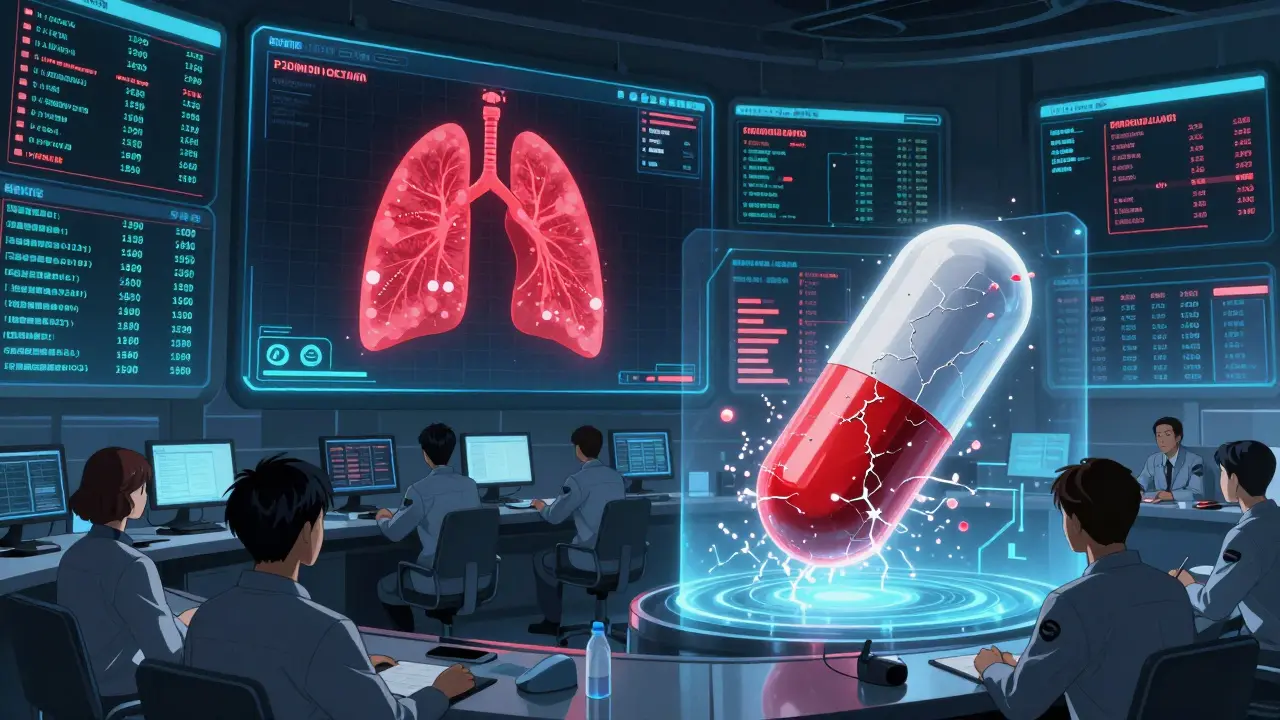
The FDA isn’t relying on spreadsheets and manual reviews anymore. They’re turning to artificial intelligence.
In 2023, the agency allocated $5.2 million to develop AI and machine learning tools that can analyze real-world data faster and more accurately. These tools can sift through millions of reports and medical records to find hidden patterns. For example, AI might detect that a certain generic version of a seizure medication is linked to more hospitalizations in elderly patients-something a human analyst might miss amid the noise.
Right now, it takes months to confirm a safety signal. With AI, the FDA hopes to cut that time to weeks. By 2027, experts predict AI could reduce detection time for complex generics by 60-70%. That’s not just efficiency-it’s life-saving.
What Happens When Something Goes Wrong?
Let’s say the FDA spots a pattern: patients taking Generic X for depression are reporting more nausea and headaches than expected. What then?
- They investigate. Are other generics for the same drug doing the same thing? Or is it just this one manufacturer?
- They check manufacturing records. Was there a change in the filler? A new supplier?
- They might contact the company and ask for more data.
- If the risk is real, they can require a label update-adding a new warning.
- In serious cases, they can issue a recall-or even block future shipments.
- They might send a “Dear Healthcare Provider” letter, alerting doctors to watch for specific symptoms.
It’s not always about the drug being dangerous. Sometimes it’s about patient perception. Studies show that if someone believes generics are inferior, they’re more likely to report side effects-even if the drug is identical. That’s called the “nocebo effect.” The FDA has to sort out real risks from perceived ones. That’s why they don’t act on single reports. They look for trends.
What’s Still Missing?
For all its tools, the system isn’t perfect.
Public Citizen, a consumer advocacy group, has criticized the FDA for not having enough staff or resources to properly monitor the thousands of generic drugs on the market. The Office of Generic Drugs handles over 15,000 approved products-and only a small team focuses on post-market safety.
The National Academies of Sciences also pointed out in a 2021 report that surveillance for complex generics like inhalers and topical products is still too weak. Bioequivalence doesn’t always mean therapeutic equivalence. And right now, there’s no standardized way to track outcomes across different manufacturers of the same drug.
Another issue: reporting is still mostly voluntary. Most patients don’t know how to file a MedWatch report. Doctors are busy. And manufacturers sometimes delay reporting. That means the data the FDA gets is incomplete.
What You Can Do
You don’t need to be a scientist to help keep generics safe.
- If you notice a new side effect after switching to a generic, write it down. Note the drug name, manufacturer, and when the symptoms started.
- File a report at MedWatch.FDA.gov. It takes 10 minutes.
- If you’re a healthcare provider, document the generic manufacturer on prescriptions and reports. That helps the FDA track which version is causing issues.
- Don’t assume a generic is always the same. If one brand of generic doesn’t work for you, try another. The FDA allows multiple manufacturers for the same drug-and they’re not all identical.
Generic drugs save the U.S. healthcare system over $300 billion a year. They’re essential. But safety doesn’t end at approval. It’s an ongoing job-and it takes everyone’s eyes to keep it working.
Do generic drugs have the same side effects as brand-name drugs?
Generally, yes. Generic drugs contain the same active ingredient and are required to be bioequivalent to the brand-name version. That means they work the same way in the body and cause the same expected side effects. But sometimes, differences in inactive ingredients (like fillers or coatings) can affect how quickly the drug is absorbed, which may lead to different experiences-especially with complex drugs like extended-release pills or inhalers. If you notice new or worse side effects after switching, report it.
How does the FDA know if a generic drug is unsafe after it’s approved?
The FDA uses multiple systems: the FAERS database for patient and provider reports, the Sentinel Initiative to analyze real-world health data from millions of people, and MedWatch for public submissions. They also conduct unannounced inspections of manufacturing sites. When a pattern emerges-like a spike in liver enzyme reports linked to one specific generic manufacturer-they investigate further. AI tools help detect subtle trends faster than humans can.
Are all generic drugs monitored the same way?
No. Simple generics-like tablets for high blood pressure-are monitored with standard tools. But complex generics-such as inhalers, topical creams, or extended-release capsules-require more attention because small changes in formulation can affect how the drug works. The FDA has special programs and research initiatives focused on these products, including the Center for Research on Complex Generics.
Can I trust that my generic drug is safe?
Yes, for the vast majority of people, generic drugs are safe and effective. The FDA approves them based on strict standards, and they’re monitored continuously after approval. But no drug system is flawless. If you feel your generic isn’t working like the brand, or you experience new side effects, don’t ignore it. Talk to your doctor and consider filing a report with MedWatch. Your input helps improve safety for everyone.
Why do some people say their generic drugs don’t work as well?
Sometimes, it’s psychological-the “nocebo effect”-where people expect the cheaper version to be worse, so they feel worse. Other times, especially with complex drugs, there can be real differences in how the drug is absorbed due to formulation changes. The FDA tracks these reports and investigates when patterns emerge. If a specific generic version consistently causes issues, the agency can require changes or even pull it from the market.
What Comes Next?
The FDA is moving toward smarter, faster, and more automated surveillance. By 2027, AI-powered systems could detect safety issues in complex generics before they affect large groups of patients. But technology alone won’t fix everything. The system still needs people-patients, doctors, pharmacists-to speak up. The goal isn’t perfection. It’s protection. And for millions of Americans who rely on affordable medication, that’s what matters most.




Comments
Charles Barry
December 21, 2025 AT 16:12The FDA is just a puppet for Big Pharma. They approve generics from Indian factories with dirt floors and then pretend they’re safe. You think they inspect those plants? LOL. I’ve seen videos-workers coughing on pills, no gloves, rats running through the storage rooms. And you’re supposed to trust this? The ‘bioequivalent’ label is a joke. It’s like saying two different brands of toilet paper are the same because they’re both white. They don’t test absorption in real people. They test it in beakers. That’s not science-that’s a carnival trick.
Rosemary O'Shea
December 22, 2025 AT 07:21Oh please. You’re all so dramatic. The FDA has more oversight than any other regulatory body on Earth. You think Canada or the EU has this level of surveillance? Please. The Sentinel Initiative alone monitors over 200 million lives in real time. If you’re having side effects, it’s likely your personal biochemistry-not the drug. Also, your ‘dirt floor factory’ narrative is straight out of a tabloid. You’re not a scientist. You’re a fearmonger with a blog.
Kathryn Weymouth
December 23, 2025 AT 16:57There’s a crucial distinction here between bioequivalence and therapeutic equivalence, and most people don’t understand it. The FDA’s standards for simple generics are robust, but for complex delivery systems-like inhalers or topical creams-the bioequivalence criteria are outdated. A 2021 National Academies report confirmed this. We need new analytical methods to measure particle size, dissolution profiles, and lung deposition-not just plasma concentration. Until then, we’re flying blind for a significant subset of medications.
Nader Bsyouni
December 24, 2025 AT 16:20So the government says its fine but you know its not because they dont want you to know the truth and its all about profit and control and the system is rigged and you think you have choice but you dont and theyre lying to you and its all fake and why do you think they dont test it on humans longer because they dont want to find out the truth and you just have to accept it because the system is designed to keep you quiet
Julie Chavassieux
December 25, 2025 AT 13:56...I switched to a generic lisinopril last month. And... I... felt... different. Not bad. Just... off. Like my brain was wrapped in cotton. I didn’t say anything. Until yesterday. When my neighbor told me she had the same thing. With the same batch. Same manufacturer. Same pill. And now... I’m not sure if it’s me... or if it’s the filler... or if it’s the FDA... or if it’s all just in my head... but I’m filing a MedWatch report. Just in case.
Herman Rousseau
December 26, 2025 AT 23:07Hey everyone-just wanted to say thanks for this thread. I’m a pharmacist and I’ve seen this firsthand. Patients get upset when their generic ‘doesn’t work’-but often it’s just a different manufacturer. One batch has slightly different binders and the pill dissolves slower. Not dangerous. Just… different. I always tell my patients: if one generic doesn’t feel right, try another brand. There are 5–10 manufacturers for most generics. And yes-file a MedWatch report if something feels off. It literally helps save lives. 😊
Ajay Brahmandam
December 28, 2025 AT 20:21Bro, I take generic metformin from 3 different companies. One gives me gas. One makes me sleepy. One? Perfect. Same active ingredient. Different fillers. No big deal. FDA knows this. They don’t need to test every batch. They just need to catch the bad apples. And they do. I’ve been on generics for 8 years. Never had a problem. Chill out. Your body adapts.
Aliyu Sani
December 30, 2025 AT 03:26Let me tell you something about pharmaceutical hegemony. The structural epistemology of pharmacovigilance is fundamentally compromised by neoliberal logics of cost-efficiency. The FDA’s surveillance architecture is predicated on post-hoc reactive mechanisms rather than proactive ontological integrity. We are not monitoring drugs-we are monitoring *reports*. And reports are mediated by institutional power, patient literacy, and corporate opacity. The nocebo effect? A distraction. The real issue is the commodification of therapeutic equivalence.
Johnnie R. Bailey
December 30, 2025 AT 05:42Here’s the thing nobody talks about: generics aren’t just cheaper-they’re culturally loaded. In some communities, taking a generic is seen as ‘poor person medicine.’ That stigma? It makes people report side effects they don’t even have. I’ve had patients tell me their generic ‘tastes wrong’-but it’s the same pill. The color’s different. The logo’s gone. And suddenly, it’s ‘not the same.’ The FDA knows this. That’s why they look for patterns, not anecdotes. But we need to fix the narrative too. Generics aren’t inferior. They’re just… different packaging.
Art Van Gelder
December 31, 2025 AT 21:16Think about it-90% of prescriptions are generics. That’s over 4 billion pills a year. And the entire post-market surveillance system? Run by a team of maybe 200 people across the country. Meanwhile, the FDA approves over 15,000 unique generic products. That’s like having one librarian try to track every book in a library the size of Manhattan. And you think AI will fix that? AI can’t replace human intuition. AI can’t smell a bad batch. AI can’t look at a patient’s chart and say, ‘Wait, this isn’t right.’ We’re outsourcing safety to algorithms while underfunding the people who actually know what’s going on. This isn’t innovation-it’s negligence dressed up as progress.
Jim Brown
January 1, 2026 AT 18:18It is imperative to recognize that the current paradigm of pharmacovigilance, while statistically robust in aggregate, remains epistemologically insufficient for the nuanced pharmacokinetic profiles of complex drug delivery systems. The reliance upon bioequivalence as a proxy for therapeutic equivalence constitutes a fundamental epistemic gap in contemporary regulatory science. Until such time as in vivo dissolution modeling and patient-specific pharmacodynamic monitoring become standardized, we are engaging in a form of probabilistic risk management rather than definitive safety assurance. This is not criticism-it is a call for scientific rigor.
Cara Hritz
January 2, 2026 AT 22:05So the FDA uses AI? Cool. But what if the AI is trained on bad data? What if the reports are wrong? What if someone just hates their insurance and says the generic made them sick? And also-did you know that some generics have lactose? I’m lactose intolerant and I didn’t know that until I got bloated for a week. So maybe the FDA should list ALL ingredients on the pill bottle. Not just the active one. DUH.
Gabriella da Silva Mendes
January 4, 2026 AT 07:36AMERICA IS THE BEST. WE HAVE THE MOST ADVANCED DRUG MONITORING SYSTEM IN THE WORLD. NO OTHER COUNTRY DOES THIS. WE PAY FOR THIS. WE DESERVE THIS. 🇺🇸✨ But also-why do they let Chinese companies make our pills? I saw a video on TikTok-there were rats in the factory. RATS. And the FDA lets it happen? I’m boycotting ALL generics. I’m buying brand-name insulin. Even if it costs $1,000. I’d rather die rich than live poor and poisoned. 💸💊😭
Sai Keerthan Reddy Proddatoori
January 5, 2026 AT 03:38India and China are flooding our market with cheap pills. Our own doctors are too lazy to check the manufacturer. They just scribble ‘generic’ and move on. Meanwhile, our kids are getting sick from bad fillers. This isn’t science. This is betrayal. And the FDA? They’re asleep. They don’t care. They’re paid off. You think they inspect every factory? Nah. They do a quick photo op and call it a day. Wake up, people. This isn’t about money. It’s about survival.