Prenatal Depression: What It Is, How It Affects You, and What Helps
When you’re pregnant, everyone talks about physical changes—but few mention how prenatal depression, a serious mood disorder that occurs during pregnancy, distinct from typical mood swings. Also known as antepartum depression, it affects up to 1 in 7 pregnant women, and it doesn’t just fade with time. This isn’t about being tired or emotional. It’s about feeling hopeless, numb, or overwhelmed for weeks on end—while your body is changing and everyone expects you to be happy.
Prenatal depression doesn’t happen in a vacuum. It often connects to antidepressants during pregnancy, medications used to treat depression while carrying a baby, chosen carefully for safety. Many women worry that taking medication could harm their baby, but research shows that untreated depression carries bigger risks: preterm birth, low birth weight, and even long-term developmental delays. SSRI safety, the evidence-based understanding of how selective serotonin reuptake inhibitors affect fetal development has improved a lot. Sertraline, for example, is now the go-to choice—not because it’s perfect, but because it’s the best-studied and least risky option.
And it’s not just about pills. maternal mental health, the overall emotional and psychological well-being of pregnant women, critical for both mother and child includes sleep, support systems, stress levels, and access to care. A woman with no one to talk to, working two jobs, or dealing with past trauma is far more likely to struggle. That’s why screening during prenatal visits matters. If your doctor doesn’t ask about your mood, ask them. It’s not weak to speak up—it’s smart.
You might feel guilty for not feeling joyful. But depression isn’t a character flaw. It’s a medical condition, like high blood pressure or gestational diabetes. And just like those, it needs treatment. Some women find relief with therapy alone. Others need medication. Some need both. There’s no one-size-fits-all, but there is help—and you don’t have to suffer in silence.
Below, you’ll find real, practical advice from trusted sources: what antidepressants are safest, how to spot early warning signs, why some women avoid treatment unnecessarily, and what alternatives actually work. These aren’t theories. They’re based on what’s been proven in clinics, hospitals, and real lives.
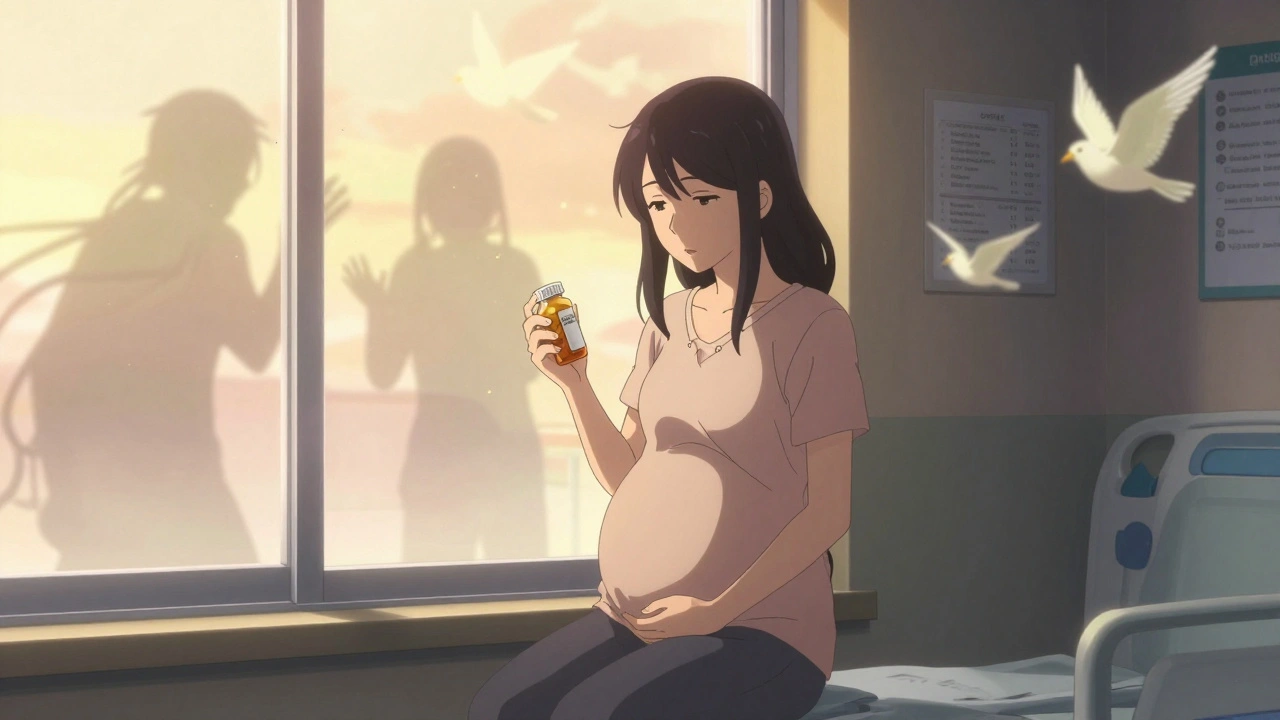
Antidepressant Use in Pregnancy: What You Need to Know About Side Effects and Safety
Antidepressants during pregnancy are safer than once thought. Sertraline and citalopram are the best-studied options with minimal risks. Untreated depression poses greater dangers to mother and baby than medication.