
When to Report Rare Side Effects from Generic Medications
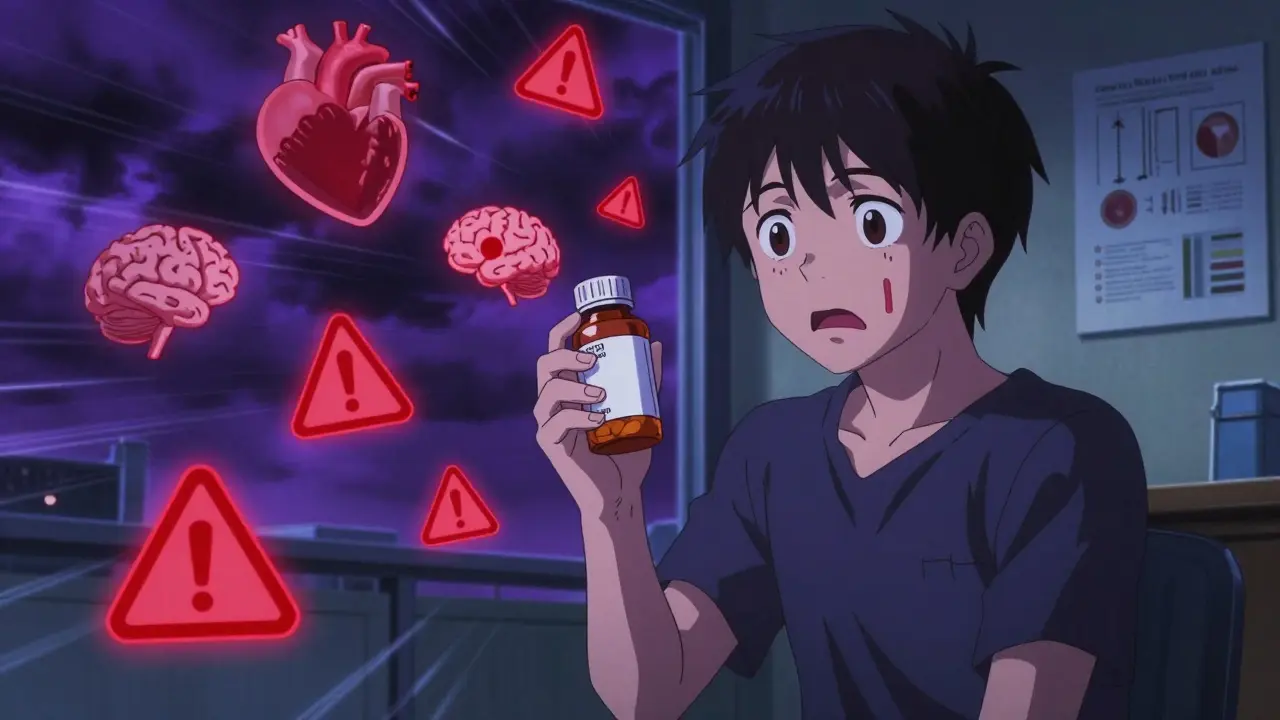
When you take a generic medication, you expect the same results as the brand-name version. After all, the FDA requires generics to have the same active ingredient, strength, and dosage form. But what happens when something unusual occurs? A rash that didn’t show up in the clinical trials. A sudden dizzy spell after switching from one generic to another. Or worse - a reaction you’ve never heard of before. These are rare adverse events, and they matter. Even if they happen to just one in 10,000 people, reporting them can save lives.
Why reporting rare side effects matters
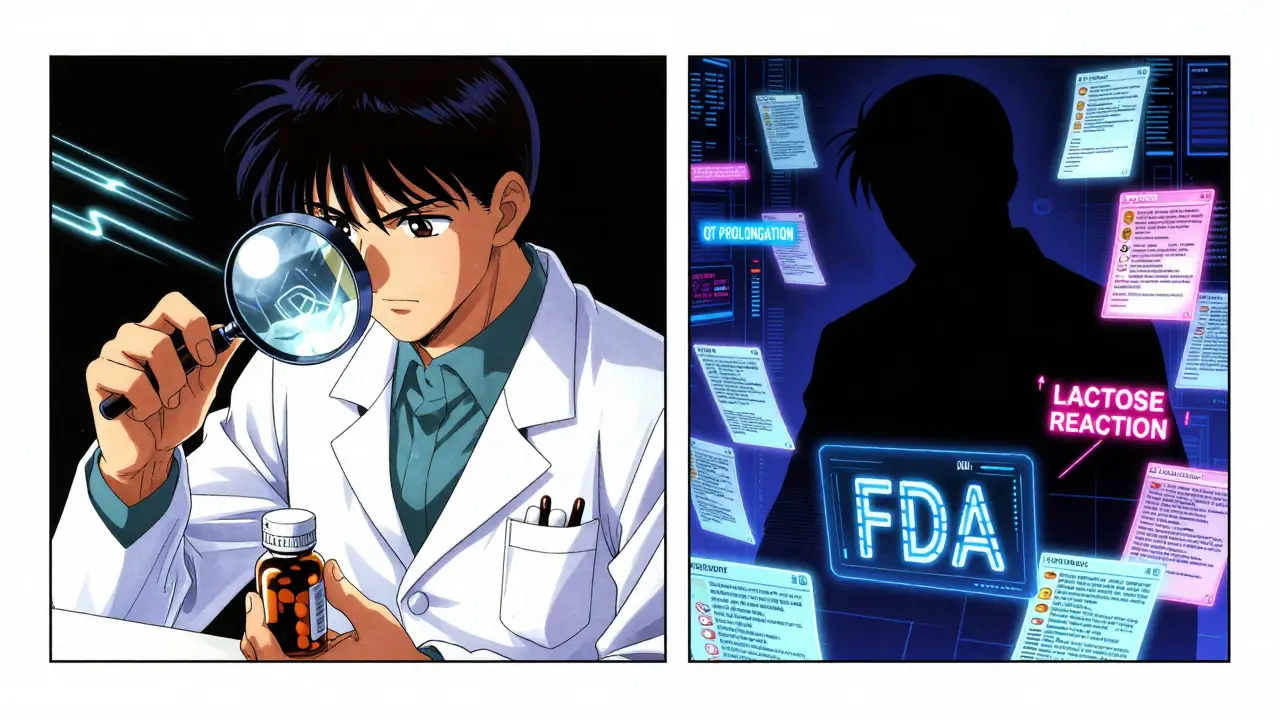
< p>Most people assume that if a drug is approved, it’s completely safe. But approval is based on clinical trials involving thousands, not millions, of people. Rare side effects - those affecting fewer than 1 in 1,000 patients - often don’t show up until the drug is used widely. That’s why post-marketing surveillance is critical. The FDA’s Adverse Event Reporting System (FAERS) has over 25 million reports, and nearly half of them involve generic drugs. Without these reports, dangerous patterns stay hidden.Take citalopram, a generic antidepressant. In 2021, 17 reports of QT prolongation - a heart rhythm issue - led the FDA to update the label, warning that doses above 20mg per day were unsafe for people over 60. That change came only because someone reported it. If no one had spoken up, more people could have been at risk.
It’s not just about the active ingredient. Sometimes, the problem lies in the inactive ingredients - the fillers, dyes, or preservatives. A generic version might use lactose as a binder, while another uses corn starch. If you’re lactose intolerant, that small difference can cause bloating, diarrhea, or worse. Yet only 15% of adverse event reports include details about inactive ingredients. That’s a huge gap.
What counts as a reportable event
Not every minor side effect needs reporting. The FDA defines a serious adverse event as one that is:
- Life-threatening
- Results in hospitalization
- Causes permanent disability
- Leads to congenital anomalies
- Requires medical intervention to prevent lasting harm
If you’re taking a generic blood thinner and start bleeding uncontrollably, that’s serious. If you switch to a new generic version of your blood pressure pill and get a mild headache for two days, that’s probably not. But if the headache turns into vision changes or chest pain? That’s a red flag.
Even if you’re unsure whether the drug caused it, report it. The FDA says 68% of major safety findings started with reports where causality was uncertain. Better to flag something that turns out to be harmless than miss the one that could prevent a death.
Expected vs. unexpected reactions
Every drug’s label lists common side effects. These are expected. If you’re on a generic statin and get muscle aches, that’s normal. You don’t need to report that unless it’s severe or persistent.
But if you develop a rash that’s not listed anywhere - especially if it’s blistering, peeling, or spreading - that’s unexpected. And unexpected means urgent. The FDA requires manufacturers to report serious, unexpected reactions within 15 days. That’s why healthcare providers are trained to recognize these patterns.
For example, levetiracetam (a generic seizure medication) had 42 reports of severe joint pain between 2019 and 2022. That wasn’t on the label. The FDA is still reviewing it. If those reports hadn’t come in, the pattern might never have been noticed.
Who should report - and how
Anyone can report: patients, caregivers, pharmacists, doctors. You don’t need to be a medical professional. The FDA has two forms:
- MedWatch Form 3500 - for healthcare professionals
- MedWatch Form 3500B - for consumers and patients
You can file online at fda.gov/medwatch, call 800-FDA-1088, or download and mail the form. The process takes less than 10 minutes. But the quality of your report matters.
Here’s what to include:
- Your age, weight, and any chronic conditions (like diabetes or kidney disease)
- The exact name of the drug - including the manufacturer if you know it
- The lot number from the pill bottle (this is critical - more on that later)
- When you started the medication and when the reaction began
- Any other drugs or supplements you’re taking
- What happened - describe symptoms clearly, not just “I felt bad”
- What you did - did you stop the drug? Did you go to the ER?
Consumer reports are often too vague. In 2022, only 23% of patient-submitted reports met the minimum quality standard. Most didn’t include the lot number, which makes it impossible to trace whether the issue came from one bad batch or a manufacturing flaw.
Why the lot number is non-negotiable
Here’s the truth: two different companies can make the same generic drug. One might use a different filler. Another might have a slightly different manufacturing process. If you get sick after taking a generic, and the lot number isn’t on the report, the FDA can’t figure out if it’s one bad batch or a widespread problem.
In 2023, only 12.4% of consumer reports included the lot number. That’s a disaster for safety tracking. If 50 people get the same rare reaction from the same lot, the FDA can pull it. If no one reports the lot, the same problem keeps happening.
Always write down the lot number when you pick up your prescription. It’s printed on the bottle or box. Take a photo if you have to. You’ll thank yourself later.
What happens after you report
Once you submit a report, it goes into FAERS. The FDA uses AI tools to scan for patterns. Since 2020, machine learning has helped identify safety signals 4.8 months faster than before. If enough similar reports come in, the FDA may:
- Update the drug’s label with new warnings
- Require manufacturers to run additional studies
- Issue a public safety alert
- Ask for a recall if the risk outweighs the benefit
The FDA’s Sentinel Initiative - which tracks data from 300 million patients - has already flagged seven new safety issues with generic drugs since 2022. One was increased hypoglycemia with certain metformin formulations. That discovery came from reports, not clinical trials.
Common myths about generic drug safety
Myth: “Generics are less safe than brand-name drugs.”
Fact: The FDA holds them to the same standards. A 2021 study of 1.2 million adverse event reports found no significant difference in reporting rates between generic and brand-name cardiovascular drugs.
Myth: “If the doctor prescribed it, it’s fine.”
Fact: Doctors rely on the same labeling as patients. They don’t know about rare reactions unless someone reports them.
Myth: “I’m not a doctor - my report won’t matter.”
Fact: Patients are the first line of defense. The FDA says 90% of serious adverse events are first noticed by patients or caregivers.

What you can do right now
You don’t need to wait for a crisis. Here’s what to do today:
- Check the label of your generic meds. Know the manufacturer and lot number.
- Keep a simple log: drug name, date started, any new symptoms.
- If something unusual happens, don’t assume it’s “just in your head.”
- Report it - even if you’re not sure.
- Encourage friends and family to do the same.
The FDA’s 2024 goal is to increase high-quality generic drug reports by 25%. That won’t happen unless people speak up. Your report could be the one that prevents someone else from getting hurt.
Frequently Asked Questions
Do I need to prove the generic drug caused my side effect to report it?
No. You don’t need to prove causation. The FDA encourages reporting even when you’re unsure. In fact, 68% of major safety findings started with reports where the link wasn’t clear. Your observation is valuable - even if it’s just a hunch.
Can I report a side effect from a generic drug I bought online?
Yes. The FDA accepts reports for any medication you took, even if bought online. But be extra careful about the source. Many online pharmacies sell counterfeit or unapproved drugs. Include the name of the pharmacy, if possible, and any packaging details. If you suspect the product is fake, report it to the FDA’s Import Alert system as well.
What if I switched from one generic to another and had a reaction?
That’s a common scenario. Even though generics are supposed to be bioequivalent, small differences in inactive ingredients or manufacturing can trigger reactions in sensitive individuals. Report both versions - the old and the new - along with the lot numbers. This helps the FDA determine if the issue is specific to one manufacturer.
How long does it take for the FDA to act after a report?
There’s no fixed timeline. Some reports lead to quick label changes - like the citalopram dose limit - within months. Others take years if the signal is weak or scattered. But every report adds to the database. It’s like putting a puzzle piece in place. You never know which one will complete the picture.
Are there any drugs that are more likely to cause rare side effects as generics?
Yes. The U.S. Department of Health and Human Services has flagged generic anticoagulants (like warfarin), diabetes drugs (like metformin), and opioids as priority areas. These are high-risk medications used by millions, and even small variations can have big consequences. If you’re taking any of these, pay close attention to how you feel after a switch.
Next steps
If you’re currently taking a generic medication, open your pill bottle right now. Find the lot number. Write it down. If you’ve had any strange symptoms since starting it, even if they seemed minor, note them down. Then go to fda.gov/medwatch and file a report. It takes five minutes. It could save someone’s life.



Comments
Windie Wilson
January 11, 2026 AT 16:39Oh wow, so now I’m supposed to be a drug detective too? Great. Next they’ll ask me to interpret my own EKG while waiting in line at CVS. Thanks for the guilt trip, FDA.
Jessica Bnouzalim
January 12, 2026 AT 05:18YES. YES. YES. I switched generics last month and got this weird tingling in my fingers-thought it was anxiety, but then I remembered this post and reported it. FDA got back to me in 3 weeks saying it was logged! I didn’t even know I could do that. You’re not crazy if something feels off. Write it down. Take a pic of the lot number. It matters. I’m telling my mom to do this too.
Sumit Sharma
January 12, 2026 AT 06:56While the premise is commendable, the post lacks rigorous pharmacovigilance methodology. The FAERS database suffers from reporting bias, underreporting, and confounding variables. Without standardized causality assessment (e.g., Naranjo scale), anecdotal reports contribute noise, not signal. Moreover, the emphasis on lot numbers is statistically irrelevant unless paired with batch-specific HPLC and dissolution profiling data. Consumers are not qualified to interpret bioequivalence deviations.
Jay Powers
January 12, 2026 AT 19:40I’ve been taking generic metformin for 8 years and never thought twice until I read this. Now I keep a little notebook with the lot number and when I feel off. It’s not hard. I showed my cousin who’s on blood thinners and she’s doing it now too. We’re all just trying to stay alive. Small things add up.
Katherine Carlock
January 14, 2026 AT 15:42My grandma took a new generic version of her blood pressure med and started hallucinating. We thought it was dementia. Turns out it was the filler. We reported it. They changed the label. She’s fine now. Don’t ignore weird stuff. Your grandma’s weirdness might save someone’s life.
Sona Chandra
January 16, 2026 AT 09:24THIS IS WHY AMERICA IS FALLING APART. PEOPLE ARE TOO LAZY TO READ THE LABEL. I’VE SEEN PEOPLE SWALLOW PILLS LIKE CANDY AND THEN BLAME THE DRUG WHEN THEY GET SICK. THE LOT NUMBER IS RIGHT THERE. IF YOU CAN’T FIND IT, YOU DON’T DESERVE TO BE ON MEDS.
Lauren Warner
January 16, 2026 AT 18:54Let’s be real: 90% of these reports are from people who don’t understand their own physiology. Muscle ache from statins? Normal. Headache after switching generics? Probably dehydration. You’re not a medical expert. Stop overreacting. The FDA doesn’t need your panic. They need data. And data requires context, not emotional outbursts.
Craig Wright
January 16, 2026 AT 23:22As a British citizen, I find this entire system alarmingly unstructured. In the UK, the Yellow Card system is far more streamlined, with mandatory clinician involvement for serious events. Allowing laypersons to submit unverified reports without clinical triage is a recipe for regulatory chaos. This is not patient empowerment-it is data pollution.
Lelia Battle
January 18, 2026 AT 17:47It’s fascinating how we’ve outsourced our bodily awareness to institutions. We trust the FDA to keep us safe, yet we rarely participate in the system that makes that trust possible. Reporting isn’t just civic duty-it’s a quiet act of reclaiming agency over our own bodies. Maybe the real problem isn’t the generics. It’s that we’ve forgotten how to listen to ourselves.
Rinky Tandon
January 19, 2026 AT 13:40Generic manufacturers are cutting corners. You think the FDA checks every batch? They don’t. They rely on random audits and corporate self-reporting. The lot number isn’t just important-it’s your only weapon. If you don’t record it, you’re complicit. And if you’re one of those people who says ‘I don’t care’-you’re the reason people die.
Ben Kono
January 21, 2026 AT 02:53My cousin got sick after switching generics and didn’t report it because she didn’t know how. Now she’s in rehab. Don’t be like her. Take the pic. Write the lot. Send the form. Five minutes. That’s all it takes.
Cassie Widders
January 21, 2026 AT 08:31I used to ignore this stuff. Then my dog got sick from a flea med I bought online. I reported it. Turns out the batch was fake. So now I report everything. Even if it’s weird. Even if I’m not sure. Better safe than sorry.
Jose Mecanico
January 22, 2026 AT 13:39Just want to add-when you report, mention if you switched from one generic to another. That’s often the trigger. I had a reaction after switching from Teva to Mylan citalopram. Same active ingredient, different dye. The FDA flagged it as a possible allergen pattern. That’s how changes happen.
Jessica Bnouzalim
January 23, 2026 AT 23:11Jose, you’re right! I didn’t even think to mention I switched from Teva to Mylan-I just said ‘generic citalopram.’ I’m going back to edit my report. Thanks for the nudge. I didn’t realize that detail mattered so much.