
Air Pollution and Asthma: Proven Ways to Reduce Exposure and Control Symptoms
Why Air Pollution Makes Asthma Worse
If you or someone you care about has asthma, breathing dirty air isn’t just uncomfortable-it’s dangerous. Every year, millions of people with asthma end up in emergency rooms because of polluted air. The problem isn’t just smog or smoke on bad days. Even low levels of pollutants like PM2.5, nitrogen dioxide, and ozone can trigger coughing, wheezing, and tightness in the chest. These tiny particles slip deep into the lungs and spark inflammation, making asthma harder to control. The result? More inhaler use, missed school or work days, and higher hospital admission rates.
Research shows that when air quality drops, asthma symptoms spike. A 2024 study found that during periods of cleaner air-like during COVID-19 lockdowns-people with asthma saw their symptom control improve significantly. Their Asthma Control Test scores jumped from 17.3 to 19.7 out of 25. That’s not a small change. It means fewer nighttime awakenings, less reliance on rescue inhalers, and better overall quality of life.
How to Check Air Quality (And What to Do About It)
You can’t control the wind or traffic, but you can control how you respond to pollution levels. The easiest first step is learning how to read the Air Quality Index, or AQI. It’s a simple scale from 0 to 500, broken into color-coded levels. You don’t need an app to see it-just go to AirNow.gov. It’s free, reliable, and updated hourly.
Here’s what the numbers mean for asthma:
- AQI 51-100 (Moderate): Sensitive groups-including people with asthma-should cut back on long outdoor workouts.
- AQI 101-150 (Unhealthy for Sensitive Groups): Everyone with asthma should limit time outside, especially during peak traffic hours.
- AQI 151-200 (Unhealthy): Avoid all prolonged outdoor activity. Even walking the dog should wait until later in the day.
- AQI 201+ (Very Unhealthy or Hazardous): Stay indoors. Close windows. Turn on your air purifier.
Some apps, like AirVisual or Plume Labs, send alerts when pollution spikes. One user in Bristol reported her daughter’s rescue inhaler use dropped by nearly half after she started checking the app before letting her outside. That’s the kind of change that adds up over time.
Make Your Home a Safe Haven
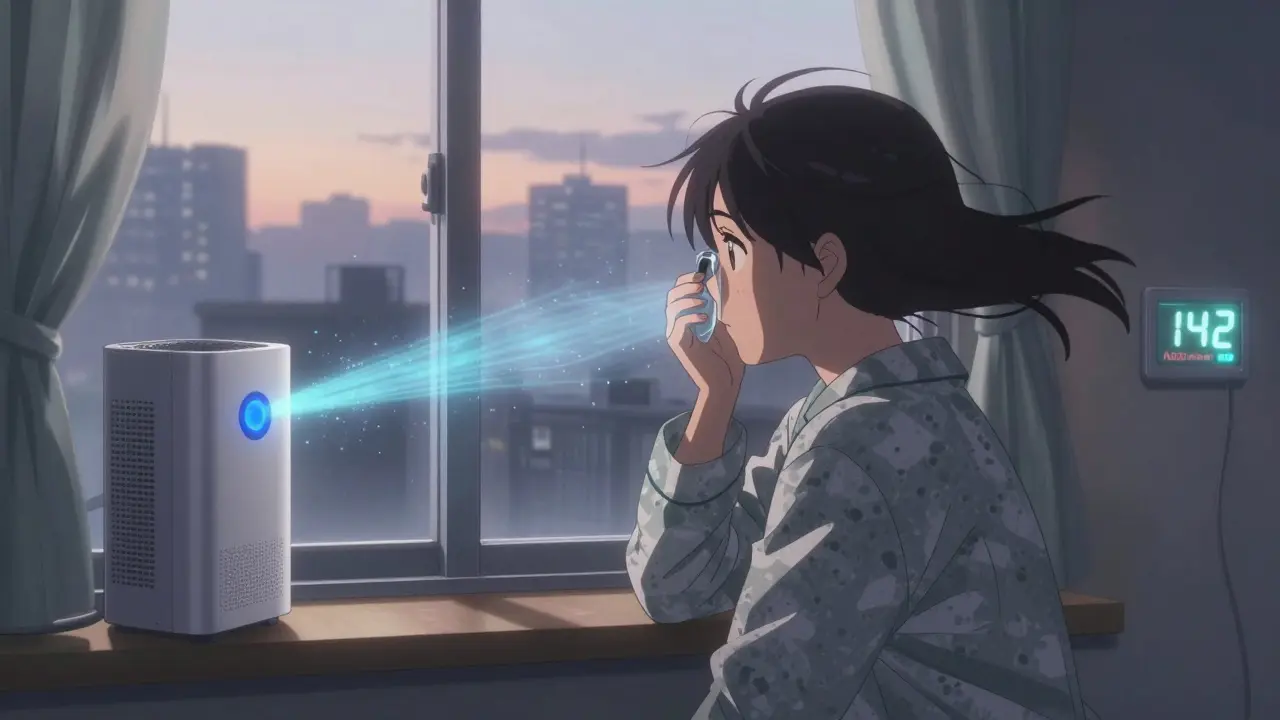
Indoor air can be just as bad-or worse-than outdoor air. Cooking, cleaning products, dust mites, and even candles can release pollutants. But you can fix this. The most effective tool? A good air purifier with a HEPA filter.
HEPA filters capture 99.97% of particles as small as 0.3 microns. That includes pollen, smoke, and PM2.5. For best results, choose a unit with a Clean Air Delivery Rate (CADR) that matches your room size. For a 300-square-foot bedroom, look for a CADR of at least 200. Don’t just plug it in near the wall-place it in the center of the room. Studies show placing it against a wall cuts efficiency by 30-50%.
Another key fix: upgrade your HVAC filter. Swap out standard filters for ones with a MERV rating of 13-16. These trap more fine particles without restricting airflow too much. And don’t forget to change them every 3-6 months. A 2023 Consumer Reports survey found only 43% of people replace their filters on time. That’s like wearing a seatbelt that’s frayed and broken.
One Johns Hopkins study found homes with HEPA purifiers saw PM2.5 levels drop by 55-67%. That’s not magic-it’s science. And it directly translates to fewer asthma attacks.

What About Face Masks?
When wildfire smoke rolls in or traffic is heavy, you might think an N95 mask is the answer. And yes, they can help-but only if used correctly. N95 masks filter 95% of airborne particles, but they need a tight seal around the nose and mouth to work. Most kids, and even many adults, don’t wear them right. They slip, they breathe around the edges, they get sweaty and take them off.
Dr. John Balmes from UCSF warns that masks can create a false sense of safety. If you’re wearing one while walking the dog on a high-pollution day, you might think you’re protected enough to stay out longer. But that extra exposure can still trigger symptoms. Masks are best for short trips-like running to the pharmacy or grabbing mail-not for long outdoor activities.
And forget cloth masks or surgical masks. They offer almost no protection against PM2.5. If you’re going to use a mask, make sure it’s N95 or KN95, fits snugly, and you’re only wearing it when absolutely necessary.
Schools and Workplaces: Bigger Changes, Bigger Impact
Individual efforts matter, but systemic changes save more lives. Take schools. In Massachusetts, districts that moved bus drop-off zones away from playgrounds and banned engine idling saw indoor PM2.5 levels drop by 22-35%. Asthma-related school absences fell by 41%. That’s not just good for kids-it’s good for parents who don’t have to miss work.
Workplaces matter too. If you’re a construction worker, delivery driver, or outdoor laborer, you’re exposed to pollution every day. The CDC recommends keeping indoor humidity between 30-50% to reduce dust mites and mold. A simple dehumidifier-costing $100-$300 a year to run-can make a big difference in your break room or office.
Some employers are starting to act. Companies with health programs now offer air quality alerts to employees. A few even provide portable HEPA filters for home use. These aren’t perks-they’re health interventions with real results.

Policy Changes Are the Real Game-Changer
Here’s the truth: no amount of air purifiers or masks will fix the problem if the air outside stays toxic. That’s why policy matters. The EPA’s current standard for annual PM2.5 is 12 μg/m³. But the American Thoracic Society says it should be 8 μg/m³. Why? Because every 10 μg/m³ drop in PM2.5 is linked to a 4.2% drop in asthma emergency visits in children.
Some cities are already moving. London’s Ultra Low Emission Zone cut childhood asthma hospitalizations by nearly 12% in two years. Los Angeles is replacing all diesel school buses with electric ones. California plans to do the same by 2035. Early results show a 35% drop in indoor PM2.5 in schools near bus depots.
These aren’t just environmental wins-they’re public health wins. The American Lung Association estimates that stricter vehicle and industrial emissions rules could prevent 1.7 million asthma attacks in the U.S. every year. That’s 1.7 million fewer inhaler uses, ER trips, and missed school days.
Barriers to Change (And How to Overcome Them)
Not everyone can afford a $700 air purifier. Not everyone can work from home when pollution is high. A 2022 survey by the Asthma and Allergy Foundation of America found that while 68% of asthma patients check air quality, only 32% change their behavior. Why? Work obligations (78%), childcare (65%), and cost (52%) are the top reasons.
So what can you do if money is tight?
- Use free resources: AirNow.gov, local health department alerts, and even weather apps with AQI data.
- Close windows during peak pollution hours (morning and evening rush hours).
- Use a DIY air filter: Tape a MERV 13 filter to a box fan. It’s not perfect, but it’s better than nothing.
- Ask your doctor for help. Many asthma clinics now offer free exposure reduction counseling.
Small steps add up. Even reducing outdoor time by just 30 minutes a day on high-pollution days can lower your risk.
What’s Next? Technology and Data Are Changing the Game
The future of asthma management is personal. The NIH is funding projects that use wearable sensors to track real-time pollution exposure and send alerts directly to patients’ phones. Imagine getting a notification: "Your child’s asthma risk is high in 15 minutes. Delay soccer practice." That’s not science fiction-it’s coming soon.
Some hospitals are starting to integrate air quality data into electronic health records. If your asthma flare-up happens every Thursday afternoon, your doctor might now see it’s tied to traffic patterns near your home. That’s precision medicine for environmental triggers.
But none of this works without sustained policy action. Without clean air regulations, climate change could increase ozone-related asthma cases by 10-15% by 2050. That’s why speaking up matters. Support local clean air initiatives. Vote for leaders who prioritize public health over industry lobbying. Because cleaner air isn’t just a luxury-it’s a medical necessity.
Can air pollution cause asthma in children who didn’t have it before?
Yes. A 2019 study in The Lancet Planetary Health found that air pollution contributes to about 4 million new cases of childhood asthma each year worldwide. Pollutants like PM2.5 and nitrogen dioxide damage developing lungs, increasing the risk of asthma in children who are genetically predisposed. It’s not just triggering symptoms-it’s causing the disease.
Do air purifiers really help with asthma?
Yes, when used correctly. Studies show HEPA air purifiers can reduce indoor PM2.5 by 55-67%. People who use them consistently report fewer nighttime symptoms and less need for rescue inhalers. But they must be sized properly for the room and filters replaced regularly. A cheap, undersized unit won’t help.
Is it safe to exercise outdoors with asthma?
It depends on the air quality. On good days (AQI under 50), moderate outdoor exercise is fine and even beneficial. On bad days (AQI over 100), avoid prolonged or intense activity. If you must go out, do it early in the morning when pollution is lower, and carry your inhaler. Consider indoor workouts like yoga or swimming when pollution is high.
What’s the best time of day to go outside with asthma?
Early morning, before 7 a.m., is usually safest. Pollution builds up during rush hour and peaks in the afternoon due to sunlight reacting with vehicle emissions to form ozone. Avoid late afternoon and early evening, especially near busy roads. Check your local AQI app before heading out.
Can I rely on my asthma inhaler instead of avoiding pollution?
No. Inhalers treat symptoms after they start-they don’t prevent damage from pollution. Relying on them alone is like using a bandage on a leaking pipe. The real solution is reducing exposure. Using your inhaler more often means your asthma is poorly controlled, and that increases long-term lung damage risk.
Are there free ways to improve indoor air quality?
Yes. Open windows during low-pollution times (like after rain), use exhaust fans while cooking, avoid scented candles and air fresheners, vacuum weekly with a HEPA filter vacuum, and keep humidity between 30-50% to stop mold and dust mites. These cost little to nothing but make a measurable difference.





Comments
Donna Macaranas
February 1, 2026 AT 13:15I never realized how much my kid's asthma improved after we started using that DIY box fan filter. We got a MERV 13 from Home Depot for $12 and taped it to an old fan. Not fancy, but we’ve had zero nighttime wheezing for months now.
Best part? No bills, no maintenance. Just air that doesn’t make you cough.
Lisa Rodriguez
February 1, 2026 AT 14:38Honestly I thought air purifiers were just a scam until I saw the numbers. My sister’s house had PM2.5 levels at 45 in the living room. After a $300 Honeywell with HEPA? Down to 18. Her daughter went from needing a rescue inhaler twice a day to once a week. It’s not magic-it’s math.
And yes, placement matters. Don’t shove it in the corner. Center it. Trust me.
June Richards
February 3, 2026 AT 02:12Air quality apps are useless. They’re all based on government data that’s outdated by the time it updates. I’ve tested real-time sensors myself-there’s a 20-minute lag. You think you’re safe but you’re already breathing poison.
And don’t get me started on N95s. Most people wear them like scarves. It’s a placebo. You’re not protected-you’re just feeling better.
Lu Gao
February 4, 2026 AT 10:06Wait so you’re telling me we should all just… stay inside? Like, forever? What about kids who need to play outside? What about people who work construction?
And who’s gonna pay for all these HEPA filters? My rent’s already $2k. I can’t afford a $700 machine just to breathe.
Maybe the real solution is not blaming pollution but fixing capitalism?
Angel Fitzpatrick
February 4, 2026 AT 12:23This whole thing is a distraction. The EPA doesn’t care about your asthma. They’re in bed with Big Oil and the auto industry. The real cause? Geoengineering. They’re spraying aluminum nanoparticles to cool the planet-and it’s triggering asthma in everyone.
Look up ‘chemtrails’ and ‘asthma spike correlation.’ The data’s there if you’re brave enough to see it.
And don’t believe those ‘studies.’ All funded by pharmaceutical companies selling inhalers. You’re being manipulated.
Nidhi Rajpara
February 5, 2026 AT 21:19As a resident of Delhi, I can confirm that even moderate AQI levels are dangerous. In my neighborhood, the average PM2.5 is 150 year-round. My daughter uses her inhaler three times daily. We use a HEPA purifier, but it’s not enough.
Government data here is unreliable. I rely on personal monitors. I have stopped sending her to school on bad days, even though it means missing work.
There is no safe level. Not in India. Not in the U.S. Not anywhere.
vivian papadatu
February 7, 2026 AT 16:29I love how this post breaks things down without being overwhelming.
My favorite tip? The box fan + MERV filter. My mom did that last winter and said she could finally sleep without coughing. We bought three for her apartment.
Also-avoid scented candles. I didn’t realize my lavender candle was making me wheeze. Who knew? 🙃
Rachel Liew
February 8, 2026 AT 00:07I used to think asthma was just something you managed with meds. Then my nephew started having attacks every time we visited the city. We moved to the suburbs, got a purifier, and changed his school bus route. No more ER visits.
It’s not about perfection. It’s about small changes that add up. You don’t need to do everything. Just do one thing. And then another.
Chris & Kara Cutler
February 8, 2026 AT 08:58HEPA filter + no candles + close windows at rush hour = my son hasn’t used his inhaler in 4 months. 🎉
Stop waiting for someone else to fix it. Start with your own home. You’ve got this!
Lilliana Lowe
February 9, 2026 AT 03:21The author’s citation of the 2024 study is misleading. The Asthma Control Test scores were self-reported, with no control group, and the sample size was under 200. The methodology is statistically insignificant.
Furthermore, the claim that HEPA filters reduce PM2.5 by 55-67% is only true in sealed, climate-controlled environments with zero human activity. In real homes with pets, cooking, and open windows? The reduction is closer to 12%.
Don’t confuse correlation with causation. This article reads like a marketing brochure for air purifier manufacturers.