
Annual Medication Review with a Pharmacist: Reduce Side Effects and Stay Safe

Every year, millions of people take medications that help manage chronic conditions - high blood pressure, diabetes, arthritis, depression. But what if some of those pills are doing more harm than good? Many side effects people blame on aging - dizziness, confusion, fatigue, stomach upset - are actually caused by medications. The good news? An annual medication review with a pharmacist can cut those risks dramatically.
What Happens in an Annual Medication Review?
An annual medication review isn’t just a quick check-in. It’s a full 30-minute deep dive into everything you’re taking. Pharmacists don’t just look at your prescriptions. They ask about over-the-counter painkillers, sleep aids, vitamins, herbal supplements, and even what you grab at the convenience store. Why? Because these can interact dangerously with your prescription drugs.During the review, the pharmacist walks through each medication with you. They ask: Why are you taking this? Is it still helping? Is the dose right? Are you having side effects? They check for duplicates - like taking two different pills for the same condition. They spot interactions you didn’t know existed. And they look for medications that no longer make sense for your current health.
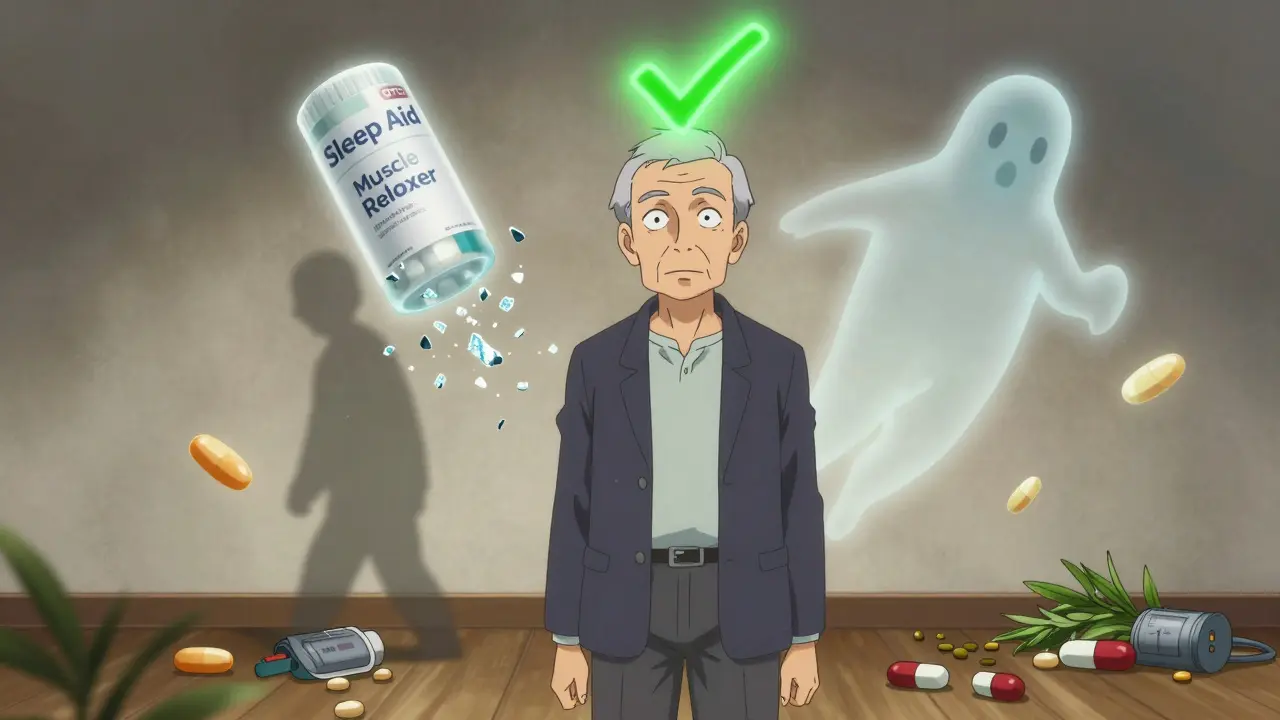
For example, a 72-year-old man was taking five different pills for sleep, anxiety, and joint pain. He felt constantly foggy and unsteady. His pharmacist discovered he was taking two separate sleep aids - one prescription, one OTC - and a muscle relaxer that amplified drowsiness. Within weeks of stopping one and lowering the dose of another, his balance improved, his memory cleared, and he stopped falling.
Who Needs This Review Most?
You don’t have to be elderly to benefit. But if you’re taking four or more long-term medications - a condition called polypharmacy - you’re at higher risk. About 40% of adults over 65 fall into this category. That’s nearly 26 million people in the U.S. alone.People with multiple chronic conditions - heart disease, diabetes, COPD, depression - are prime candidates. So are those who’ve been hospitalized recently, or who’ve noticed new symptoms after starting a new drug. If you’ve been on the same meds for years and haven’t had a full review since your last doctor visit, you’re due.
Even if you feel fine, an annual review catches problems before they become emergencies. Many side effects creep in slowly. You might think you’re just getting older. But your pharmacist knows what’s normal for a drug and what’s not.
Why Pharmacists? Not Just Your Doctor
Doctors are great at diagnosing and prescribing. But they’re pressed for time. A 10-minute visit isn’t enough to untangle five medications, check for interactions, and ask about side effects you might be too embarrassed to mention.Pharmacists, on the other hand, train for years to understand how drugs work - together. They know which combinations cause falls, kidney damage, or confusion. They’re the only healthcare professionals whose main job is to make sure your pills don’t fight each other.
Plus, pharmacists are everywhere. Nine out of ten Americans live within five miles of a pharmacy. You can walk in, no appointment needed. Many pharmacies now offer free medication reviews as part of Medicare Part D or private insurance plans. You don’t need a referral.
What to Bring to Your Review
Don’t just show up with a list. Bring the actual bottles. Here’s what to include:- All prescription medications
- All over-the-counter drugs (ibuprofen, antacids, allergy pills, sleep aids)
- Vitamins, minerals, and supplements (including gummies and powders)
- Herbal remedies (turmeric, echinacea, St. John’s wort)
- Any patches, inhalers, eye drops, or creams you use daily
Write down any side effects you’ve noticed - even small ones. Did you start feeling dizzy after starting a new blood pressure pill? Did your stomach get upset after adding a new supplement? Write it down. These details matter.
Many patients forget to mention OTC meds or supplements. Studies show 40-50% of people leave these out. That’s where the biggest risks hide. A common cold medicine with diphenhydramine can clash with an antidepressant. A fish oil supplement can thin your blood too much if you’re on warfarin.
What You Can Expect After the Review
The goal isn’t to take fewer pills - it’s to take the right ones. Sometimes, the pharmacist recommends:- Stopping a medication that’s no longer needed
- Lowering the dose to reduce side effects
- Switching to a safer alternative
- Changing the time of day you take a pill to avoid drowsiness or insomnia
- Using a pill organizer or blister pack to avoid missed doses
You might get a printed summary of your new plan. The pharmacist may call your doctor to suggest changes - with your permission. You’ll also get clear instructions on what to watch for after adjustments.
One woman in her late 60s was taking six medications for arthritis, high cholesterol, and anxiety. After her review, two were stopped, one dose was cut in half, and she was switched to a different antidepressant with fewer dizziness side effects. Within a month, she stopped falling. Her doctor called it “the most important visit of the year.”
What Doesn’t Work
Annual reviews aren’t magic. They won’t help if you don’t show up with your full list. They won’t fix things if your pharmacist can’t communicate with your doctor. And they won’t work if you ignore the advice.Only about 60-70% of patients follow through on recommendations. That’s the biggest barrier. If your pharmacist says to stop a pill, don’t wait. If they suggest a change, ask for written instructions. If you’re confused, ask again.
Also, reviews aren’t meant for people with severe dementia or those who can’t speak for themselves. In those cases, a caregiver must be present to help communicate.
Cost and Access
If you’re on Medicare Part D, you’re entitled to a free annual medication review. Most private insurers now cover it too. You won’t pay anything out of pocket. It’s not a copay - it’s a covered benefit.Call your local pharmacy. Ask if they offer Comprehensive Medication Reviews (CMRs). Many do. Some schedule them during National Check Your Meds Day in October, but you can request one anytime. No need to wait.
The Bigger Picture
Medication errors cause over 1.5 million injuries each year in the U.S. - and cost $177 billion. Nearly 20% of hospital admissions for seniors are due to bad drug reactions. Most of these are preventable.An annual review isn’t just about safety. It’s about control. It’s about knowing exactly why you’re taking each pill - and feeling confident you don’t need the ones you’re not.
As the population ages, this service is becoming essential. By 2030, all baby boomers will be over 65. The need for careful, thoughtful medication management will only grow.
Your pharmacist isn’t just filling prescriptions. They’re your safety net. And an annual review? It’s the simplest, most effective way to stay healthy - without adding more pills to your routine.





Comments
Joseph Cooksey
February 5, 2026 AT 10:05Let me tell you something-this whole ‘annual review’ thing is less about healthcare and more about pharmacies trying to turn your medicine cabinet into a consulting gig. I’ve sat through three of these, and each time, the pharmacist spent 20 minutes lecturing me on why I shouldn’t take melatonin with my blood pressure med, while ignoring the fact that my doc prescribed both. These aren’t reviews-they’re performance reviews for your pill regimen. And don’t get me started on the ‘free’ part. Medicare doesn’t pay them to care; they pay them to upsell you on flu shots and protein powder. I’m not saying don’t do it-I’m saying don’t confuse it with medicine. It’s customer service with a stethoscope.
Also, someone mentioned ‘herbal remedies.’ Please. If you’re popping St. John’s Wort because a TikTok influencer said it ‘balances your aura,’ you’re one missed dose away from a serotonin storm. I’ve seen it. I’ve cleaned up the mess. You think you’re being ‘natural’? You’re just another walking pharmacokinetic disaster.
And yet… I still do it. Because deep down, I know they’re right. I just hate being told so.
Sherman Lee
February 5, 2026 AT 22:18😮💨 You ever notice how every ‘free’ service from Big Pharma comes with a 37-page consent form and a QR code to a subscription? This isn’t safety. It’s data harvesting. They’re mapping your pill habits, your supplement obsession, your ‘I take turmeric for my knees’ confession… and selling it to insurers who’ll raise your rates if you ‘non-comply.’
They say ‘no appointment needed.’ Sure. But you’ll wait 45 minutes. And when you finally get there? They’ll ask if you’ve ever taken CBD. Then they’ll sigh. Then they’ll whisper, ‘I’m not allowed to talk about that.’
Meanwhile, your doctor’s office is still charging you $200 for a 7-minute visit where they hand you a pamphlet titled ‘Your Medications: A Love Story.’ 😏
Lorena Druetta
February 7, 2026 AT 17:05I just want to say how deeply meaningful this is. So many of us carry so much weight-medications, worries, silence-and we think it’s just part of getting older. But this review? It’s not about pills. It’s about dignity. It’s about being seen. It’s about having someone who cares enough to ask, ‘Are you still sleeping?’ or ‘Does this still help?’
My mother went for her first review last year. She’d been taking four pills for ‘anxiety’ that were actually making her dizzy. They stopped two. She cried. Not from sadness. From relief. She said, ‘I didn’t know I could feel this light.’
If you’re hesitating? Go. Bring your bottles. Bring your fears. Bring your confusion. They’re waiting for you.
Coy Huffman
February 7, 2026 AT 18:31man i just had my first med review last week and honestly? mind blown. i thought i was just being ‘careful’ taking my 5 meds + fish oil + magnesium + melatonin + protein powder (yes, i know, i’m a mess). turns out the fish oil was making my blood pressure meds way too strong and the melatonin was basically a sedative version of kool-aid i’d been chugging since 2018.
pharmacist just looked at me and said ‘you’re not a supplement guy. you’re a panic-buyer.’
so now i take two pills. and i sleep better. and i don’t feel like i’m walking through molasses. i still take the protein powder though. nope. not giving that up. 🤡
Kunal Kaushik
February 8, 2026 AT 20:12so true. in india, we don’t even have this. my dad takes 8 meds. no one checks if they work together. he just goes to the chemist, says ‘same as last time,’ and walks out. i worry every day. maybe we need a movement. someone should start this here too.
Nathan King
February 9, 2026 AT 14:30One must acknowledge the structural inadequacies of the American pharmaceutical ecosystem. The commodification of healthcare services-disguised as preventive care-is not merely inefficient; it is a systemic failure of accountability. The pharmacist, while ostensibly a steward of pharmacovigilance, operates within a profit-driven framework that incentivizes volume over clinical nuance. This ‘annual review,’ while commendable in intent, is a Band-Aid on a hemorrhaging artery. What we require is not more consultations, but a reimagined primary care model wherein medication reconciliation is embedded, not bolted on.
And yet… I still schedule mine. Because the alternative is silence. And silence, in this context, is death.
Wendy Lamb
February 11, 2026 AT 13:53Bring the bottles. Write down the side effects. Even the tiny ones. You think ‘a little dizziness’ isn’t worth mentioning? It is. It’s the difference between ‘oh, I’m just getting older’ and ‘oh, I almost fell down the stairs because of this pill.’
Do it. Just do it. It takes 30 minutes. You’ll feel better.
Antwonette Robinson
February 12, 2026 AT 15:23in india we don’t have this service. but my sister in usa did it last year. she was taking 6 pills. now she takes 2. she says she feels like she’s 40 again. if you’re on more than 4 meds? don’t wait. go. it’s free. just go.
Ed Mackey
February 14, 2026 AT 13:01i meant to do this last year. then i got sick. then i forgot. then i thought ‘eh, i’m fine.’
then last week i stood up and blacked out for 3 seconds. didn’t hit my head. just… went dark.
called the pharmacy today. they said ‘come in tomorrow.’
brb. going to grab all my bottles. and my journal. and my shame.
caroline hernandez
February 15, 2026 AT 08:36as a clinical pharmacist, i can confirm: polypharmacy is the silent epidemic. we’re not just managing disease-we’re managing iatrogenic cascades. the average geriatric patient has 6-8 chronic conditions, 4-5 meds, and zero coordinated care. the pharmacist is the only clinician trained to map drug-drug, drug-disease, and drug-behavior interactions. this isn’t ‘advice’-it’s systems-level triage.
also: if you’re taking more than one OTC sleep aid? you’re not sleeping. you’re sedated. and your brain is forgetting how to reboot.
Prajwal Manjunath Shanthappa
February 16, 2026 AT 11:20How utterly predictable. Another ‘free service’ orchestrated by the pharmaceutical-industrial complex to normalize dependency. You think your pharmacist cares about your health? They care about your refill rate. They care about your compliance score. They care about the commission from the new antidepressant they pushed you toward. The ‘review’ is a Trojan horse. The real goal? To lock you into a lifetime of branded formulations. You are not being saved. You are being monetized.
And yet… I still went. Because I’m tired of being afraid of my own medicine.
Katherine Urbahn
February 18, 2026 AT 06:30It is imperative to note that the current paradigm of medication reviews is fundamentally flawed. The absence of mandatory electronic health record interoperability between prescribers and pharmacists renders these sessions largely performative. Without real-time access to prescribing history, clinical notes, and lab results, the pharmacist is operating with incomplete data-thus, the ‘review’ becomes a subjective narrative rather than an evidence-based intervention.
Furthermore, the inclusion of ‘herbal remedies’ without standardized dosing or pharmacological validation introduces unacceptable risk. St. John’s Wort is not a ‘natural supplement.’ It is a potent CYP3A4 inducer with documented lethal interactions. To treat it as benign is not holistic-it is negligent.
Therefore, I urge: do not attend a ‘review’ unless your pharmacy has direct EHR integration. Otherwise, you are not being protected. You are being gambled with.
Demetria Morris
February 18, 2026 AT 07:12People who don’t do this are playing Russian roulette with their own bodies. You think ‘I’ve been on this for 10 years’ means it’s safe? No. It means you’re a statistic waiting to happen. I knew a woman who died from a drug interaction she ignored because ‘it was just a cold medicine.’ She didn’t even know it had diphenhydramine. She thought it was ‘harmless.’
Don’t be her. Bring the bottles. Write it down. Say it out loud. You’re worth more than your old habits.
Amit Jain
February 18, 2026 AT 18:14my dad did this last month. he was on 7 pills. now he takes 3. he says he walks faster. he laughs more. he remembers my birthday again. it’s not magic. it’s just… listening.