
How to Build a Safe Home OTC Medicine Cabinet for Families

Every family has one - that drawer or cabinet stuffed with old cough syrup, leftover painkillers, forgotten vitamins, and half-used antiseptic wipes. It’s easy to ignore. But here’s the truth: OTC medicine cabinet clutter isn’t just messy. It’s dangerous.
In Australia, over 1,200 children under five are taken to emergency rooms every year after accidentally swallowing medicine they found at home. That’s not rare. It’s common. And most of it happens in places parents think are safe: the bathroom cabinet, the kitchen counter, the nightstand. The truth? Your medicine cabinet might be the most hazardous spot in your house - if it’s not set up right.
Stop Storing Medicine in the Bathroom
It’s the default. Everyone does it. But it’s the worst place you can keep medicines. Humidity from showers and baths doesn’t just make your toothpaste soggy - it ruins pills and liquids. Medications break down faster in moisture, losing effectiveness or turning into something harmful. A 2025 study from Cone Health found that medicines stored in bathrooms can crumble, leak, or become toxic over time.
Move your medicine cabinet out of the bathroom. Find a dry, cool spot instead. A high shelf in the linen closet, a locked drawer in the bedroom, or even a cabinet above the kitchen sink - as long as it’s away from steam, sunlight, and kids’ reach. The ideal spot is at least 1.2 meters off the ground. Not just out of sight - out of reach.
Lock It. Even If You Think You Don’t Need To
Childproof caps? They’re not childproof. A 2021 Johns Hopkins study showed that 42% of kids aged 4 to 5 can open standard safety caps in under 10 minutes. That’s not a flaw in the cap - it’s a flaw in the assumption. Kids are smart. They watch. They copy. They figure things out.
If your cabinet doesn’t have a lock, install one. Simple, affordable childproof locks from brands like ADT or even magnetic cabinet locks from hardware stores work. Better yet, put your medicines in a locked drawer inside the cabinet. For extra safety, keep stronger painkillers like codeine or ibuprofen in a separate locked container - like a small safe or a locked box. Teens are just as risky. Over half of teens who misuse prescription drugs get them from their own home cabinet. Locking it isn’t about distrust - it’s about protection.
Empty It. All of It.
Before you reorganize, take everything out. Every bottle. Every tube. Every packet. Don’t skip the vitamins. Don’t ignore the eye drops. Don’t pretend the aspirin from 2018 is still fine.
Check every expiration date. If it’s more than 12 months past the date - toss it. The FDA says expired meds don’t just lose power. Some, like antibiotics, can turn toxic. Even something as simple as liquid paracetamol can grow bacteria after its expiry. And don’t trust the “use by” date on the box - check the bottle. The real date is printed on the label.
Separate what’s left into three piles: Keep, Toss, and Unsure. If you’re not sure what something is for, or who it belongs to - toss it. Better safe than sorry.
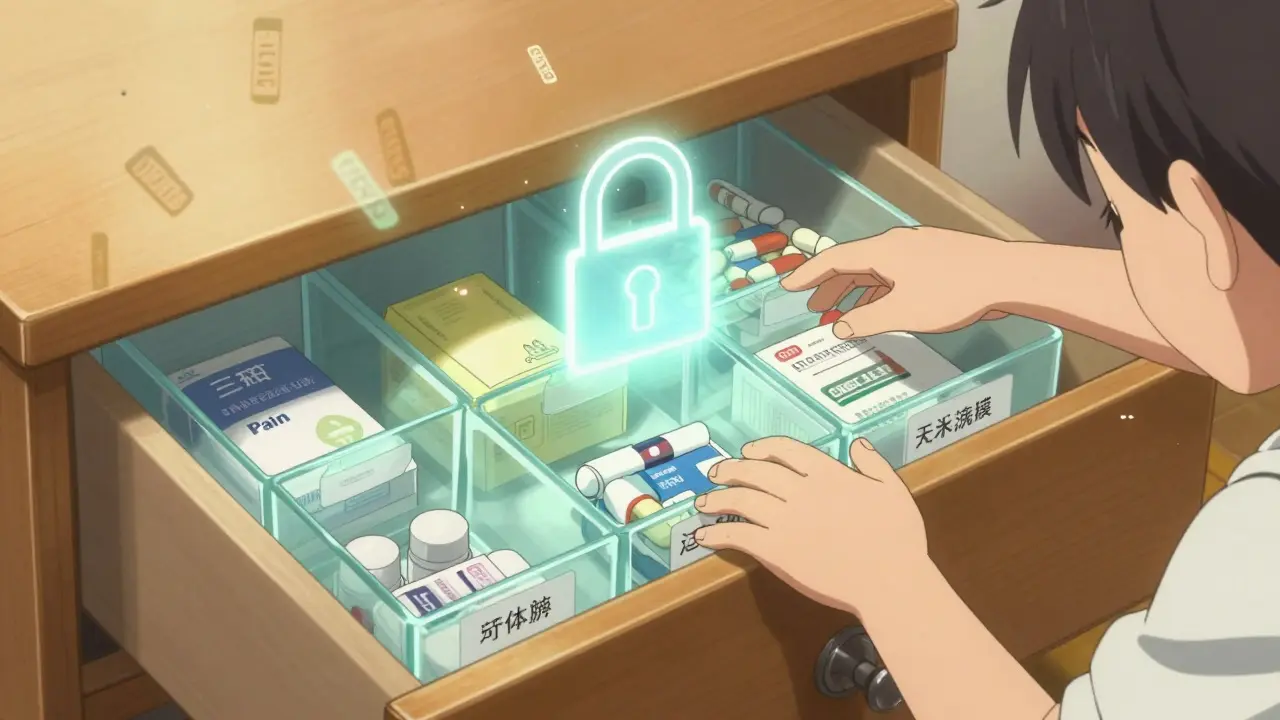
Organize Like a Pro
Now you’re ready to rebuild. Start fresh. Use clear plastic bins or small containers to group items by use:
- **Pain & Fever**: Paracetamol, ibuprofen (in child-safe doses)
- **Allergy & Cold**: Antihistamines, nasal spray, throat lozenges
- **First Aid**: Bandages, antiseptic wipes, gauze, tweezers, thermometer
- **Digestive**: Antacids, laxatives, anti-diarrhoea meds
- **Skin**: Hydrocortisone cream, sunscreen, aloe vera
Label each bin clearly. Put the most-used items at eye level for adults. Keep child-specific doses separate - don’t mix adult and children’s bottles. Store all liquids upright. Keep inhalers in a dry, cool place - not in direct sunlight.
Pro tip: Group meds by time of day. Morning meds in one bin, evening in another. It helps avoid double-dosing and makes routines easier.
Dispose of Old Medicine the Right Way
Never flush pills. Never throw them in the trash without mixing them with something unappetizing. And never leave them in a child’s reach during disposal.
Here’s how to do it right:
- Take expired meds to a pharmacy. Most major chains like Chemist Warehouse, Priceline, and TerryWhite Chemmart have free disposal bins. Just drop them in.
- If you can’t get to a pharmacy, mix pills with coffee grounds or cat litter in a sealed container. Throw it in the bin. This makes it unappealing and unrecognizable.
- For opioid painkillers, use DisposeRX powder - it’s free at many pharmacies and turns pills into a gel that can’t be reused.
And if you have unused prescriptions you never took - get rid of them. Don’t save them for “next time.” That’s how people get addicted.
Keep a Medication List - and Share It
When you’re in a rush - say, your child has a fever and you’re rushing to the doctor - you won’t remember what you gave them yesterday. Or what dose. Or if it was the liquid or the tablet.
Create a simple list: write down every medicine you keep at home - including vitamins, supplements, and herbal remedies. Include the name, dose, frequency, and why you use it. Keep a printed copy in your wallet. Save a digital copy on your phone. Share it with babysitters, grandparents, and school nurses.
This isn’t just for emergencies. It prevents dangerous interactions. For example, mixing paracetamol with cold medicine that already contains it can cause liver damage. A clear list stops that.
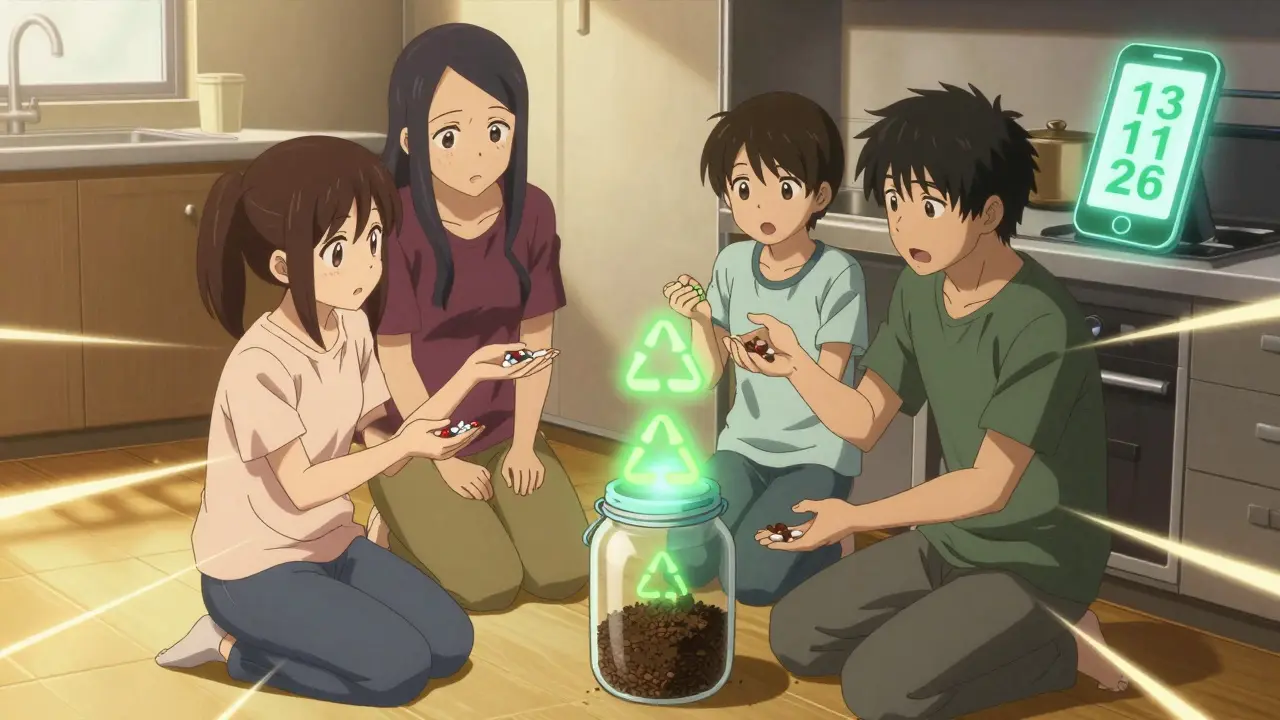
Teach Kids - Without Scaring Them
You can’t lock everything forever. Eventually, kids grow up. Teach them early that medicine isn’t candy. Use simple words: “These are for when you’re sick. Only grown-ups give them.”
Don’t say “medicine is bad.” That makes it mysterious. Say “medicine is powerful. It helps, but only when it’s used right.”
Let them help you sort pills during your biannual cabinet check. Make it a family task. Turn it into a game: “Can you find the expired one?”
Check It Twice a Year
Set a reminder. Every April and October, do a 10-minute medicine cabinet check. Look at dates. Toss what’s old. Wipe down the shelves. Reorganize if needed.
This isn’t a chore. It’s a safety habit - like checking smoke alarms. And it works. Since 2015, the number of Australian families using locked storage has jumped from 8% to 23%. That’s progress. But we’re not done.
Emergency Info Must Be Visible
Keep the Poison Help number - 13 11 26 - posted where everyone can see it. On the fridge. Next to the phone. On the back of the medicine cabinet door. Save it in your phone under “Emergency Contacts.” Tell every caregiver - babysitter, grandparent, tutor - where to find it.
If someone swallows medicine by accident, don’t wait. Call immediately. Poison control gives free, expert advice 24/7. They’ll tell you whether to wait, rinse, or rush to hospital. Don’t guess. Don’t Google. Call.
A safe medicine cabinet isn’t about perfection. It’s about reducing risk. It’s about knowing what’s in there, where it is, and who can get to it. It’s about choosing safety over convenience - every single time.

Comments
Harsh Khandelwal
December 25, 2025 AT 10:17Bro, I just found a bottle of codeine from 2016 behind my toothbrush. I thought it was cough syrup. Turns out it’s a felony in three states. I’m not even kidding. My mom used to say ‘just swallow it’ like it was candy. Now I keep mine in a lockbox under my bed. Like a drug lord. But for Tylenol.
Spencer Garcia
December 26, 2025 AT 19:18Good breakdown. Key thing: humidity kills meds. Bathroom = bad. High closet shelf = good. Locks are cheap. Expired meds = trash. No exceptions. Done.
Abby Polhill
December 26, 2025 AT 20:18As someone who’s worked in pediatric ER, I can confirm: the #1 source of accidental ingestions is the ‘out of sight’ bathroom cabinet. Parents think ‘high shelf’ = safe. Nope. Toddlers climb. They’re tiny ninjas. Also, liquid paracetamol grows mold after expiry. It’s not a myth. Lab-tested. Just… don’t.
Bret Freeman
December 26, 2025 AT 23:35They’re lying about the bathroom thing. The real reason they want you to move your meds is so Big Pharma can sell you new ones faster. Why else would they push you to toss everything? You think they care about your kid? They care about your wallet. Lock it? Sure. But don’t believe the hype. That 2025 Cone Health study? Paid for by a pharmaceutical conglomerate. You’re being manipulated.
Lindsey Kidd
December 28, 2025 AT 20:55Love this! 🙌 I started doing the biannual check with my 6-year-old and now she helps me find expired stuff. We call it ‘Medicine Detective Day’ 🕵️♀️💊 We even made a chart with stickers. Safety + bonding = win-win!
Rachel Cericola
December 30, 2025 AT 16:21Let’s be real - most people don’t even know what’s in their cabinet. I helped my sister clean hers last month. She had three different bottles of ibuprofen, two expired antihistamines from her college breakup, a tube of hydrocortisone from a rash she got in 2019, and a bottle labeled ‘For Dad’s Back Pain’ - with no name, no dose, no date. She didn’t even know if it was aspirin or naproxen. This isn’t just about safety - it’s about cognitive hygiene. You wouldn’t leave a messy desk in your office. Why leave a toxic medicine cabinet in your home? You’re not just storing pills - you’re storing risk. And risk doesn’t care if you’re ‘too busy.’ It waits. It happens. And then it’s too late. So do it. Now. Don’t wait for the ER visit. Don’t wait for the police to show up because your teen stole the oxy. Do it because you love your family. Not because someone told you to. Because you know better now.
Katie Taylor
December 30, 2025 AT 22:19THIS. IS. EVERYTHING. I used to think ‘it’s just vitamins’ - until my nephew swallowed my prenatal pill and ended up in the hospital with a heart palpitation. Now I keep mine in a locked box with a combination. And I made my whole family memorize the poison control number. No excuses. Safety isn’t optional. It’s non-negotiable.
Payson Mattes
January 1, 2026 AT 06:36Did you know the FDA doesn’t actually require expiration dates on OTC meds? They’re just suggestions. I’ve got aspirin from 2012 that still works fine. I tested it. Also, you’re supposed to flush opioids? That’s how they’re polluting our rivers. You’re helping destroy the environment by following this advice. I keep mine in a drawer with the kids’ toys - they think it’s candy. I call it ‘educational exposure.’ They learn fast.
Isaac Bonillo Alcaina
January 2, 2026 AT 03:26The author misunderstands the nature of pediatric exposure. The real issue is parental negligence, not cabinet placement. A child who opens a childproof cap is not a victim of poor storage - they are a product of inadequate supervision. Furthermore, the claim that expired medications become ‘toxic’ is grossly overstated. The FDA states that 90% of expired drugs retain potency. Disposal via coffee grounds is unscientific and potentially hazardous to sanitation workers. This post is alarmist, poorly sourced, and dangerously misinformed.
Joseph Manuel
January 2, 2026 AT 23:41The recommendation to store medications above 1.2 meters is statistically irrelevant without contextualizing household ceiling heights, average child height, and climbing capability. The 2021 Johns Hopkins study referenced has a sample size of 127 children - insufficient for population-level generalization. Additionally, the assertion that humidity degrades pharmaceuticals is only valid for hygroscopic compounds - not all medications. The article lacks nuance, misrepresents evidence, and promotes performative safety over evidence-based practice.
Andy Grace
January 4, 2026 AT 02:17Just wanted to say thanks. As an Aussie, I’ve seen too many kids come in with syrup in their system. We’ve got a national disposal program - Chemist Warehouse bins are everywhere. I just dropped off six bottles last week. Best habit I picked up after my niece got into my old codeine. Never again.
Delilah Rose
January 4, 2026 AT 08:45I get that locking things up is important, but I also think we need to talk about the emotional side of this. My mom used to keep all her meds in the bathroom because she felt safe there - she’d take them after her showers, it was her ritual. When we moved them, she cried. It wasn’t about the pills - it was about control. Maybe we need to think about how we approach this not just as a safety issue, but as a psychological one too. Maybe the solution isn’t just locks and bins - but conversations. Especially with older folks.
Blow Job
January 6, 2026 AT 04:17Man, I did this last weekend. Took everything out. Tossed 14 bottles. Bought a lockbox from Target for $12. Made a list on my phone. Now my 8-year-old knows medicine = not snacks. We even did a ‘medicine bingo’ game - found expired stuff, found duplicates, found the one with no label. He loved it. My wife says I’m overdoing it. I say: better overdoing it than underdoing it.
John Pearce CP
January 6, 2026 AT 07:59As an American taxpayer, I find it offensive that this article promotes compliance with corporate pharmacy disposal programs. Why are we outsourcing our responsibility to Chemist Warehouse? The government should be funding secure incineration, not letting private chains profit off our waste. Also, why is this only about Australia? Are American children less valuable? This is selective outrage. And the ‘teach kids’ part? That’s cultural imperialism. In my community, we don’t turn safety into a game. We teach discipline. We teach respect. We don’t sticker our medicine cabinets.