
How to Prepare for Allergy Testing for Antibiotic Reactions

Why Antibiotic Allergy Testing Matters
Many people believe they’re allergic to penicillin or other antibiotics because they had a rash or stomach upset as a child. But here’s the truth: over 90% of people who think they’re allergic to penicillin aren’t. That’s not just a myth-it’s backed by data from the CDC and major medical societies. When you’re wrongly labeled as allergic, doctors avoid the safest, cheapest, and most effective antibiotics. Instead, they give you broader-spectrum drugs that cost more, cause more side effects, and fuel antibiotic resistance. Allergy testing isn’t just about comfort-it’s about getting the right treatment, saving money, and protecting public health.
What You Need to Stop Taking Before Your Test
Getting accurate results depends on what you’re not taking before the test. Antihistamines are the biggest problem. They hide signs of an allergic reaction, making the test useless. You need to stop them well in advance.
- First-generation antihistamines like diphenhydramine (Benadryl) and hydroxyzine: stop at least 72 hours before testing.
- Second-generation antihistamines like cetirizine (Zyrtec), loratadine (Claritin), fexofenadine (Allegra), and levocetirizine (Xyzal): stop 7 full days before.
- Tricyclic antidepressants like doxepin: stop 14 days before because they also block histamine.
Don’t assume your regular meds are safe. Even over-the-counter sleep aids or cold medicines often contain antihistamines. Check labels. If you’re unsure, call your pharmacist. You don’t need to stop blood pressure meds, asthma inhalers, or diabetes drugs-but do tell your allergist about everything you take, especially ACE inhibitors. These can make an allergic reaction harder to treat if one happens.
What Happens During the Test
Allergy testing for antibiotics follows a clear, step-by-step process. It’s not scary, but it’s done carefully-always in a medical setting with emergency tools on hand.
- Skin prick test: A tiny drop of penicillin solution is placed on your forearm or back. A small plastic device lightly pricks the skin through the drop. It feels like a quick, light scratch. No blood is drawn. This step has less than a 0.01% chance of causing a serious reaction.
- Intradermal test: If the skin prick is negative, a small amount of the antibiotic is injected just under the skin. You’ll see a small bump (bleb). After 15 minutes, the doctor checks for redness or swelling bigger than 3mm. That’s a positive sign.
- Oral challenge: If both skin tests are negative, you’ll swallow a small dose of the antibiotic-usually 10% of a normal pill. You’re watched for 30 minutes. Then you take the full dose and are monitored for another 60 minutes. Most people feel nothing. Some report mild stomach upset or itching, but those are often not allergic reactions.
The whole process takes about 2 to 3 hours. You’ll be sitting in a room with nurses watching you. Epinephrine, antihistamines, and oxygen are right there if needed. The risk of a life-threatening reaction is about 0.06%-lower than the chance of being struck by lightning.
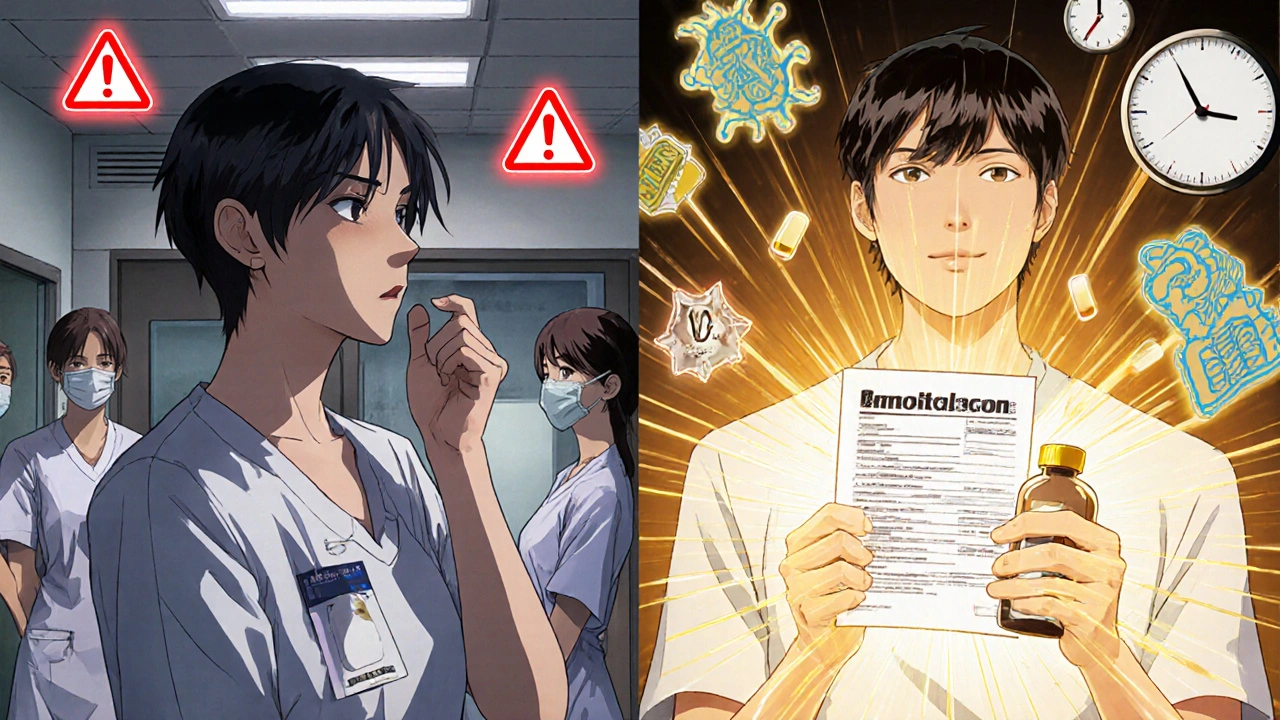
How to Know If the Test Worked
A positive skin test means a raised, itchy bump larger than 3mm. That’s a strong sign you’re truly allergic. But a negative test doesn’t always mean you’re completely safe. Some reactions happen later.
Up to 15% of people develop mild redness or itching at the test site 4 to 8 hours after the test. That’s not an allergy-it’s just skin irritation. You can treat it with hydrocortisone cream. If you get a full-body rash, trouble breathing, or swelling of the lips or throat during or after the test, that’s a true reaction. But those are rare.
Here’s the key: if you’ve had a reaction to penicillin years ago, you might not be allergic anymore. About half of people who had anaphylaxis lose their allergy in 5 years. Eighty percent lose it in 10. That’s why retesting is so important-even if you’ve been labeled allergic for decades.
What Happens After a Negative Test
If your test is negative, your doctor will remove the “penicillin allergy” label from your medical record. That’s called “de-labeling.” And it changes everything.
Instead of being stuck with expensive, stronger antibiotics like vancomycin or daptomycin, you can now safely take penicillin or amoxicillin. These drugs are cheaper, safer, and more effective. One patient in a 2023 study switched from $1,850-per-dose daptomycin to $12 penicillin for a bone infection. Their annual antibiotic cost dropped from over $67,000 to less than $4,400.
Studies show that after de-labeling, patients get the right antibiotic 87% more often. Hospital stays get shorter by nearly two days. Infections are less likely to come back. And you help reduce the spread of drug-resistant bacteria. That’s not just good for you-it’s good for everyone.
What to Expect After the Test
Most people feel fine after testing. You can drive home, eat normally, and go back to work. Some report mild itching or redness at the skin test sites. That usually goes away in a few hours. Avoid scratching. If it lasts more than a day, use an over-the-counter hydrocortisone cream.
Don’t take antihistamines right after the test unless your doctor says so. They can interfere with your results if you need a repeat test. And remember: even if you test negative, you should still report any new reaction to antibiotics in the future. Allergies can develop at any time.

Who Should Get Tested
You should consider testing if:
- You were told you’re allergic to penicillin, amoxicillin, or another beta-lactam antibiotic based on a childhood rash or stomach upset.
- You’ve been prescribed broad-spectrum antibiotics more than once.
- You’re facing surgery or a serious infection and need the best antibiotic option.
- You’ve had an allergic reaction more than 10 years ago.
- Your doctor says you need an antibiotic but you’re afraid to take it.
If you’ve had a severe reaction like anaphylaxis, swelling of the throat, or low blood pressure, you still need testing-but it must be done in a hospital or specialized allergy clinic. Never try to test yourself at home.
Where to Go for Testing
Not every doctor can do this. You need to see an allergist or immunologist who specializes in drug allergies. Most primary care offices don’t have the equipment or training. If you live in a rural area, you might need to travel. But there’s hope: new telemedicine programs are starting to allow low-risk patients to do oral challenges at home under video supervision. One pilot study showed a 95% success rate.
If you’re in the UK, ask your GP for a referral to an NHS allergy clinic. In the US, find a board-certified allergist through the American Academy of Allergy, Asthma & Immunology website. Don’t settle for a blood test-those are unreliable for penicillin. Skin testing and oral challenges are the gold standard.
The Big Picture: Why This Test Changes Lives
Every time someone gets tested and proves they’re not allergic, it saves money, saves lives, and helps stop superbugs. The math is simple: every dollar spent on testing saves $5.70 in avoided costs from wrong antibiotics, longer hospital stays, and complications. That’s why major health groups now call this one of the most important steps in modern medicine.
Think of it like a vaccine for your future health. You’re not just clearing a label-you’re unlocking better care for the rest of your life. And if you have kids, testing yourself means they won’t grow up thinking antibiotics are dangerous. You’re breaking a cycle.
Can I take antihistamines before my antibiotic allergy test?
No. Antihistamines block the body’s allergic response and can hide signs of a true allergy, making the test inaccurate. Stop first-generation antihistamines like Benadryl at least 72 hours before your test. Stop second-generation ones like Zyrtec, Claritin, and Allegra for a full 7 days. Always check with your allergist about any medication you’re taking.
Is the skin test painful?
Not really. The skin prick feels like a light scratch or a quick mosquito bite. The intradermal test involves a tiny needle injection under the skin, which might sting for a second. Most people say it’s far less uncomfortable than they expected. No blood is drawn, and there’s no lasting pain.
How long does the whole test take?
The entire process usually takes 2 to 3 hours. The skin tests take about 30 minutes total. If those are negative, the oral challenge adds another 90 minutes of monitoring. You’ll need to plan to be at the clinic for the full time. Don’t schedule anything else right after.
Can I be tested for allergies to antibiotics other than penicillin?
Penicillin and related beta-lactams (like amoxicillin) are the only antibiotics with standardized, reliable testing. For other antibiotics like sulfa drugs or vancomycin, testing is less reliable and not routinely done. Diagnosis is usually based on your history and careful challenge under supervision, not skin or blood tests.
What if I’m still allergic after testing?
If your test is positive, you’ll be advised to avoid that antibiotic and all similar ones. Your doctor will keep a note in your record and help you choose safe alternatives. You’ll also get a medical alert bracelet or card. The good news? Even if you’re allergic now, your allergy might fade over time. Retesting every 5-10 years is recommended.
Is antibiotic allergy testing covered by insurance?
Yes, in most cases. Most insurance plans in the US and UK cover allergy testing when it’s ordered by a specialist for a documented history of reaction. The cost of testing is far less than the cost of unnecessary broad-spectrum antibiotics. Always check with your provider, but don’t let cost stop you-this test pays for itself many times over.





Comments
Chris Vere
November 20, 2025 AT 23:50This is one of those rare pieces of medical advice that actually changes the trajectory of your health. The idea that most penicillin allergies are misdiagnosed is staggering. I've seen people avoid life-saving treatments because of a childhood rash. It's not just personal-it's public health. We need more awareness.
And the cost savings? That's not just a footnote. It's a revolution in how we think about prescribing. Every dollar spent testing saves nearly six in avoided complications. Why isn't this mandatory?
Pravin Manani
November 22, 2025 AT 15:53The immunological mechanisms underlying penicillin hypersensitivity are fascinating. The IgE-mediated Type I reaction is often conflated with non-IgE-mediated cutaneous reactions, which are frequently benign. The gold standard remains skin testing with major and minor determinants, followed by graded oral challenge when negative. The false-positive rate in self-reported histories is indeed >90%, per JACI and AAAAI guidelines. De-labeling reduces beta-lactam avoidance by 87%, per the 2023 NEJM cohort study. We must standardize protocols.
Leo Tamisch
November 23, 2025 AT 09:51I mean... wow 🤯
So basically, if you got a rash as a kid and now you're on $2000 antibiotics? You’re basically being scammed by your own medical history. Like, who even decided that a childhood rash = lifelong allergy? Was there a meeting? 🤔
Also, why do we still have doctors who don’t know this? Are they still using rotary phones?
Clifford Temple
November 23, 2025 AT 16:08This is why America is falling behind. We let people make medical decisions based on childhood stories and Google. In my country, we don’t let citizens self-diagnose allergies. We have trained professionals who test properly. This article reads like a blog written by someone who watched a YouTube video. You don’t just stop Zyrtec because some website says so-you follow a protocol approved by the FDA and CDC. And no, I don’t trust telemedicine for oral challenges. That’s dangerous.
Corra Hathaway
November 25, 2025 AT 04:11OK but imagine if we treated EVERY medical myth this way 🤩
Like, 'I’m allergic to gluten because I got bloated once in college' → nope, let’s run some ELISA tests. 'I can’t take ibuprofen because my cousin had a reaction' → let’s do a controlled challenge. Imagine if we stopped letting fear dictate medicine. This is the future. Let’s goooo 💪❤️
Shawn Sakura
November 26, 2025 AT 23:52I just had this test last month and it changed my life. I’ve been told I was allergic to penicillin since I was 7 after a rash from amoxicillin. Turned out it was just a viral exanthem. After the skin prick and oral challenge, I was cleared. Now I take amoxicillin for every infection. Saved me $15k in antibiotics over 3 years. My doctor said I’m now in the 10% who actually benefit from testing. Thank you for this article. It’s real. 💯
Paula Jane Butterfield
November 27, 2025 AT 19:10I’m a nurse in rural Nebraska and I’ve seen this so many times. Patients come in terrified to take antibiotics because they 'got sick once as a kid.' We refer them to allergists, but transportation is a nightmare. The telemedicine pilot study mentioned? We need that NOW. Not just for penicillin-this model could work for sulfa, vancomycin, even chemo agents. This isn’t just medicine-it’s equity.
Simone Wood
November 28, 2025 AT 17:36I don’t know why people are acting like this is some groundbreaking revelation. My aunt got tested in 1998. She was labeled allergic after a rash in 1972. Negative test. Switched to penicillin. Lived fine. So why is this article being shared like it’s the second coming? Because we live in a world where people forget everything after 3 years. And now we have to relearn the same facts over and over. Sigh.
Swati Jain
November 29, 2025 AT 08:50Okay but let’s be real-how many of these people who think they’re allergic actually just had a side effect? Like, stomach upset isn’t an allergy. It’s a GI reaction. And rashes? Could be viral. Or stress. Or your laundry detergent. But nooo, now you’re allergic to penicillin for life. Classic case of medical overreach. We need better patient education. Not just testing. We need to fix the narrative.
Florian Moser
November 30, 2025 AT 07:06This is one of the most important public health interventions in modern medicine. The data is overwhelming. De-labeling reduces antibiotic resistance, lowers costs, improves outcomes, and increases patient safety. Yet, less than 10% of people with a penicillin allergy label have been formally evaluated. That’s a systemic failure. We need mandatory de-labeling protocols in all primary care EMRs. It’s not optional. It’s standard of care.
jim cerqua
December 1, 2025 AT 21:28I’m not saying this isn’t important. I’m not saying the science is wrong. But let’s talk about what this article ISN’T saying. Who benefits from keeping people labeled allergic? Pharma. Hospitals. Insurance companies. Because the moment you’re cleared, you’re on $12 penicillin instead of $1800 vancomycin. Who loses? The people who profit from overprescribing. This isn’t just medicine-it’s a power play. And we’re being sold a solution that doesn’t address the root problem: profit-driven healthcare.
Donald Frantz
December 2, 2025 AT 06:24I’m curious-how many of these 'false positive' cases were actually true IgE-mediated reactions that resolved over time? The paper you cite says 80% lose allergy in 10 years. But what’s the mechanism? Is it IgE decay? T-reg induction? Or just the body adapting? And why do some people never lose it? The immunology here is understudied. We need longitudinal studies with basophil activation tests and memory B-cell tracking.
Julia Strothers
December 3, 2025 AT 05:21This is all part of the Great Medical Deception. The CDC doesn’t want you to know that most 'allergies' are fabricated by labs that profit from broad-spectrum antibiotics. Why do you think they pushed the '90% false positive' stat? To get you to stop taking your meds and start taking theirs. And now they want you to do a 'challenge' at a clinic? That’s how they control you. Don’t trust them. Don’t get tested. Stay afraid. It’s safer.
Erika Sta. Maria
December 3, 2025 AT 05:25I think this is all nonsense. My cousin’s friend’s neighbor had a penicillin test and got anaphylaxis 48 hours later. So much for 'safe'. And what about cross-reactivity with cephalosporins? No one talks about that. And why are we assuming everyone has the same immune response? What about genetic variations in HLA-B*57:01? This is just Western medicine arrogance. In India, we use Ayurveda and avoid antibiotics altogether. Why are we even doing this?