
Salt Substitutes and ACE Inhibitors or ARBs: The Hidden Potassium Danger
Potassium Risk Calculator
Are you at risk?
This calculator helps you determine if you should avoid potassium-based salt substitutes based on your kidney function and medications.
Enter your information to see your risk level
Most people think switching to a salt substitute is a simple, healthy choice-especially if they’re trying to lower their blood pressure. But for millions of Americans taking ACE inhibitors or ARBs, that swap could be life-threatening. It’s not about the salt. It’s about what replaces it: potassium chloride.
What’s in those salt substitutes?
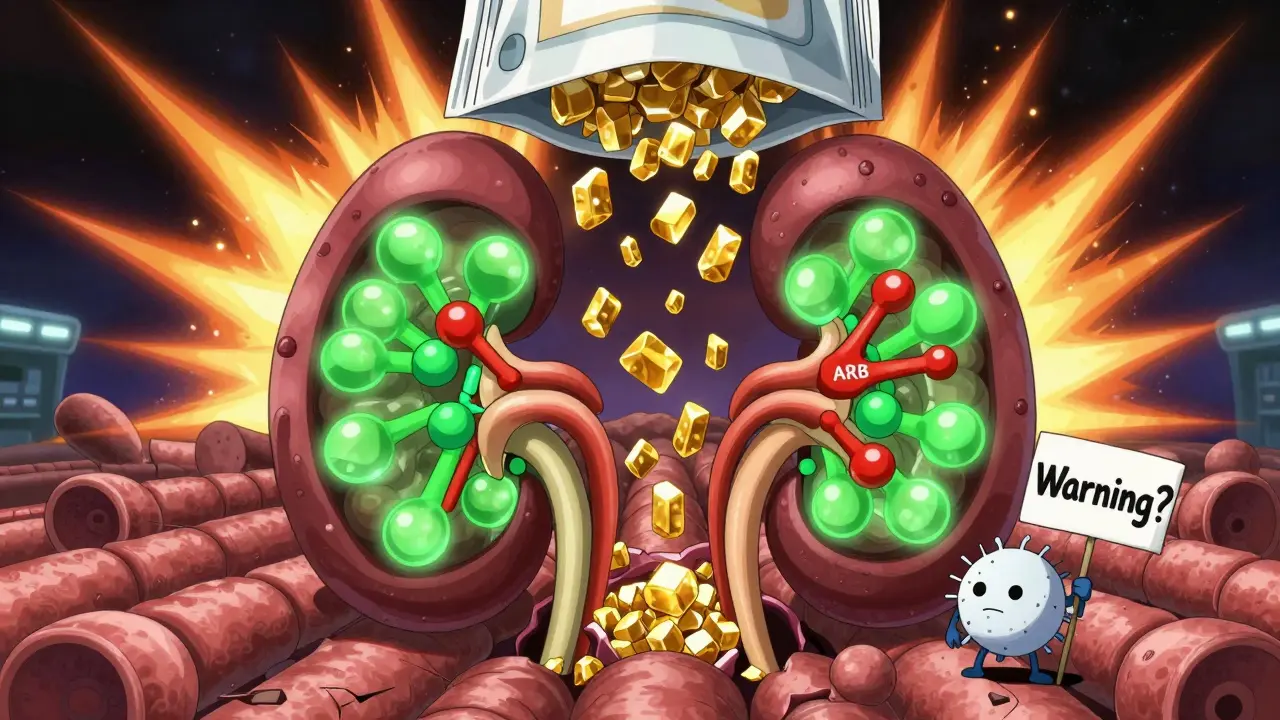
Many salt substitutes, like LoSalt or NoSalt, don’t just reduce sodium-they replace it with potassium chloride. A typical "lite" salt is half sodium chloride, half potassium chloride. Pure substitutes can be up to 66% potassium chloride. That means every pinch you use adds 400-600 mg of potassium to your diet. For someone eating normally, that’s not a problem. But if you’re on an ACE inhibitor or ARB, your body can’t flush out the extra potassium the way it should.These medications work by blocking the renin-angiotensin-aldosterone system. That’s good for lowering blood pressure. But it also cuts down on aldosterone, a hormone that tells your kidneys to get rid of potassium. With less aldosterone, potassium builds up. Add in a salt substitute? You’re essentially pouring fuel on a fire.
Who’s at real risk?
Not everyone is at risk. If your kidneys are healthy, you’re fine. Your kidneys naturally filter out extra potassium. But if you have chronic kidney disease (CKD), especially stage 3 or worse (eGFR under 60), your kidneys are already struggling. About 15% of U.S. adults have CKD. That’s 37 million people. And nearly 40% of them are on ACE inhibitors or ARBs for high blood pressure or diabetes-related kidney protection.Combine those two things-impaired kidneys and these medications-and you’ve got a perfect storm. A 2022 Mayo Clinic study found that 63% of hyperkalemia cases in people on these drugs came from dietary potassium sources, not supplements or bananas. Salt substitutes were the biggest culprit.
Diabetics with kidney issues are especially vulnerable. Up to 20% of them have hyporeninemic hypoaldosteronism-a condition where their bodies barely make aldosterone. For them, even a small increase in potassium can push levels into the danger zone.
What happens when potassium gets too high?
Serum potassium above 5.0 mmol/L is considered high. Above 6.5 mmol/L? That’s a medical emergency. At that level, your heart can’t beat properly. You might feel muscle weakness, nausea, or an irregular heartbeat. But often, there are no symptoms until it’s too late.There are documented cases of people collapsing from cardiac arrest after using salt substitutes while on lisinopril or losartan. One 72-year-old patient in a 2004 case report had a potassium level of 7.8 mmol/L-deadly territory. He wasn’t taking supplements. He wasn’t eating huge amounts of bananas. He was just using LoSalt on his food every day.
And it’s not rare. A 2019 meta-analysis of over 1.2 million people found that people with CKD on ACE inhibitors had a hyperkalemia rate of 8.7 events per 100 person-years. In the general population? Just 0.8. That’s more than ten times the risk.

But what about the benefits?
Yes, salt substitutes can help. A 2025 JAMA study of 21,000 people showed a 14% drop in stroke recurrence among those using potassium-enriched salt. For healthy people without kidney disease or those meds, the benefits clearly outweigh the risks.But here’s the problem: most people don’t know if they’re in the safe group or the dangerous one. A 2023 JAMA Internal Medicine study found that 78% of patients on ACE inhibitors had no idea dietary potassium could be risky. They thought "no salt" meant "healthy." They didn’t know their doctor never warned them.
What about labeling?
You won’t find a warning on most salt substitute bags. In the U.S., the FDA doesn’t require it. A 2023 FDA review found only 3 out of 12 major brands explicitly warn against use with ACE inhibitors or ARBs. Canada changed its rules in January 2024-now all potassium salt products must say: "Contraindicated in patients taking ACE inhibitors." The U.S. hasn’t followed.Some manufacturers have voluntarily added warnings. But without enforcement, compliance is patchy. You can’t rely on the label. You have to ask your doctor.
What should you do?
If you’re on an ACE inhibitor or ARB, here’s what you need to do right now:- Check your kidney function. Ask for your eGFR number. If it’s below 60, avoid potassium salt substitutes entirely.
- Ask your doctor. Don’t assume they know you’re using a salt substitute. Many patients don’t mention it because they think it’s harmless.
- Get your potassium checked. If you’ve been using a substitute, ask for a blood test. Levels above 4.5 mmol/L in someone with CKD or on these meds are a red flag.
- Stop using potassium salt substitutes if you have CKD, diabetes, or are on these meds. It’s not worth the risk.
What can you use instead?
You don’t need potassium chloride to reduce sodium. Herbs and spices work just as well-and safely. Try Mrs. Dash, garlic powder, onion powder, smoked paprika, cumin, or lemon zest. Cooking with fresh herbs like rosemary, thyme, and cilantro cuts sodium by 40-50% without adding any potassium risk.And you can still use regular salt-just use less. Most sodium comes from processed foods, not the salt shaker. Swap canned soups for low-sodium versions. Choose fresh chicken over deli meats. Rinse canned beans. These changes reduce sodium without any hidden dangers.
Why don’t more doctors warn patients?
Because the problem is invisible. Patients don’t think to mention salt substitutes. Doctors don’t think to ask. It’s a gap in care that’s costing lives. A Kaiser Permanente initiative in 2023 trained staff to screen every patient on ACE inhibitors or ARBs for salt substitute use. They found 22% were using them. After education and follow-up, hyperkalemia cases dropped by 92%.That’s the key: awareness. If you’re on these medications, you’re not just managing blood pressure. You’re managing potassium. And salt substitutes are the silent threat.
The bottom line
Salt substitutes aren’t universally good or bad. They’re a tool. And like any tool, they can be dangerous in the wrong hands. For the 85-90% of people with healthy kidneys and no kidney meds? They’re a smart swap. For the 10-15% with kidney disease or on ACE inhibitors or ARBs? They’re a ticking time bomb.Don’t assume your salt substitute is safe. Don’t assume your doctor knows you’re using it. Ask. Get tested. Switch to herbs if you’re at risk. Your heart will thank you.



Comments
Paula Villete
December 22, 2025 AT 14:31Okay but can we talk about how the FDA is basically letting people die because labeling is optional? I used LoSalt for years thinking I was being healthy-turns out I was just one kidney test away from cardiac arrest. My doctor never mentioned it. Not once. And now I’m mad at myself for not asking. Why is this not a black-and-white warning on every package? This isn’t about ‘personal responsibility’-it’s about corporate negligence wrapped in ‘health food’ marketing.
Steven Mayer
December 22, 2025 AT 22:17The renin-angiotensin-aldosterone axis suppression is the key pathophysiological mechanism here. Aldosterone downregulation impairs distal nephron potassium excretion, resulting in hyperkalemia, particularly in the context of reduced glomerular filtration rate. The concomitant use of potassium chloride-based salt replacers represents a pharmacodynamic synergy that elevates serum potassium beyond the renal threshold for compensatory secretion. This is not anecdotal-it’s textbook pharmacokinetics with clinical consequences.
Joe Jeter
December 24, 2025 AT 00:49So you’re telling me the entire ‘low sodium’ movement is a scam designed by Big Pharma to sell more blood pressure meds? I’ve been using NoSalt since 2018 and I’m fine. My BP is lower than my kid’s anxiety levels. You want me to stop using it because some guy in a lab coat says ‘maybe’? I’ll take my potassium and my herbs and my skepticism thank you very much.
Lu Jelonek
December 24, 2025 AT 21:14As someone who’s worked in nephrology for 18 years, I’ve seen this play out too many times. Patients come in with arrhythmias, convinced they’re just ‘eating clean.’ They don’t realize that ‘no salt’ on the label doesn’t mean ‘safe for everyone.’ The real tragedy? Most of them had no idea their eGFR was below 60. We need better screening protocols. Not just for patients-but for providers. This isn’t rocket science, but it’s being ignored like a forgotten grocery list.
Ademola Madehin
December 25, 2025 AT 23:09WOW. I just lost my uncle last year to a heart attack. He was on lisinopril and used that salt stuff every day. He told me he switched because his wife said it was ‘better for him.’ Now I’m crying in my car. This is real. This is life. Why isn’t this on TV? Why isn’t this on every damn food label? My uncle didn’t even know what potassium was. He thought it was some kind of vitamin.
suhani mathur
December 27, 2025 AT 01:52Let’s be real-the problem isn’t the salt substitute. It’s the fact that doctors assume patients know what’s in their pantry. I’m an Indian woman who cooks with rock salt and herbs daily. I never even knew potassium chloride existed until I read this. Now I’m checking every spice jar. But honestly? If my doctor had said ‘hey, don’t use that pink stuff’ in plain English, I wouldn’t have Googled it at 2 a.m. like a conspiracy theorist.
Bartholomew Henry Allen
December 28, 2025 AT 23:27Government regulation is failing Americans. If you want to kill yourself with potassium chloride that’s your right. But don’t force manufacturers to put warnings on their products because some people are too lazy to read the ingredients. This is America. We don’t need nanny-state labels. If you’re on ACE inhibitors and you don’t know what’s in your salt-you deserve what you get.
bharath vinay
December 29, 2025 AT 20:45This is all a cover-up. The FDA and Big Pharma are working together to push expensive blood pressure meds while hiding the truth: potassium chloride is natural. Bananas are natural. Sunlight is natural. But they want you to believe everything natural is dangerous unless it’s patented. They’re scared people will realize they can fix their BP with diet and herbs and stop buying pills. This isn’t medicine. It’s control.
claire davies
December 30, 2025 AT 00:19My mum’s on losartan and has stage 3 CKD. She used to sprinkle that white powder on everything like it was fairy dust. I found out when she got dizzy and ended up in A&E with a potassium level of 6.2. We switched to Mrs. Dash and smoked paprika-now she says her food tastes better anyway. Honestly? The real magic isn’t in the salt substitute. It’s in the herbs. Rosemary makes roasted potatoes taste like a hug from your grandma. No potassium. No panic. Just flavor. And if your doctor hasn’t asked you about your salt habits? Ask them back. It’s not rude-it’s survival.