
Statin-Induced Muscle Pain: Understanding Myalgia and Myositis
Statin Muscle Pain Symptom Checker
Symptom Assessment Tool
This tool helps you understand potential statin-induced muscle conditions based on your symptoms. Remember: This is not a substitute for professional medical advice. Always consult your doctor for proper diagnosis and treatment.
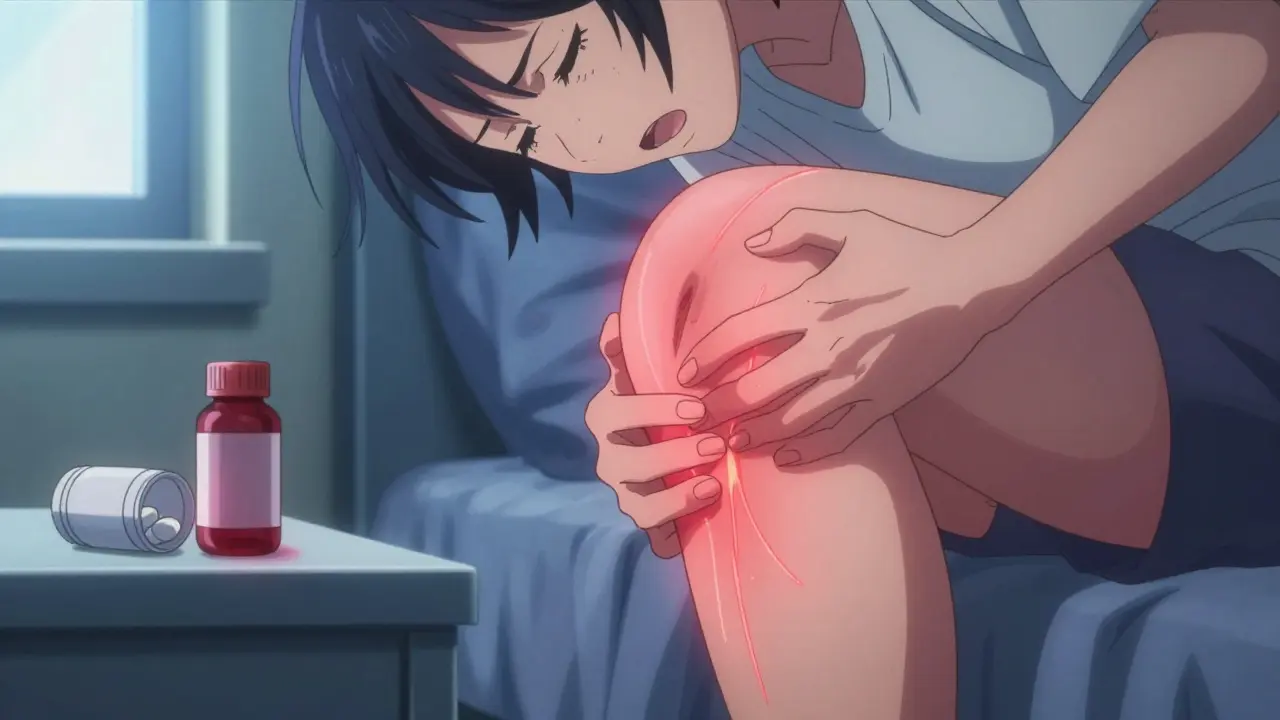
Ever wondered why some people get statin muscle pain from statins while others don’t? It’s more common than you think. Up to 30% of statin users experience muscle-related issues. But not all pain is the same. Some is mild soreness; others signal something serious. Let’s break down what’s really happening in your muscles.
What Exactly is Statin-Induced Muscle Pain?
Statin-induced muscle pain falls into several categories. The most common is myalgia-muscle pain without elevated creatine kinase (CK) levels. This affects 10-29% of users, according to a 2014 JAMA Internal Medicine study. Then there’s myositis, where inflammation shows up with CK levels 10-40 times higher than normal. But the real concern is immune-mediated necrotizing myopathy (IMNM), a rare autoimmune condition where the body attacks its own muscles. This affects just 2-3 out of 100,000 statin users.
Here’s the key difference: myalgia is pain alone, while myositis involves actual muscle inflammation. Rhabdomyolysis-a severe breakdown of muscle tissue-can happen in extreme cases. It’s rare (0.01-0.1% of users) but dangerous, as it can damage kidneys. Immune-mediated cases are even trickier: they often cause progressive weakness without pain, and symptoms can linger for months after stopping statins.
Why Do Statins Cause Muscle Pain?
Statins block HMG-CoA reductase, which lowers cholesterol. But this also disrupts other vital processes in your muscles. For example, CoQ10 levels drop by about 40% in people taking 40 mg of simvastatin daily. CoQ10 is crucial for energy production. Without it, muscles struggle to function properly. Additionally, statins interfere with protein prenylation, leading to calcium buildup in muscle cells. This triggers enzymes that break down muscle tissue.
In rare autoimmune cases, statins cause the body to produce anti-HMGCR antibodies. These antibodies attack muscle cells directly. A 2018 review found this happens when statins increase HMG-CoA reductase expression by 2-3 times, making it visible to the immune system. Genetic factors also play a role. People with the SLCO1B1 gene variant (rs4149056) have up to 1.4% risk of myopathy versus 0.6% in others.
Types of Statin-Induced Muscle Conditions
| Condition | Key Symptoms | CK Levels | Typical Treatment |
|---|---|---|---|
| Myalgia | Muscle pain without weakness | Normal or slightly elevated | Statin discontinuation; symptom monitoring |
| Myositis | Pain with muscle weakness | 10-40x upper limit of normal | Statin discontinuation; possible CoQ10 |
| Rhabdomyolysis | Severe weakness, dark urine | >40x ULN | Immediate hospitalization; IV fluids |
| Immune-mediated (SAAM) | Progressive weakness, no pain | >2,000 IU/L | Immunosuppressants; statin avoidance |
Diagnosis: What Doctors Look For
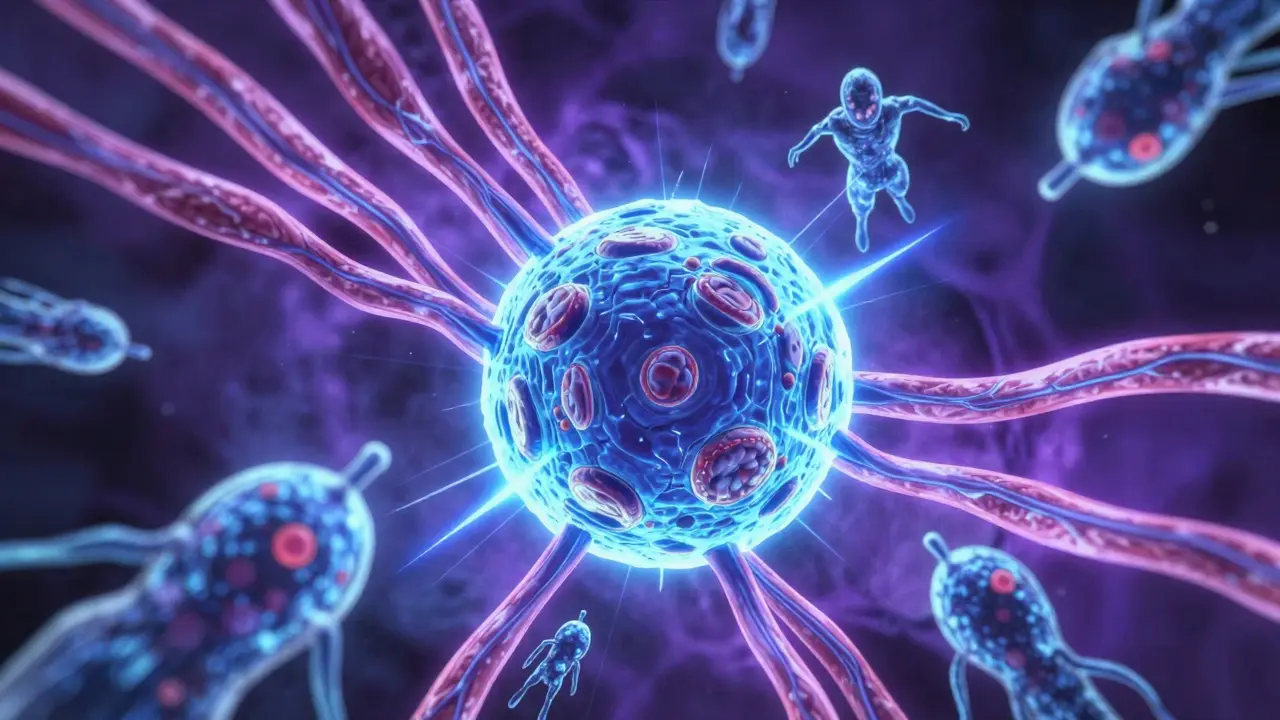
Diagnosing statin muscle pain starts with blood tests. creatine kinase (CK) levels are key. Normal CK is 30-200 IU/L. Myositis shows CK 10-40 times higher. Rhabdomyolysis pushes CK above 40 times ULN. For immune-mediated cases, doctors test for anti-HMGCR antibodies. A muscle biopsy is the gold standard-it reveals characteristic tissue damage in 85% of SAAM cases.
But diagnosis isn’t always straightforward. A 2022 Myositis Support forum study found 68% of SAAM patients were initially misdiagnosed as fibromyalgia or chronic fatigue syndrome. Average delay was 11.3 months. That’s why doctors also check thyroid function, vitamin D levels, and drug interactions. For example, amiodarone can increase statin exposure by 300-500%, raising side effect risks.
Treatment Options: What Works
Stopping the statin is usually the first step. For myalgia or myositis, symptoms often fade within 1-2 weeks. But for immune-mediated cases, it’s more complex. Immunosuppressants like prednisone and methotrexate help 60-70% of patients within 6-12 months. CoQ10 supplements (200 mg/day) show mixed results-only 3 of 7 studies found them helpful.
Switching statins can work too. A 2021 American Journal of Cardiology study found 73% of people who had trouble with simvastatin tolerated rosuvastatin instead. For those with high-risk genetics, pharmacogenomic testing can guide safer choices. The SLCO1B1 gene variant is a major predictor: people with this variant should avoid high-dose simvastatin.
For severe rhabdomyolysis, hospitalization is critical. IV fluids prevent kidney damage. Emerging treatments include complement inhibitors like ravulizumab, which showed 75% response in refractory SAAM cases in a 2022 pilot study. Future options may include polygenic risk scores for personalized statin selection.
Real-Life Experiences
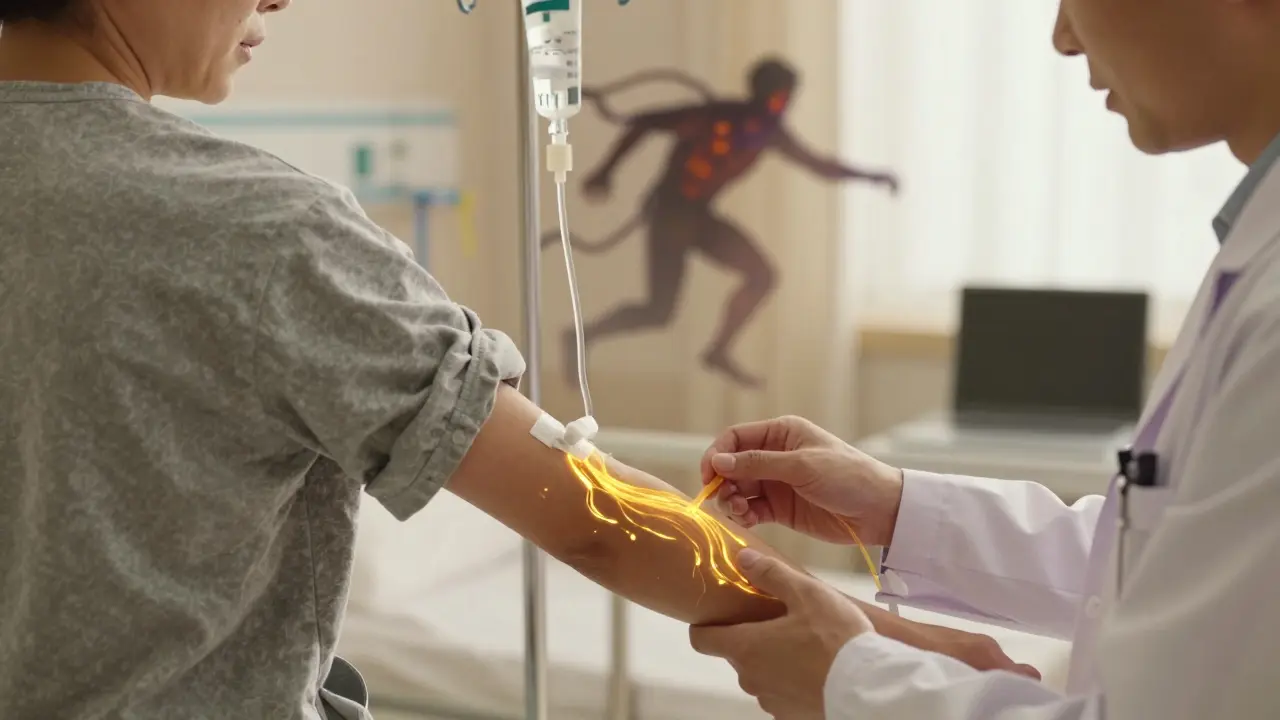
Reddit user testimonials in r/cholesterol (October 2023) reveal common struggles. One user described 18 months of progressive weakness after atorvastatin use, requiring 6 months of IVIG therapy. Another shared how switching to pravastatin resolved their symptoms within weeks. Meanwhile, a 2023 Circulation study found that stopping statins due to muscle pain increases 10-year cardiovascular risk by 25% in high-risk patients. This highlights why finding a safe solution matters.
Dr. Robert Phillips, lead author of the 2018 PMC review, emphasizes: "Muscle biopsy remains the gold standard for diagnosing immune-mediated necrotizing myopathy." Early treatment is critical-patients treated within 6 months of symptoms have 65% remission rates versus 28% when delayed beyond 12 months.
When to See a Doctor
Don’t ignore muscle pain while on statins. Contact your doctor if you notice:
- Persistent pain lasting more than a few days
- Weakness in shoulders or hips
- Dark urine (sign of kidney stress)
- Unexplained fatigue or swelling
Early intervention makes a huge difference. For immune-mediated cases, delaying treatment can lead to permanent muscle damage. Your doctor will likely check CK levels, test for antibodies, and review your medication history. Drug interactions matter too-statins combined with fibrates or certain antibiotics increase risks significantly.
Can I keep taking statins if I have muscle pain?
It depends. Mild myalgia might resolve with a lower dose or different statin. However, persistent pain or weakness requires stopping the statin and consulting your doctor. For autoimmune myopathy, continuing statins can worsen the condition. Always work with your healthcare provider to find the safest solution.
How long does muscle pain take to go away after stopping statins?
For most cases (myalgia or myositis), symptoms fade within 1-2 weeks. But immune-mediated cases can last 6-12 months after stopping statins. Some patients need immunosuppressant therapy for full recovery. Always follow up with your doctor to monitor progress.
Is CoQ10 effective for statin muscle pain?
Research shows mixed results. A 2015 Cochrane review found only 3 of 7 randomized trials reported significant improvement with CoQ10. While it’s generally safe to try, don’t rely on it as a standalone solution. Always discuss with your doctor before adding supplements.
What are the safest statin alternatives?
Rosuvastatin and pravastatin are often better tolerated. A 2021 study found 73% of simvastatin-intolerant patients could switch to rosuvastatin. For high-risk genetics, pravastatin or fluvastatin may be safer choices. Non-statin options like ezetimibe or PCSK9 inhibitors are also available for those who can’t tolerate any statin.
Can statin muscle pain lead to permanent damage?
Yes, especially in immune-mediated cases. Delayed treatment increases the risk of permanent muscle weakness. Rhabdomyolysis can cause kidney failure if untreated. Early diagnosis and intervention are critical-most patients recover fully when treated promptly.

Comments
Jennifer Aronson
February 5, 2026 AT 06:57A well-structured overview of statin-related muscle conditions. The inclusion of real-life experiences from Reddit adds context. However, more emphasis on non-statin alternatives might benefit patients with persistent symptoms.
Dr. Sara Harowitz
February 6, 2026 AT 04:17This article is dangerously incomplete! The author completely ignores the critical role of genetic testing in managing statin-related myopathy. And what about the European guidelines? They clearly state that CK levels must be monitored regularly. This is why American medicine is falling behind!
Katharine Meiler
February 6, 2026 AT 14:35I appreciate the detailed breakdown of statin-induced conditions. The table comparing myalgia, myositis, etc. is very helpful. However, I'd like to add that pharmacogenomic testing for SLCO1B1 variants can significantly reduce adverse events. It's a promising area for personalized medicine. Recent studies show that patients with the rs4149056 variant have a 1.4% risk of myopathy versus 0.6% in others. This genetic factor is crucial for determining the right statin dose. Additionally, drug interactions play a major role; for example, amiodarone can increase statin exposure by 300-500%. Clinicians should routinely check for such interactions. The American Heart Association guidelines now recommend genetic testing for high-risk patients. This approach not only minimizes side effects but also improves adherence. It's time for healthcare systems to integrate these findings into standard practice. Many physicians are still unaware of these nuances. We need more education on this topic. The data is clear: personalized medicine saves lives. Statin therapy should not be a one-size-fits-all approach. The future of cardiology lies in precision medicine. This article touches on the basics but misses the bigger picture. We must move beyond generalizations.
Cole Streeper
February 7, 2026 AT 22:38Statins are a Big Pharma conspiracy to keep us sick! They're poisoning us with chemicals. The real cause of muscle pain is 5G radiation. Don't trust the FDA. They're in cahoots with the pharmaceutical industry. Wake up people!
Phoebe Norman
February 8, 2026 AT 06:39Statin-induced myopathy involves complex pathophysiological pathways including CoQ10 depletion and altered protein prenylation leading to calcium dysregulation. The immune-mediated necrotizing myopathy is particularly concerning due to anti-HMGCR antibodies. However current evidence regarding CoQ10 supplementation remains inconclusive. Further research is needed.
Dina Santorelli
February 8, 2026 AT 11:28I've been on statins for years and never had issues. But I guess some people just can't handle it. Maybe they're weak? 🤷♀️ This article is too vague and should've included more data. People are too sensitive about muscle pain. Just take the statin and deal with it. Weakness is not an excuse.
Pamela Power
February 9, 2026 AT 14:51This article is utterly simplistic. Real medical professionals know that statin myopathy is far more nuanced than this shallow analysis. The author clearly lacks the depth of understanding required to discuss such a complex issue. Anyone with a modicum of clinical experience would recognize that the data presented here is cherry-picked and ignores the vast majority of studies. For example, the JAMA study cited is outdated and doesn't account for recent findings on immune-mediated cases. This is why laypeople get confused-because so-called experts refuse to acknowledge the true complexity of the issue. It's embarrassing. The true prevalence of statin-induced myopathy is much higher than reported. Many cases are misdiagnosed as fibromyalgia or chronic fatigue. The author's failure to mention the 2022 Myositis Support forum study showing 68% misdiagnosis rate is a glaring omission. Furthermore, the role of the SLCO1B1 gene variant is critical but completely overlooked. This article reads like a press release from a pharmaceutical company. The real danger here is that patients may stop taking their statins based on this misinformation. Cardiovascular risk increases by 25% when statins are discontinued in high-risk patients. The author should be ashamed for spreading such dangerous half-truths. This is why we need more rigorous peer review. Medical journalism is failing us. I'm a doctor, and I'm appalled by this piece. It's amateurish at best.
Rene Krikhaar
February 10, 2026 AT 08:10I've seen many patients struggle with statin side effects. It's important to work with your doctor to find the right solution. Some people do better on different statins or non-statin options. Don't give up hope! There are always alternatives.
Albert Lua
February 11, 2026 AT 14:38In my country, people have different reactions to statins. In India, we often use natural remedies like turmeric for inflammation. But statins are crucial for heart health. Balance is key. Many find success with alternatives like ezetimibe.
anjar maike
February 11, 2026 AT 17:31Statins? My muscles feel fine. 🤷♀️
divya shetty
February 12, 2026 AT 07:17It is imperative that patients adhere strictly to their prescribed statin regimen. Any deviation due to minor muscle discomfort is ill-advised. The benefits of statin therapy far outweigh the risks, which are often exaggerated. One must not succumb to baseless fears.