
Medication Leaflets: What You Need to Know Before Taking Any Prescription
When you pick up a prescription, the small booklet that comes with it isn’t just paperwork—it’s your medication leaflets, official, legally required documents that explain how a drug works, its risks, and how to use it safely. Also known as patient information leaflets, these are the only source of complete, verified details about what your medicine can and can’t do. Most people glance at them once, if at all. That’s a mistake. These leaflets contain life-saving info you won’t hear from your doctor in a 7-minute visit—like which foods to avoid, what other drugs can cause deadly reactions, and the early signs of a dangerous side effect.
They’re not optional. The FDA drug labeling, the official regulatory document that forms the basis of every medication leaflet is written by the drugmaker and reviewed by the FDA before approval. Every warning, interaction, and dosage note in your leaflet comes from that document. That’s why you’ll see the same details in posts about warfarin and antibiotics causing dangerous INR spikes, or how beta-blockers can hide low blood sugar symptoms. These aren’t random warnings—they’re pulled straight from the leaflet’s "Warnings and Precautions" section. And if you’re taking generic drugs, the leaflet might look different, but the safety info is identical to the brand-name version. The FDA requires it.
Medication leaflets also tell you what to watch for. If you’re on clindamycin, the leaflet warns about C. difficile diarrhea. If you’re using thyroid medication, it lists signs of overdose. If you’re taking antidepressants during pregnancy, it details what’s known about fetal risk. These aren’t scare tactics—they’re facts. And they’re why posts here cover how to read FDA safety communications, how to spot counterfeit pills, and how to use lab monitoring calendars to track side effects. All of it connects back to the leaflet. If your doctor says "it’s fine," but the leaflet says "avoid alcohol," trust the leaflet. It’s the only document legally required to tell you the truth.
You don’t need a medical degree to use these. Start by reading the "Possible Side Effects" section. Look for words like "serious," "rare," or "requires immediate medical attention." Then check the "Drug Interactions" list—especially if you take more than one pill. If you’re on warfarin, insulin, or any heart or mental health med, this section could prevent a hospital visit. Keep your leaflets. Don’t toss them. Put them in a folder with your other meds. When you get a new prescription, compare the leaflet to the one you already have. Are the warnings the same? If not, ask why. These documents are your shield. Use them.
Below, you’ll find real-world examples of what medication leaflets actually warn about—how a simple antibiotic can turn your blood thinner into a danger, why energy drinks and ADHD meds don’t mix, and how to catch a dangerous reaction before it’s too late. These aren’t theoretical risks. They’re the exact issues patients face every day. And they’re all in the leaflet you already have.
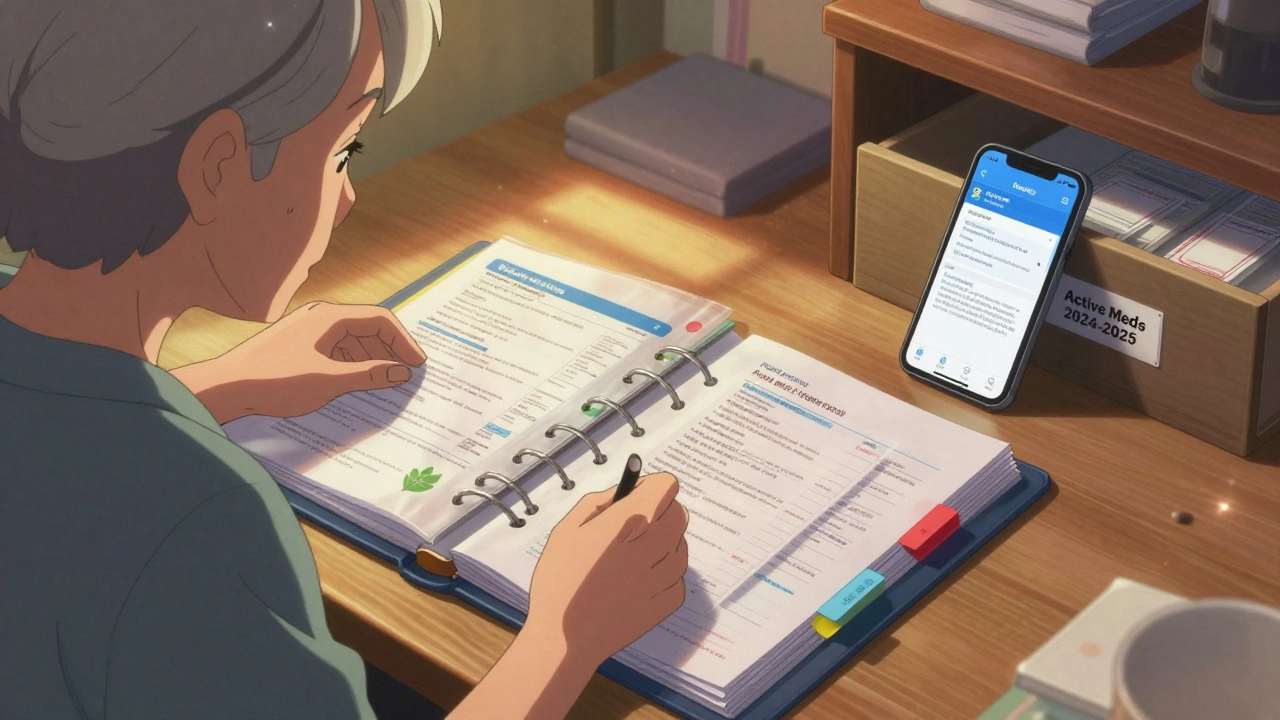
How to Store Prescription Labels and Leaflets for Future Reference
Store prescription labels and leaflets properly to avoid dangerous medication errors. Learn how to organize physical and digital records for safety, convenience, and peace of mind.