Photosensitivity: What It Is, Which Drugs Cause It, and How to Stay Safe
When your skin reacts badly to sunlight—not just sunburn, but rashes, blisters, or burning pain—you might be dealing with photosensitivity, an abnormal skin reaction triggered by ultraviolet (UV) light, often caused by medications or chemicals. Also known as sun sensitivity, it’s not just about getting tanned too fast—it’s a serious drug reaction that can turn a walk outside into a medical emergency. Many people don’t realize their medicine is the culprit. A simple antibiotic, a common painkiller, or even an antidepressant can make your skin dangerously reactive to sunlight, even on cloudy days or through windows.
Photosensitivity isn’t one thing—it comes in two main types. The first is phototoxicity, a direct chemical reaction between UV light and a drug in your skin, causing burns that look like severe sunburn. The second is photoallergy, an immune response that develops over time, leading to itchy, red, raised patches that spread beyond sun-exposed areas. Both can be triggered by the same drugs: antibiotics like doxycycline, NSAIDs like ibuprofen, diuretics like hydrochlorothiazide, and even some acne treatments like isotretinoin. You might not notice it until you’ve been outside for just 20 minutes—and then your skin starts screaming.
What makes this dangerous is how easily it’s missed. People think they’re just getting sunburned, so they reach for aloe vera or more sunscreen. But if the real cause is your medication, sunscreen alone won’t fix it. You need to know which drugs carry this risk—and that’s where the real protection starts. Some medications increase your sensitivity so much that even indirect light from a computer screen or fluorescent bulb can trigger a reaction. And once it happens, the damage can last for weeks, even after you stop the drug.
There’s no single test for photosensitivity. Doctors usually diagnose it by connecting your symptoms to your meds and your sun exposure history. If you’ve had an unusual skin reaction after being outside—and you started a new pill around the same time—it’s worth asking. The good news? Most cases clear up once you stop the drug or switch to a safer alternative. But you need to catch it early. Ignoring it can lead to long-term skin damage, scarring, or even an increased risk of skin cancer over time.
Below, you’ll find real-world guides on how to spot dangerous drug reactions, what to do if you think your medication is making you sun-sensitive, and how to protect yourself without giving up your daily life. These aren’t generic tips—they’re from people who’ve been through it, doctors who’ve seen the damage, and experts who know exactly which pills to watch out for.
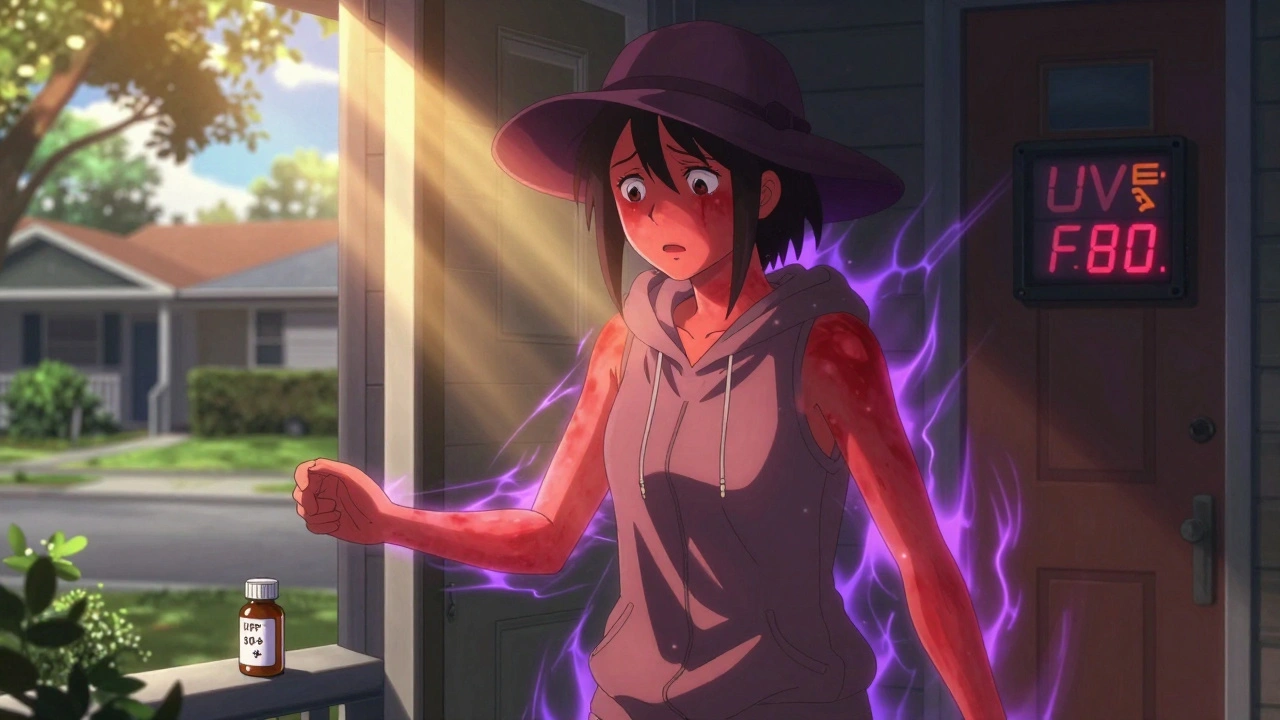
Photosensitivity from Medications: Sun Safety and Skin Protection Guide
Many medications can make your skin dangerously sensitive to sunlight, causing severe burns or rashes. Learn which drugs trigger photosensitivity, how to protect yourself, and why regular sunscreen often isn't enough.