Phototoxic Reaction: What It Is, How It Happens, and Which Medications Cause It
When your skin reacts badly to sunlight after taking a medication, you might be having a phototoxic reaction, a type of skin inflammation caused by drugs interacting with ultraviolet (UV) light. Also known as drug-induced photosensitivity, it’s not an allergy—it’s a chemical burn triggered by light. Unlike sunburn, which affects exposed skin evenly, a phototoxic reaction often shows up in sharp patterns—like where your shirt rode up, or where you applied lotion or perfume. It’s red, painful, and sometimes blisters. And it can happen fast—sometimes within minutes of sun exposure.
This isn’t rare. Hundreds of common drugs can cause it, including antibiotics like doxycycline, a tetracycline-class antibiotic used for acne and infections, pain relievers like ibuprofen, a nonsteroidal anti-inflammatory drug (NSAID) found in Advil and Motrin, and even some antidepressants and diuretics. If you’re on any of these, your skin becomes extra sensitive to UV rays. The reaction doesn’t mean your body is allergic—it means the drug molecules absorb sunlight, break down, and damage your skin cells directly. It’s chemistry, not immunity.
People often mistake it for a sunburn or rash. But here’s the clue: if you got a bad reaction only after starting a new pill or cream, and it showed up where the sun hit—not under clothes or in shaded areas—it’s likely phototoxic. You won’t get it every time you go out, but it can hit hard when you least expect it. That’s why it’s so dangerous: you think you’re fine until your skin starts burning like you spent all day on the beach.
Some medications are riskier than others. Tetracyclines, fluoroquinolones, thiazide diuretics, and certain psoriasis treatments are top culprits. Even some herbal supplements like St. John’s wort can trigger it. The good news? You don’t have to stop your meds. You just need to know how to protect yourself. Wear broad-spectrum sunscreen daily, even when it’s cloudy. Cover up with hats and long sleeves. Avoid direct sun between 10 a.m. and 4 p.m. And if you’re starting a new drug, ask your pharmacist: "Could this make me more sensitive to the sun?" It’s a simple question that could save you from weeks of pain.
What you’ll find in the posts below are real stories and clear advice about how medications interact with sunlight, how to spot the warning signs before it gets serious, and what to do if you think you’re having a reaction. From antibiotic risks to over-the-counter painkillers that can burn your skin, these articles give you the facts without the fluff. You’re not alone in this—and you don’t have to guess what’s causing your skin to react.
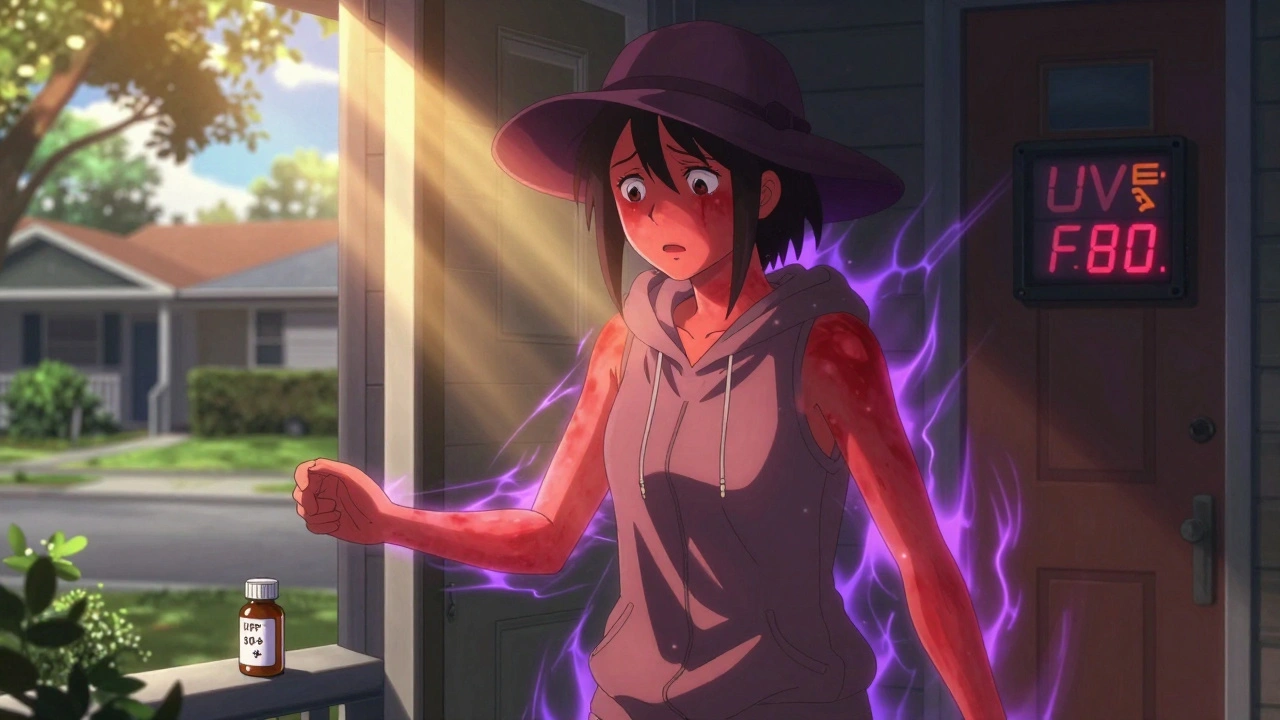
Photosensitivity from Medications: Sun Safety and Skin Protection Guide
Many medications can make your skin dangerously sensitive to sunlight, causing severe burns or rashes. Learn which drugs trigger photosensitivity, how to protect yourself, and why regular sunscreen often isn't enough.