
Pill Bottle Organization: Keep Your Medications Safe and Sorted
When you’re juggling multiple prescriptions, pill bottle organization, the system of storing and labeling medications to avoid errors and improve adherence. Also known as medication management, it’s not just about neatness—it’s a lifesaver. A messy medicine cabinet can lead to missed doses, double dosing, or worse—taking the wrong pill. This isn’t theoretical. One study from the FDA found that over 1 in 5 medication errors happen because of poor labeling or storage. You don’t need a fancy system. You just need clarity.
Think about your pill organizer, a compartmentalized container designed to hold daily or weekly doses. Also known as medication dispenser, it’s one of the simplest tools for pill bottle organization. But it only works if your bottles are labeled right. Many people use the same pill bottle for different meds over time, or skip updating labels after a dosage change. That’s how confusion starts. Combine a clear pill organizer with original bottles that have readable labels, and you cut risk dramatically. And don’t forget medication storage, the environment where you keep your drugs. Heat, humidity, and light can ruin pills. Storing insulin in the bathroom or keeping blood pressure meds near the stove? That’s not just bad organization—it’s dangerous.
Good pill bottle organization, the system of storing and labeling medications to avoid errors and improve adherence. Also known as medication management, it’s not just about neatness—it’s a lifesaver. isn’t just for older adults. Parents managing kids’ asthma inhalers, caregivers juggling antidepressants and thyroid meds, even young adults on birth control and antibiotics—all benefit. The goal is simple: know what you have, when to take it, and where it is. That’s why pairing your bottles with a written list or a simple app (even a notes app on your phone) makes a huge difference. And if you’re sharing meds with someone else, like a spouse or parent, separate storage isn’t optional—it’s required. One post here shows how mixing household chemicals with meds led to accidental poisoning. Another explains how to read FDA alerts to catch dangerous interactions. These aren’t just tips—they’re habits that prevent real harm.
You’ll find real stories here about people who sorted their pills after a near-miss. One woman took the wrong blood thinner because two bottles looked identical. Another missed his diabetes meds for weeks because the bottle was tucked behind cleaning supplies. The fixes were easy: color-coded labels, a locked box, a daily reminder. No expensive gadgets needed. Just smart, consistent habits. Below, you’ll see how others handled pill storage, avoided dangerous interactions, tracked side effects, and stayed safe with their meds. These aren’t abstract ideas—they’re proven, practical steps anyone can take today.
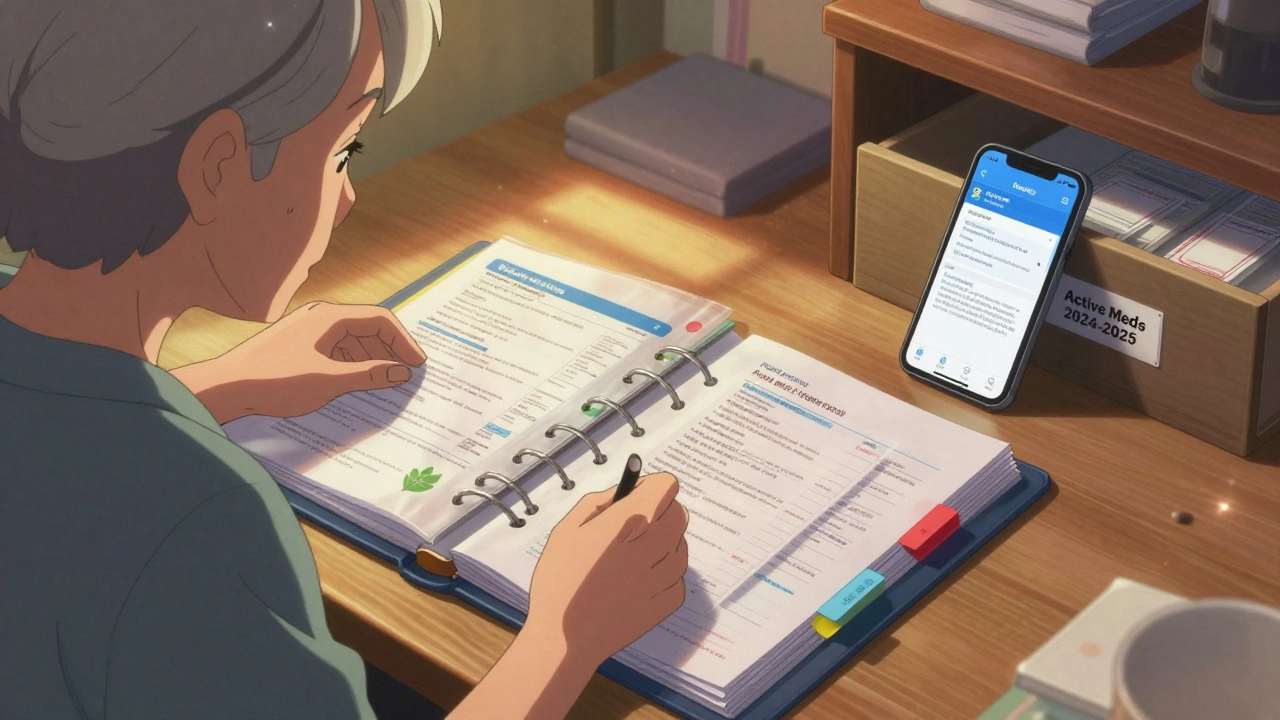
How to Store Prescription Labels and Leaflets for Future Reference
Store prescription labels and leaflets properly to avoid dangerous medication errors. Learn how to organize physical and digital records for safety, convenience, and peace of mind.