Prenatal Antidepressants: What You Need to Know About Safety, Risks, and Alternatives
When you're pregnant and struggling with depression, the question isn't just prenatal antidepressants—it's what’s safer: taking them or not. prenatal antidepressants, antidepressant medications prescribed during pregnancy to manage depression and anxiety. Also known as antidepressants in pregnancy, these drugs are used by hundreds of thousands of women each year, but the conversation around them is often clouded by fear, misinformation, and oversimplified advice. The truth is, untreated depression during pregnancy carries real risks—preterm birth, low birth weight, difficulty bonding after delivery. But so do some medications. It’s not a simple yes or no. It’s a balance, and it’s personal.
SSRI safety, the risk profile of selective serotonin reuptake inhibitors like sertraline and fluoxetine during pregnancy is one of the most studied areas in maternal mental health. Research from the CDC and large cohort studies show that while SSRIs may slightly increase the chance of certain complications—like transient newborn adaptation symptoms—they don’t cause major birth defects at higher rates than the general population. That’s different from saying they’re risk-free. Some women experience worsened anxiety in early pregnancy, others notice their baby is fussier after birth. These aren’t side effects you can ignore, but they’re often manageable. Then there’s depression during pregnancy, a clinical condition affecting up to 1 in 7 pregnant women, often mislabeled as "just hormonal". It’s not weakness. It’s biology. And it doesn’t go away just because you’re carrying a baby.
What’s missing from most advice? Alternatives. Therapy, exercise, sunlight, support groups—these aren’t just "nice to have." For mild to moderate depression, they can be as effective as medication, with zero drug exposure. For severe cases, skipping meds isn’t brave—it’s dangerous. The key is matching the treatment to the severity, the trimester, and your history. A woman who’s had three depressive episodes before pregnancy needs different support than someone having their first episode now. And no, you don’t have to choose between being a good mom and being healthy. The best moms are the ones who get the help they need—medication, therapy, or both.
Below, you’ll find real, practical guides on how to spot dangerous reactions, how to read FDA alerts about pregnancy-safe meds, and how to talk to your doctor without feeling pressured. You’ll learn what’s actually known—not guessed—at every stage of pregnancy. No fluff. No fearmongering. Just what works, what doesn’t, and what to ask next.
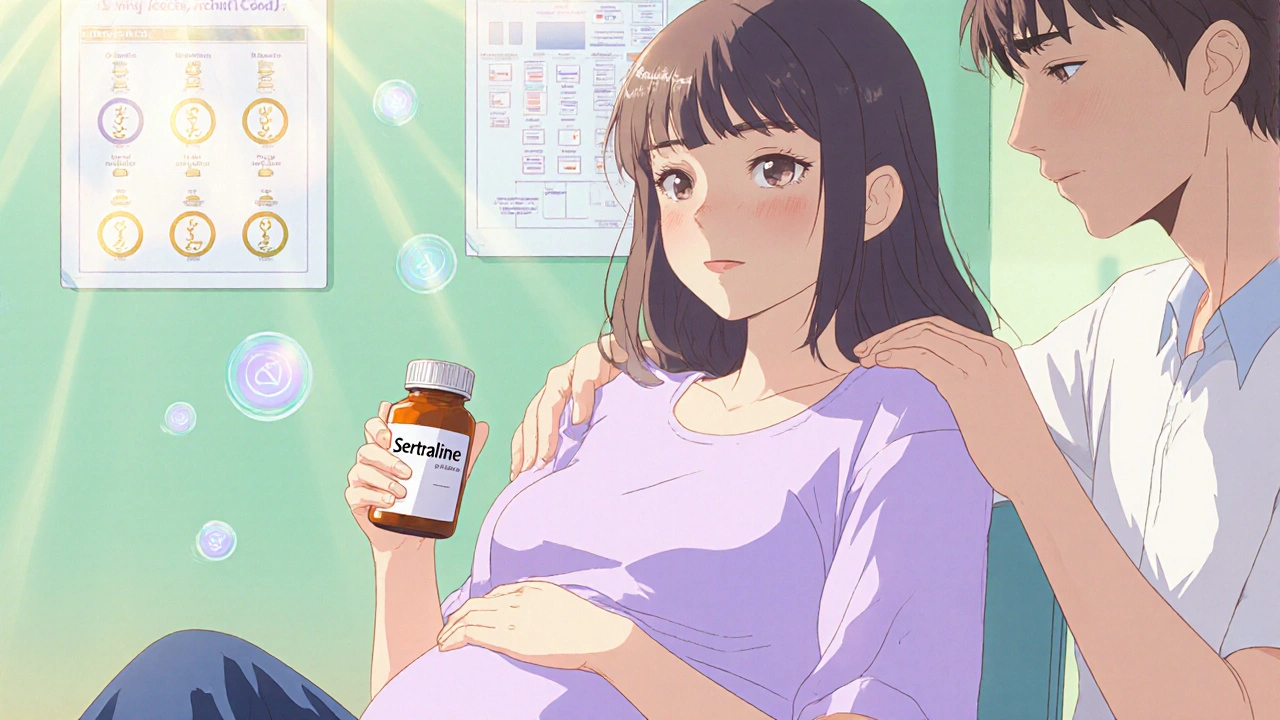
Antidepressant Use in Pregnancy: What You Need to Know About Safety and Side Effects
Antidepressants during pregnancy are safer than many think. Sertraline is the preferred choice, with no proven link to birth defects or long-term harm. Untreated depression poses greater risks to mother and baby.