
Store Prescription Records: Why Keeping Track Saves Lives and Money
When you store prescription records, a systematic way to track all medications you’ve taken, including doses, dates, and side effects. Also known as medication history, it’s not just paperwork—it’s a lifeline in emergencies, doctor visits, and when switching pharmacies. Most people think they remember what they’re on, but studies show over 60% of adults can’t accurately list all their meds after just a few months. That’s not forgetfulness—it’s a hidden risk.
Why does this matter? Because drug interactions, when two or more medications react in harmful ways can turn a routine pill into a danger zone. Think about store prescription records when you’re on warfarin and your doctor prescribes trimethoprim-sulfamethoxazole. That combo can spike your INR and send you to the ER. Or if you’re taking insulin and beta-blockers—those can hide low blood sugar signs until it’s too late. If your records are scattered across apps, old pill bottles, and scribbled notes, you’re flying blind. A clean, updated list helps your pharmacist catch risks before they happen.
And it’s not just about safety. When you pharmacy records, the official logs kept by pharmacies that track your filled prescriptions don’t match what you think you’re taking, you get duplicate prescriptions, wasted money, and unnecessary side effects. Imagine buying generic lamictal online because you forgot your last refill date—only to find out your old pharmacy already filled it two weeks ago. Or worse, you miss a critical alert about clindamycin and C. diff because no one has your full history. Keeping your own record means you’re not just a patient—you’re an active partner in your care.
People who store prescription records also handle insurance disputes faster, avoid emergency room delays, and make smarter choices when switching doctors. You don’t need fancy software. A simple spreadsheet, a notes app, or even a printed sheet with dates, names, doses, and why you’re taking each drug works. Update it every time something changes—new meds, stopped pills, or side effects you didn’t expect. That list becomes your health anchor.
Below, you’ll find real-world guides on how to track your meds safely, spot dangerous interactions, understand FDA alerts, and even test for allergies you didn’t know you had. These aren’t theory pieces—they’re tools from people who’ve been there. Whether you’re managing diabetes, mental health meds, or just a long list of prescriptions, the right records make all the difference.
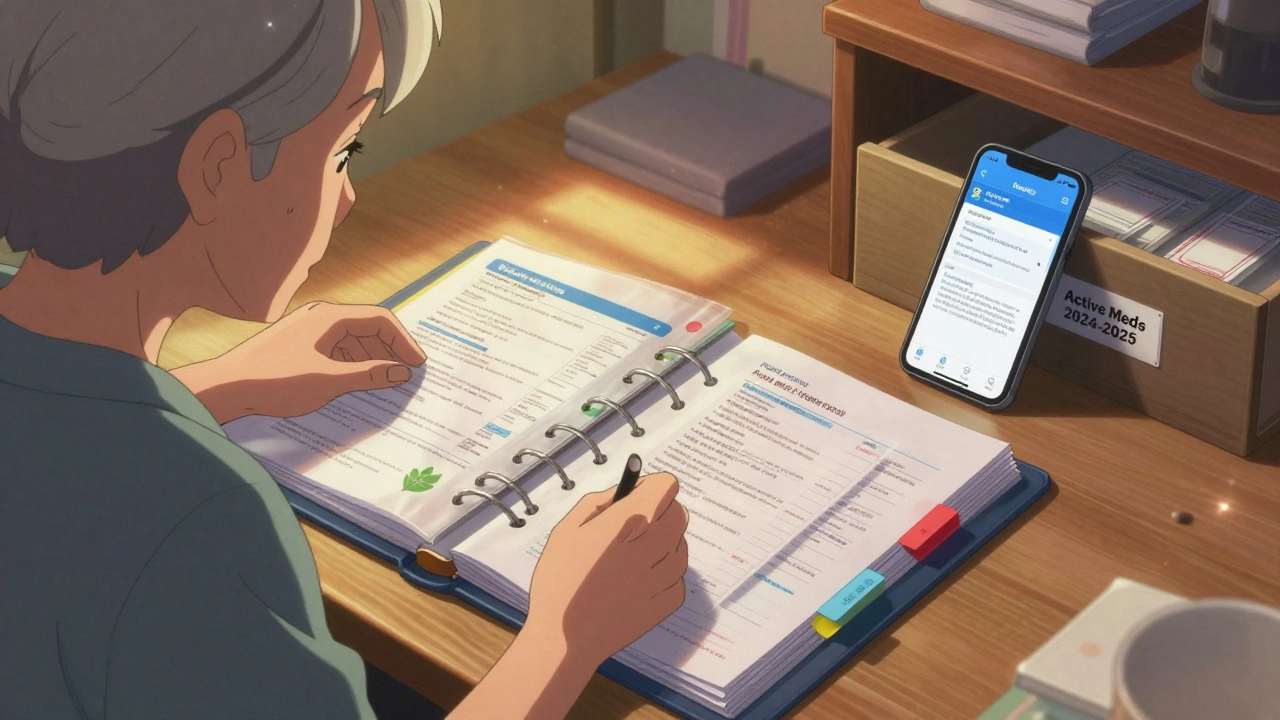
How to Store Prescription Labels and Leaflets for Future Reference
Store prescription labels and leaflets properly to avoid dangerous medication errors. Learn how to organize physical and digital records for safety, convenience, and peace of mind.