Sun Safety with Medications: What You Need to Know
When you take certain medications, drugs that alter how your body reacts to ultraviolet light. Also known as photosensitizing agents, these can turn a normal day outside into a painful burn or long-lasting skin reaction. It’s not just about sunscreen—some common prescriptions and even over-the-counter pills can make your skin act like a solar panel, soaking up UV rays and reacting badly. This isn’t rare. It happens with antibiotics, antidepressants, blood pressure meds, and even acne treatments. If you’ve ever gotten a bad sunburn after a short walk or developed a rash where your shirt ended, your meds might be why.
Drug photosensitivity, a reaction where skin becomes overly sensitive to sunlight due to medication. Also known as phototoxicity, it’s the most common form of this issue and shows up fast—like a bad sunburn within hours. Then there’s photoallergy, a delayed immune response that looks like eczema and can spread beyond sun-exposed areas. Also known as light-induced allergic reaction, it’s rarer but lasts longer and can show up even after you stop the drug. These reactions aren’t just uncomfortable—they can lead to scarring, premature aging, and in rare cases, increase skin cancer risk. The FDA has issued multiple drug safety alerts, official warnings about medications that increase sun sensitivity. Also known as MedWatch alerts, these are updated regularly as new data comes in. You won’t always see it on the label. Many people don’t realize their headache pill, cholesterol med, or even antihistamine can be the culprit.
Some of the most common offenders include doxycycline, NSAIDs like ibuprofen, certain diuretics like hydrochlorothiazide, and even some antidepressants. If you’re on any of these and you’re spending time in the sun, you’re playing with fire. But you don’t have to avoid the outdoors. You just need to be smarter. Wear UPF clothing, skip midday sun, and use broad-spectrum sunscreen every single day—even when it’s cloudy. And if you notice unusual redness, blistering, or itching after sun exposure, stop assuming it’s just a sunburn. Check your meds. Talk to your pharmacist. Look up your drug on the FDA’s safety site. There’s no need to suffer through a reaction you could have prevented.
The posts below cover exactly this: which drugs make you sun-sensitive, how to spot the warning signs before it’s too late, and how to protect yourself without giving up your lifestyle. You’ll find real stories, practical tips, and clear guidance on what to ask your doctor—and what to watch for after you leave the pharmacy. This isn’t guesswork. It’s science, backed by patient experiences and official alerts. You’ve already taken the first step by reading this. Now let’s get you the tools to stay safe.
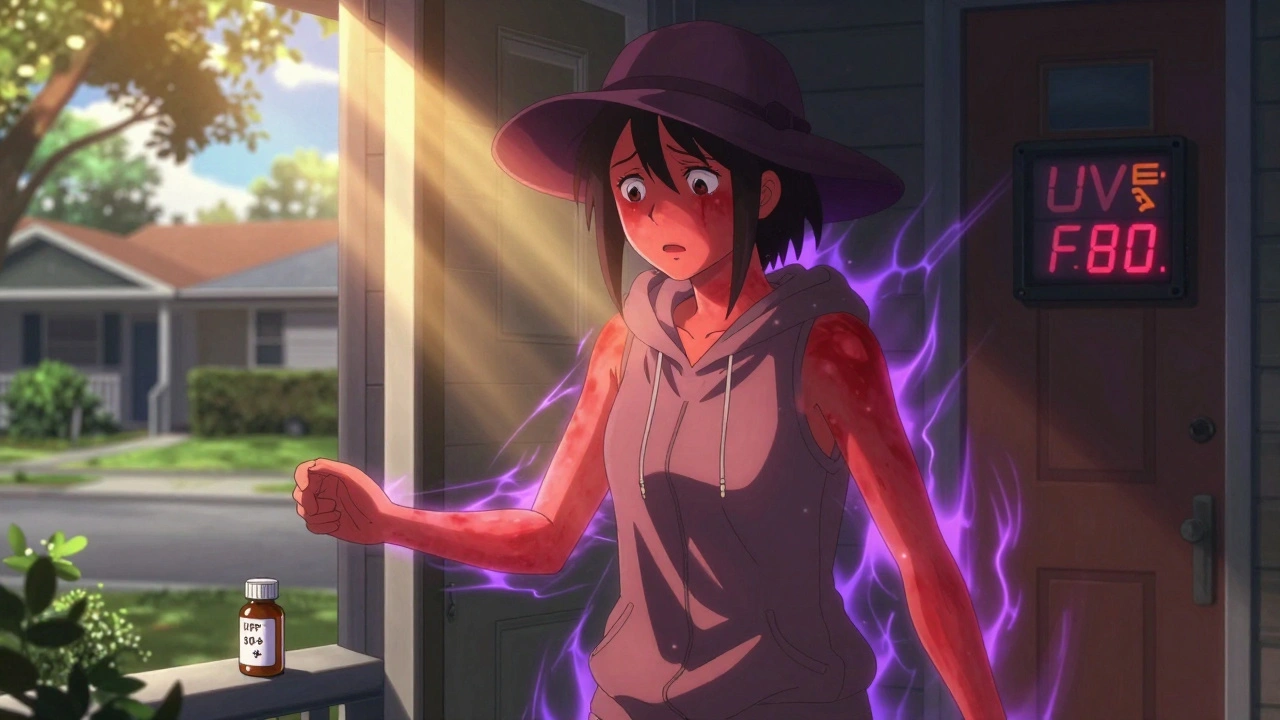
Photosensitivity from Medications: Sun Safety and Skin Protection Guide
Many medications can make your skin dangerously sensitive to sunlight, causing severe burns or rashes. Learn which drugs trigger photosensitivity, how to protect yourself, and why regular sunscreen often isn't enough.